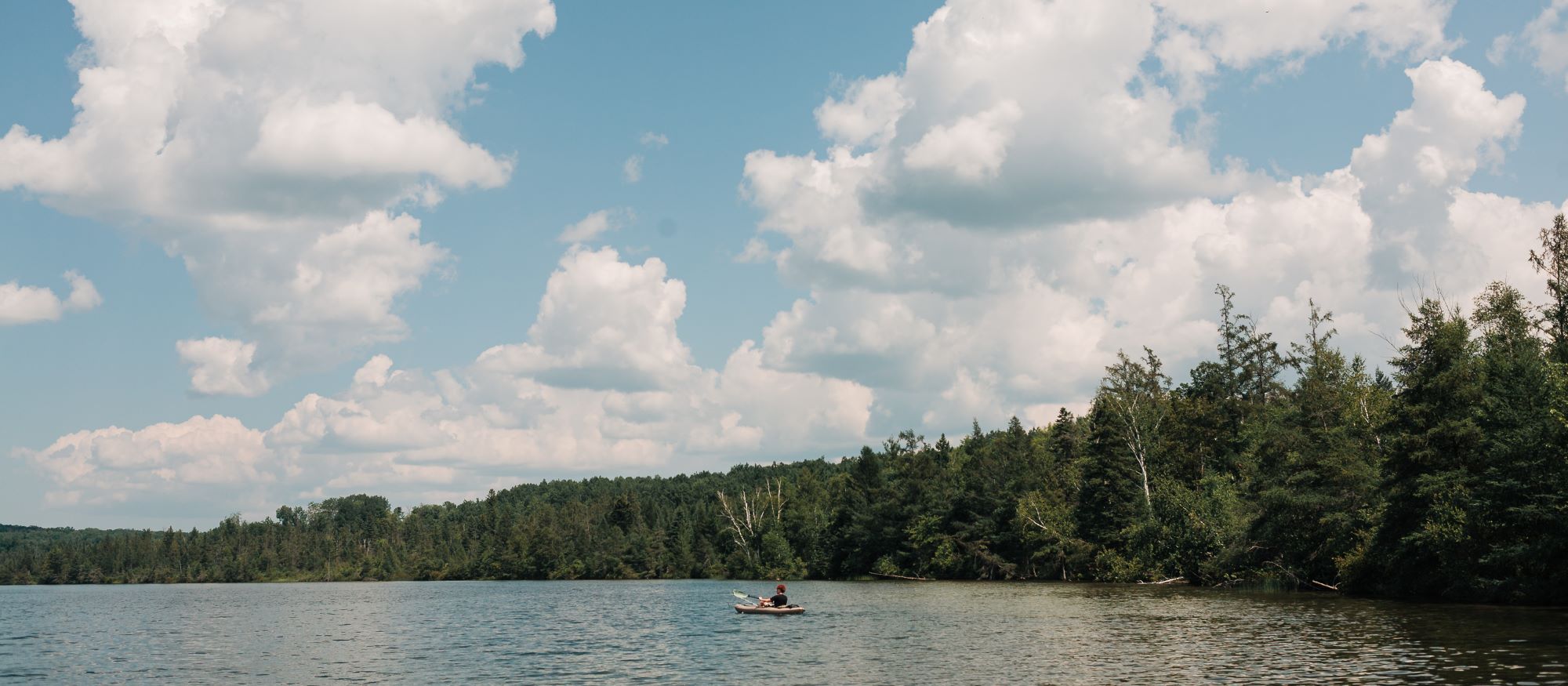
Our usual summer holiday includes sticking to one spot, with a few exceptions.
This year, after we left Door County, we wandered around the Upper Peninsula of Michigan for a week – first in Ironwood, then in Escanaba.
It was a vacation spent living out of our suitcases, constantly on the go.
First, Ironwood. We picked this little city because of its proximity to the Porcupine Mountains, an ancient volcano system weathered down to our present modest range of basalt and conglomerate.
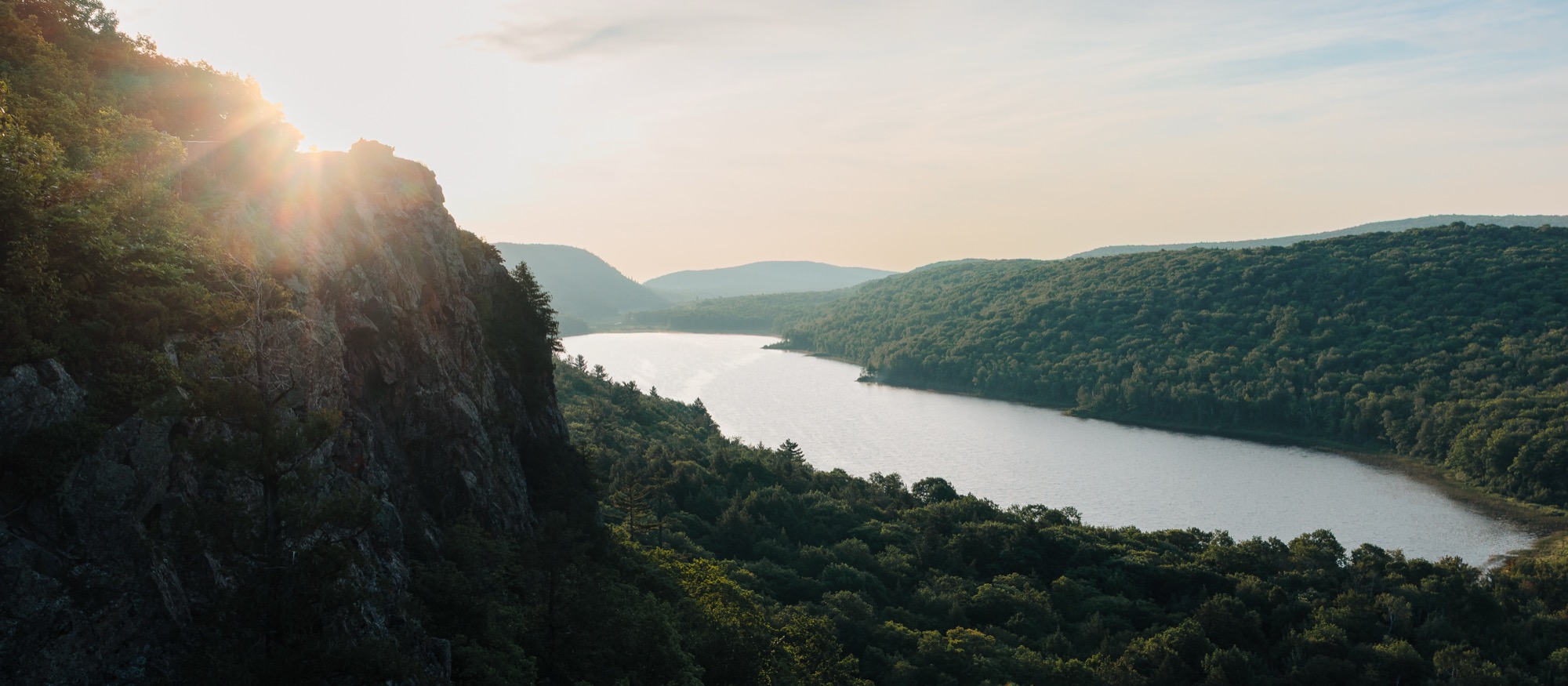
During our first full day in Ironwood, we woke up for sunrise over the Lake of the Clouds.
There’s nothing the kids love more than to wake up at 3 AM to go hiking in the woods – except for just about anything else. But the view? Totally worth it.
After a bit more hiking down to the lake, we stopped by the Lake Superior shore to grab lunch and look at the rocks along the beach.
I took just a few minutes to stop along the road, on the way back, to grab shots of the local businesses.
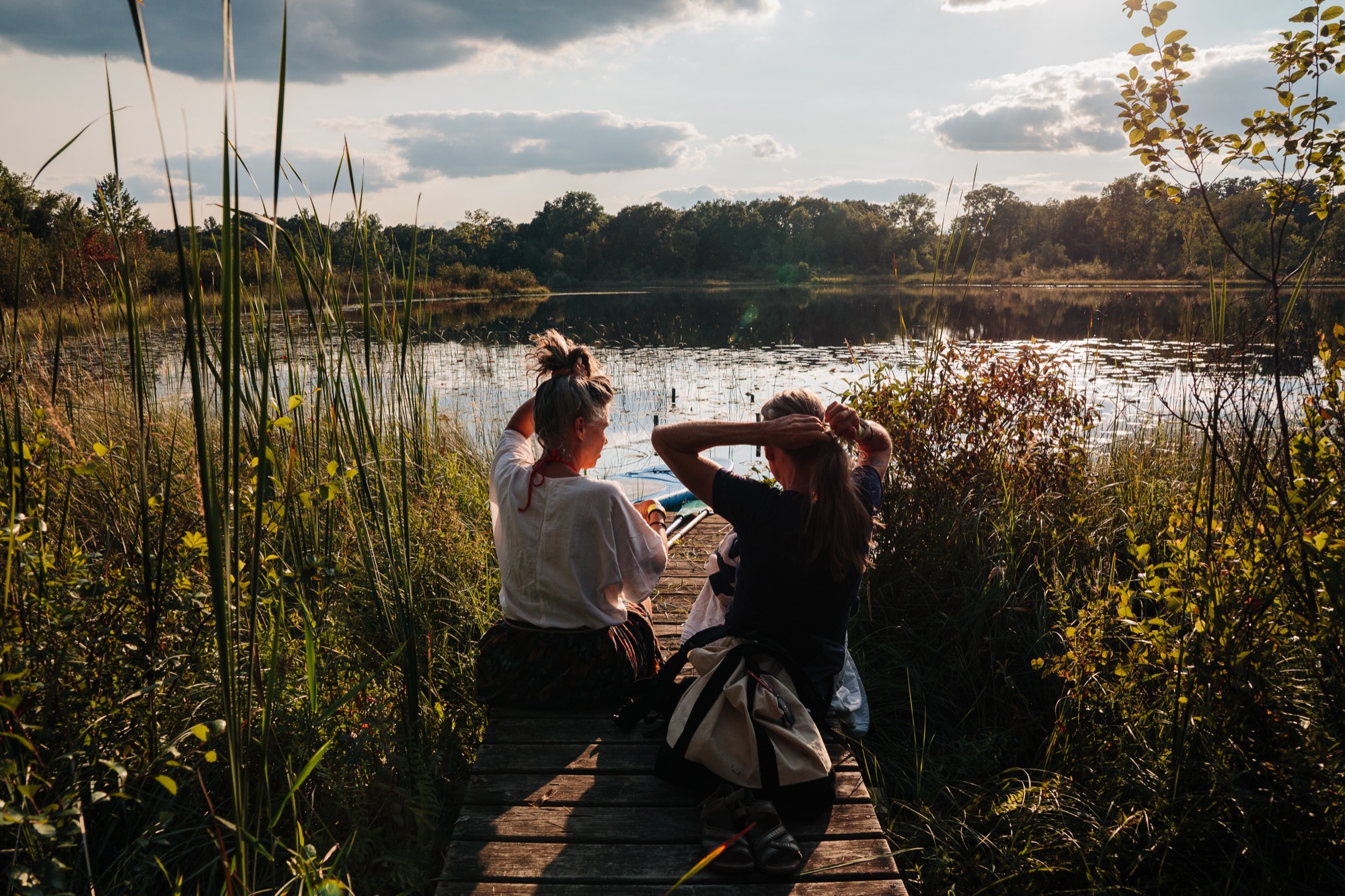
Our cabin sat alongside the Black River, which empties out into Lake Superior. Along the way, you can hike down to a series of waterfalls along the river.
What I loved about this section of our trip was the hiking. We didn’t get a lot of forest bathing in Wisconsin, but here we had woods a-plenty, and it was good for all of us to hear nothing but birds and the strong river running.
For these hiking trips, the Canon EOS M6 – with its portability and light weight – was perfect: small and capable.
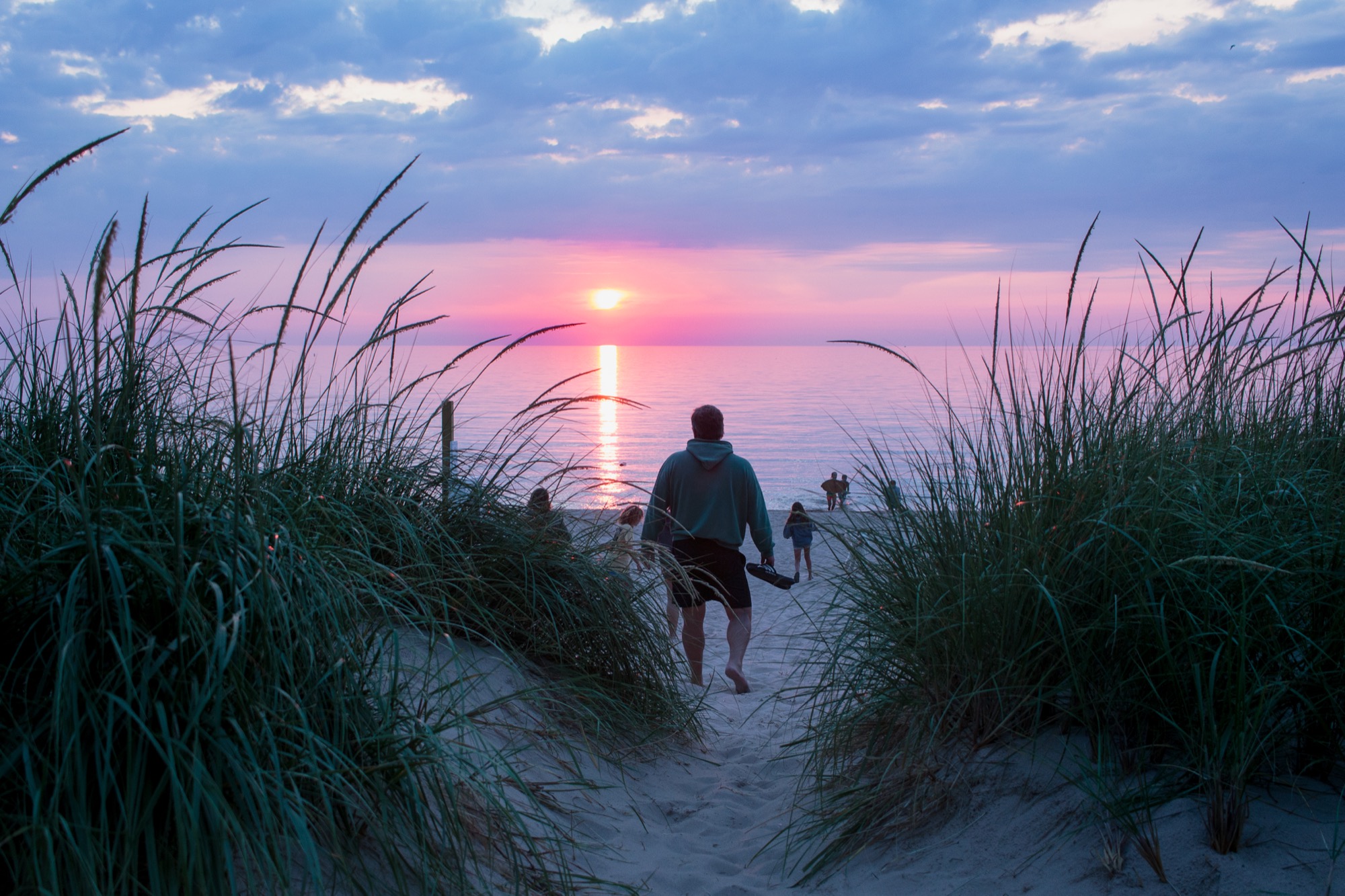
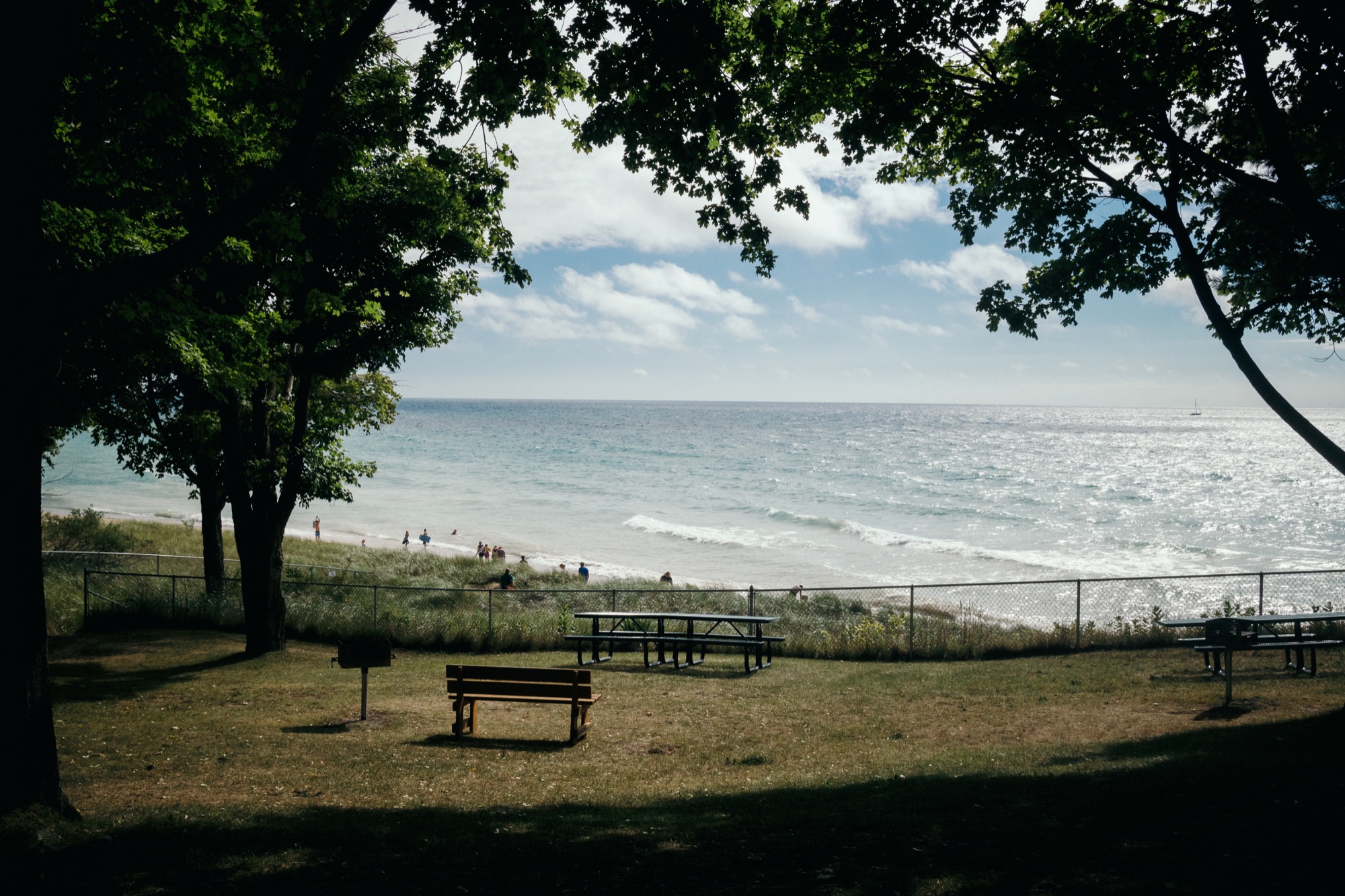
After a few days in Ironwood, we drove down to Escanaba, Michigan, along Lake Michigan, for a different view of the Great Lakes. Here, we found a beach on Sand Island that was great for swimming and sunbathing.
We also explored a bit of downtown Escanaba and a dam that sat outside our cabin on the Escanaba River.
That was it for the Upper Peninsula portion of the trip. From here, we headed south across the Mackinac Bridge to Hale, Michigan, to meet up with my family and finish up our summer vacation.
The Canadian wildfire smoke rolled into town yesterday.
Wednesday, we went to bed with clear skies. Thursday morning, I took the dog out in the morning, and there it was: a terrible smell, a yellowish haze, and a dramatic decrease in air quality – so much so that many summer events around town are getting delayed or canceled.
After work, I drove around town to get a sense of the situation. It was dramatic at the Jackson County Airport, where they shut down operations because of the air quality.
Around our own neighborhood, it looked like a foggy day all day long. The farther you looked in the distance, the more haze you could see.
My girls popped outside to do some quick squishy gluing, but other than that, they stayed inside – a bummer for summer, when they should be outside playing.
For our family, summer means trips to Lake Michigan. In two hours, you can be right next to one of the world’s great bodies of fresh water.
Summer also means Pentwater, a little west coast town in Michigan that we frequent – either visiting family friends or participating in our church’s summer camp.
Pentwater is a classic Lake Michigan town: busy during the summer, but unlike some of the towns to the south, it retains its small-town charm.
And then, just outside of town, you get these quaint Lake Michigan beaches and fish stores – perfect for a family picnic.
You can’t miss when visiting these little western Michigan towns. Just ask all the Chicago residents who travel this way in the warmer months; their Chicago Bears bumper stickers give away their hometown.
This weekend, I attended my first artist expo at Jackson’s The Sparks summer open house.
Jen Dixon from my Artists In Jackson 2 project asked me to join. A free table around a bunch of artists and community members provided a great opportunity to promote my portrait projects and sell a few prints.
And that’s exactly what happened. I sold my Musicians In Jackson book and some select photo prints, talked to a bunch of great people, reconnected with some of the artists from my project, and added a few more subjects to the to-do list.
All in all, a good day filled with music, art, and self-promotion.
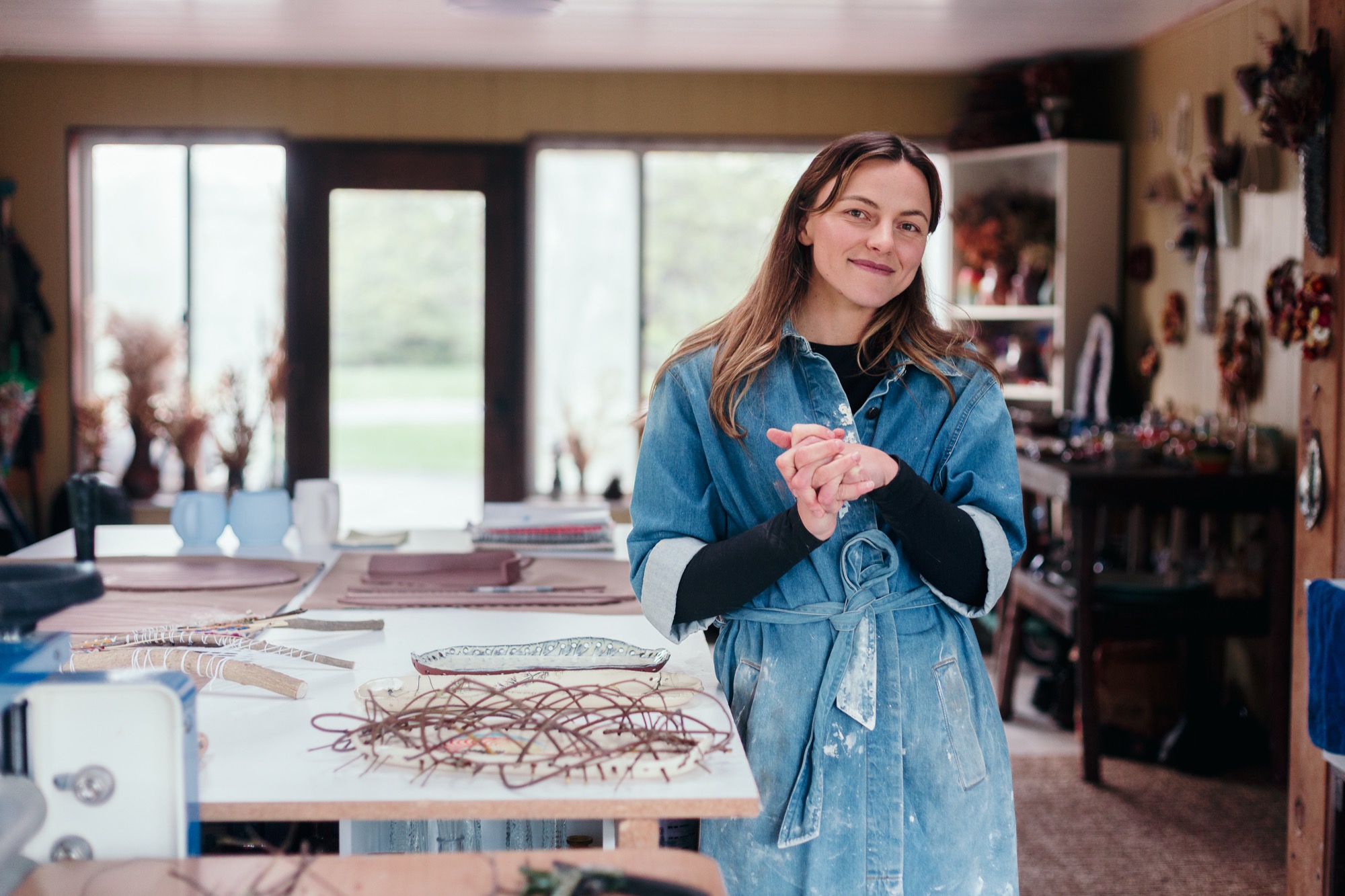
When Abby Dawson and her husband Phil decided to convert the back room of their Brooklyn, Michigan property into a ceramics studio, they ran into a minor structural reality: someone had built the room around a hot tub.
“We had to chainsaw the hot tub into four pieces,” she says, laughing, “and get it out.”
It’s a good starting point into how Abby works. To her, obstacles are just logistics.
The studio that replaced that hot tub room now sits surrounded by old spruce trees on land she describes, without irony, as divine (hence the name: Divine Pine Studios). It’s where she throws, hand-builds, glazes, fires, and occasionally drops a finished ceramic platter on the floor on purpose.
That last bit is all part of her process.
The only way out was demolition.
“I’ll have these videos of me doing slow-mos where I just take a huge platter, one where I put 10 hours into it, and I drop it and just watch it shatter,” Abby says. “You just have to be okay with things not working out.”
Sticking With Ceramics
Abby grew up in Boynton Beach, Florida, moved to Michigan as a high school junior, and eventually landed at Adrian College, where she majored in psychology and art with a focus in art therapy.
Ceramics was the medium that stuck.
“The more you learn about it, the more you feel like you don’t know anything at all. It reminds me of yoga or religion: the deeper you go, the more you realize you are really still just a beginner,” she says. “And I find that genuinely exciting.”
Her ceramics work ranges from rainbow-blended mugs that sell out in minutes, to birch bark cups made with a broom-end tool that leaves tree bark-like marks, to mushroom bowls, sculptural wall hangings, and big platters with organic edges.
“Even if I never sold anything, I will always just make art,” she says. “I just want to make as much as I can.”
In her current work, Abby is moving toward mosaic murals and textured wall pieces assembled from dozens of small individually-glazed tiles. The idea is that many tiny things get combined into one larger shape.
An Unpredictable Art
Abby found her kiln, her first wheel, and a stockpile of ceramics supplies on Craigslist around 2016. The equipment was aging, some of it barely functional, and she lost entire kiln loads of work early on before she understood what she was dealing with.
She learned the hard way that ceramics is an unpredictable art that rewards patience and experimentation.
“You totally have to be okay with failure,” she says. “That’s how it goes.”
Her family’s property hosts the Divine Pine Gathering, a small festival she and Phil started in 2017 that has grown to roughly 600 attendees, 65 classes, 25-plus music acts, a free healing tent, a vendor village, and as many art installations as they can arrange. It runs every other year on their property, the last weekend of July. This year marks the tenth year of the event.
Abby describes running the Gathering the way a curator would talk about mounting a gallery show.
“How do I want people to feel when they’re here?” she says. “How do I want the space to make people feel?”
Stages of Life
Since having two young children, Abby’s studio time has compressed. She stays up late after the kids are in bed, working by the fading light that remains.
Sometimes, she’ll go weeks without touching clay. Then she’ll spend an entire fall in a push to get items done in time for her annual holiday open studio sale.
But Abby doesn’t complain. It’s all about balance. She understands this is another, different season in her life and studio work – another obstacle to work around.
“I have like 10 things I’d love to do for myself in a day. And it’s like, okay, you can choose one of those things for like 20 minutes,” she says. “With our current stage and the kids being so young, they’re my priority. So I’ll stay up really late out here in the studio.”
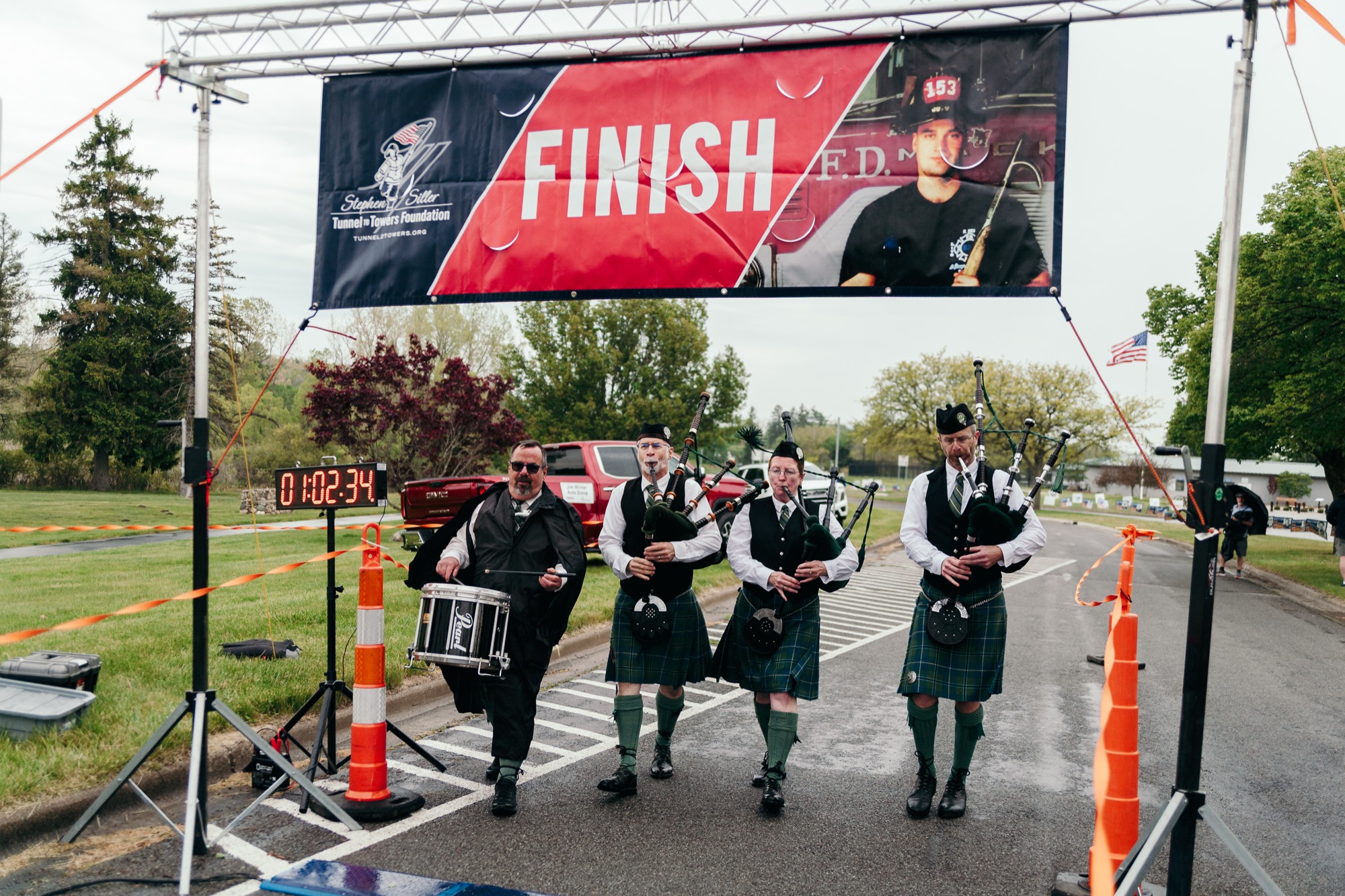
Our daughter, Riley, took a chance on the running club at school. The culmination of the semester was participating in the local Tunnel to Towers 5k.
So we braved a rainy May morning and watched firefighters, first responders, and about 50 elementary students run through Sparks Park in Jackson.
I took this as an opportunity to try out my new-to-me Tamron 28-75mm f/2.8 – an upgrade from my previous Tamron 24-135 f/3.5-5.6 zoom lens.
My review? Pretty good, especially for the $150 I paid for it used. I don’t usually need a full 24mm view, and the extra few stops of light are a nice touch.
For years, Ari Simeone did not make art because he had learned not to.
As a kid growing up on Prince Edward Island in Canada, art was always around Ari. He drew with his father, who he calls “a fantastic artist,” and grew up in a family where creativity was part of everyday life.
“My grandmother was a teacher and she taught everything through the lens of art,” he says. “She taught math through art. She taught science through art.”
Then, for years, Ari stopped.
“While my parents were supportive, others in my life basically told me that to appear more normal, I should have nothing to do with art anymore,” he says. “And so I stopped cold turkey.”
Coming Back to It
Ari returned to painting during the pandemic, almost by accident, sitting at home with his daughter and a set of watercolors.
“We were painting and she looks at me and she’s like, ‘Why have I never seen you do this before?’” he says. “It felt like I got caught doing something I wasn’t supposed to.”
He told her he did not paint anymore. She returned with a question: “What do you mean ‘anymore?’ We’re going to fix that.”
That week, they went to the art store. Ari has been painting ever since.
“It felt like I was coming home. I remember how it felt when I stopped doing art, and I don’t want to wait for something dramatic to happen to get me to start again.”
Painting What Comes In
Much of Simeone’s work begins as translation.
“Everything that would come in through the day, whether it be things I hear or see, I would kind of lock myself in this quiet space in my house, and I would just start painting,” he says. “Everything that came in would come out.”
Ari describes the work as “a visual representation of audio and sensory input,” often building abstract landscapes shaped by motion, sound, and atmosphere rather than fixed, figurative subjects.
He says static days make for stagnant art. That instinct eventually led Ari out of solitude and into public performance.
Painting in Public
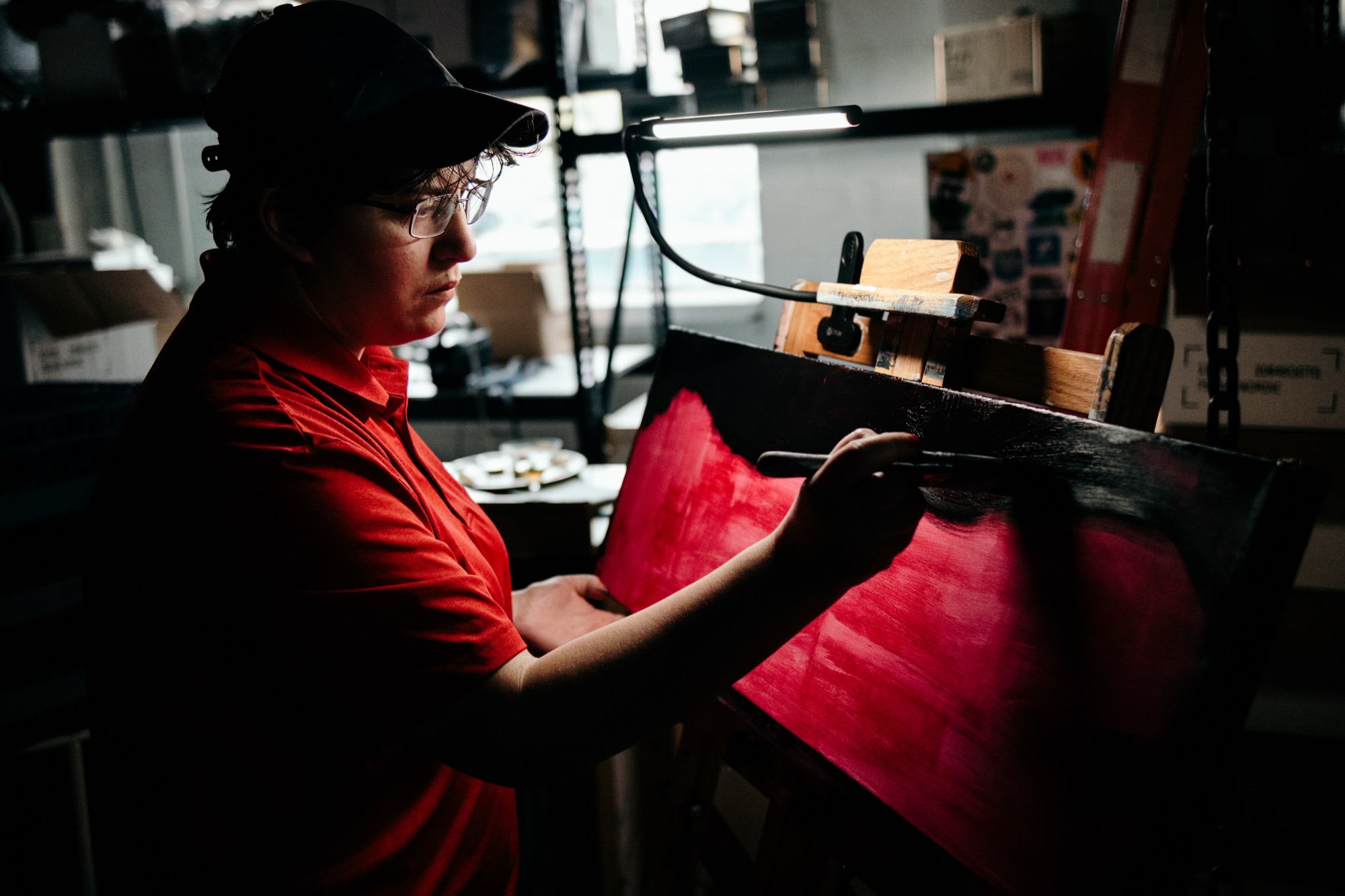
When Ari learned about and entered his first Art Battle, where a panel of artists would compete for votes, he didn’t expect much. The format was everything his process had not been: loud, crowded, timed, and public.
“I thought, this is a neat idea. I would like to watch it, but I’m probably going to hate doing it.”
Instead, he loved it. Ari won his first round, then the next, then states, then went on to compete at nationals in Florida.
Along the way, he found a new way of working.
“Painting in public, there’s always new input,” he says. “There’s always something unexpected or unusual that happens. And part of me just thrives on that.”
Now Ari regularly paints live at festivals and performances, building pieces in real time while musicians play – like at Manchester Underground, at River Raisin Distillery, where he is a focal point of the monthly performances.
“I go and paint the music.”
Doing It Anyways
At Art 634 in Jackson, Simeone’s studio has become both workspace and community space – a place to paint, experiment (he’s working on a creature-building card game), and let people see the work as it happens.
That openness and vulnerability are a result of the lessons Ari learned early on, when he was discouraged from creating.
“One of the thrills I get is from sharing my art and having people be just as excited or more about my art than I am,” he says. “Part of the completion of a piece is also others seeing it. Then my art gets to go out and see the world, too.”
Ari is still nervous making art in public, but that nervousness no longer decides whether the work gets made.
“I’m afraid of this thing,” he says, “so I’ll do it anyways.”
She’s sketched, painted, made wire jewelry, picked up beading, decorated cakes, attempted a tattoo apprenticeship, and, at one point, filmed her own drawing tutorials for YouTube.
That last one didn’t really take off.
“That didn’t really go well,” she says, laughing it off.
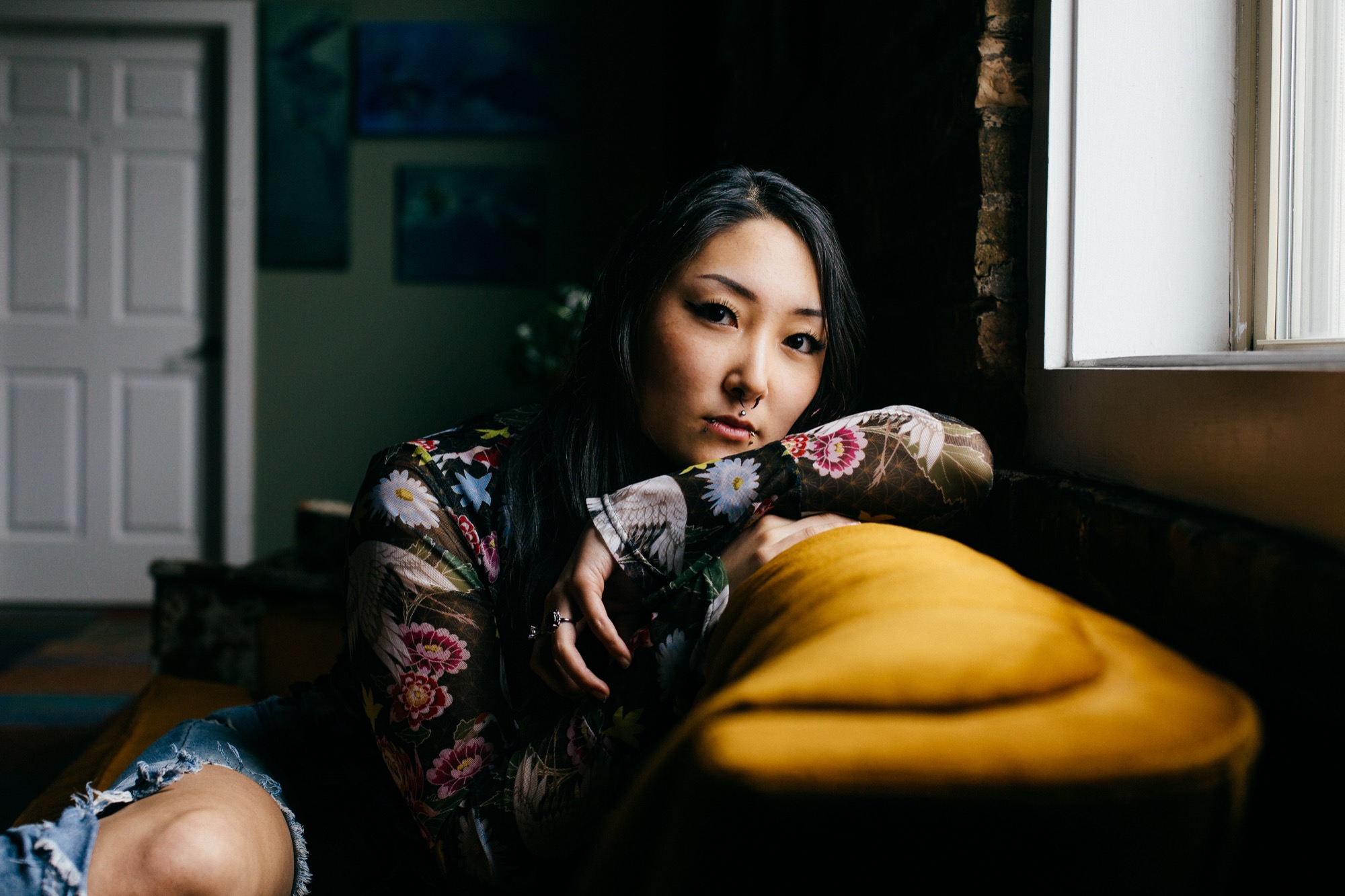
She’s in her early 20s and lives in Vandercook Lake. The through line in everything she does isn’t any particular medium. It’s curiosity.
Sidney’s mostly self-taught. As a kid, she would track down one of those YouTube tutorials just to figure out how something worked.
Art teachers in middle and high school kept her motivated, and she’s always had her dad – and her boyfriend, David – in her corner, cheering her on.
First-Place Finish
By chance, Sidney stumbled across an event on Facebook called Art Battle at Art 634.
The idea is simple: 10 artists, 20 minutes to paint something from scratch, and the audience votes on a winner.
She psyched herself up and signed up for the first-ever Art Battle in Jackson and won the whole thing. Then, Sidney entered the next competition and earned second place.
“If I can do that in 20 minutes, imagine what I can do in a few hours,” she says.
Those competitions lit a fire. Sidney started painting more seriously and found her people at Art 634, where she began vending and building connections in the local art community.
Brain On Mute
Sidney admits she has ADHD, and she’s open about what making art does for her.
When she’s deep in a piece, everything else disappears.
“My whole focus is on that piece,” she says. “It feels like my brain is pretty much shut off and in my hand, going at it.”
Music helps, too. Bring Me the Horizon used to be her go-to. Lately, Sidney enjoys a mix of rock and some hip-hop, but the purpose is the same: block out the noise and lock in on her craft.
Simple Tools
Ask Sidney what her favorite things to make are, and she’ll land on line art and jewelry.
Lately, she started using cheap pens from Dollar as a challenge, but also because they work.
“I just find it fun using cheaper stuff, see what I can do with it,” she says. “Why spend all this money on expensive stuff when the cheaper stuff, you do the same thing?”
Sidney’s jewelry-making started with wire crafts and a short-lived Etsy shop, then she fell down a research rabbit hole into beading.
Each of these media keeps her laser-focused. Sometimes, she’ll sit for hours without looking up.
Future Plans
Sidney’s day job is cake decorating at Country Market, a skill a supervisor handed her after noticing she was artistic. She’s been doing it since 2017 and brings the same care to a cake as she does to a canvas.
Her long-term vision is a bakery and gift shop where she sells her own work and gives other local artists a place to sell theirs, too.
“I want to have my stuff out there and have stuff to have like forever homes, people enjoying my art,” Sidney says.
So when an old friend, who came out of a four-year retirement to wrestle, gave me a heads-up on some indy wrasslin’ for a good cause? Count me in.
I took my daughter, who joins me for my annual Royal Rumble and Wrestlemania watches, to watch a series of surprisingly good matches. The Headlock On Hunger event even included a 20-man battle royale.
This could easily become a longer-term project for me.
The sweaty gym setting. The vocal crowd. The hard hits and potential bumps – it was all there. And it was a blast to capture.
Shot on the Canon 5D mark II and EF 100mm f/2.8, and EOS M6 with the Viltrox 23mm f/1.4.
Early in the pandemic, our youngest daughter, Riley, had to celebrate her birthday outside. Social distancing and flattening the curve – you remember all that.
Of course, it rained. But family and friends still came by to wish her a happy birthday.
Shot on the Canon 5D (classic!) and EF 40mm f/2.8.
February was rough for me. Emotionally, work-wise – everything felt like it was crashing down.
My family noticed how irritable I was. I felt it, too: waking up every day tired, wanting to go to bed early every night.
I was in a funk. So I got out of the house.
It’s amazing what a little sunshine and fresh winter air will do for the spirit.
And not to oversimplify it, but getting in my car, driving around town, and making photos was exactly what I needed.
I had my mental photo checklist handy – little spots around town that, given the right light, I wanted to visit and photograph. So I grabbed my trusty Canon 5D (classic!) and 40mm lens, along with a new pickup – the EF 200mm f/2.8 – and hit the town.
This evening was perfect, with the sun setting and the snow turning blue. I stopped at everything from mall parking lots to rooftop parking garages, and lots of places in between.
“Make your own little adventure,” I kept telling myself. Grab the dog, throw the camera gear in the car, and hit the road. Just because.
Looking through my photo archives recently, I stumbled on photos from a memorable winter trip with my now-wife to South Haven, Michigan. The result of that trip was one of my favorite photos.
I know: we Michiganders are wacky. In college, I took a spring break trip north, to Toronto, instead of south, as most sane people do.
And here we were, a fairly young couple during a freezing cold February, taking a weekend holiday to the icy Lake Michigan shore. We spent a day walking around South Haven, talking to some locals, and wandering over to the lighthouse to catch an amazing winter sunset.
It was there, on the walkway out to the lighthouse, that I caught this couple holding hands while they shuffled along the path:
It might be one of my most enduring pictures: it won first prize in my local county fair photo competition, it remains one of my most-viewed photos on Flickr, etc. This photo is one of my favorites, too (though it’s hard to go wrong in South Haven, especially in the summer).
Art has always been central to Jessica Leeland’s life.
“I’ve always done it,” she says. “My brother was an artist. My parents were artists.”
Music, theater, and psychology – together with the visual arts – shaped her early creative world, giving her what she calls “the arts in the whole realm of my life.”
That foundation eventually led Jessica to discover art therapy in college, something she “had no idea” existed until professors recognized her ability to connect with others and encouraged her to explore it.
Jessica soon realized that art could be used not just for expression, but to help people.
“That was my favorite thing, finding out that you could actually help people by utilizing it,” she says.
Choosing Education at a Critical Moment
Jessica initially planned to pursue clinical art therapy, but a sudden opportunity changed everything.
When a music teacher unexpectedly left a local elementary school, she was faced with a choice: continue the art therapy path, or help kids in a different, but related, way.
“I thought, ‘If I don’t jump now, I’ll never do it,’” she recalls.
Rather than waiting years to complete art therapy’s clinical requirements, Jessica chose to step into teaching and advocate for arts education where she felt it was missing.
“Kids need the tools now, in elementary,” she says.
In education, Jessica could give students access to creative tools early, before those opportunities disappear.
“You can still play sports and be an artist. You can still go be a doctor and be an artist. You just have to balance the schedule.”
Teaching as Creative Advocacy
In the classroom, Jessica merges artistic practice with therapeutic principles. She emphasizes pausing, reflecting, and making choices.
“It’s okay to pause,” she tells students. “And then watching them and hearing them speak the words, ‘no means no. Those are my boundaries.’ Those are healthy. This is OK.”
Jessica remembers one moment that confirmed she was exactly where she needed to be.
“A child told me they had never held a paintbrush before,” she says. “That was their first time painting. When that hit me, I knew I was meant to be here.”
Over time, she has seen the impact. Students repeat her language back to parents. Former 4H participants return and tell her, “You told me last year to do this.” For Leeland, those moments are everything.
“That’s game over for me,” she says. “That’s it.”
Her Own Studio Practice
Despite the demands of teaching and family life – she’s married with two kids – Jessica remains committed to her own art.
“If I don’t create for myself in a certain amount of time, I become bitter,” she says. “It’s me flushing my brain out.”
Her Art 634 studio is essential – a place where her brain knows it is time to create.
Jessica’s work spans life drawing, paint pouring, acrylic painting, and ongoing experimentation.
“I’m very much a try it out, test it kind of person,” she explains.
Much of her work is human-centered, shaped by anatomy, psychology, and emotional experience.
“It just needs to come out of me,” she says.
While her art began as something “for nobody but myself,” sharing it has become part of the process. Teaching, creating, and continuing to evolve are inseparable for Leeland.
“This is exactly what I was looking for,” she says.
For Gary Willcock, art is something built from the inside out.
His story begins with buildings.
“I studied architecture at the University of Michigan,” he says. “I worked for a company in Pontiac called Custom Home Design, for Architonics here in Jackson, and I used to moonlight doing drawings at night. I got into a lot of places, met a lot of people, did some fun things.”
Gary grew up in Michigan’s Upper Peninsula. As he moved around the state, he was raised in houses without plumbing or a refrigerator, where every wall and nail carried meaning.
“All those structures had a special place in my life,” he says. “After World War II, there was a huge building boom. Every vacant lot disappeared, and I got involved in it somehow. When my dad decided to build a house, I was part of that. I didn’t know anything about architecture, but I liked designing houses. They told me, ‘That’s an architect.’ So off I went.”
Even after he left formal architecture for design and engineering work, the mindset stayed.
“Wherever I’ve lived, I play with the building,” Gary says. “If I see an empty building, I start massaging it in my mind.”
Gary’s Living Sculpture
Gary and his wife Christie live on seven wooded acres south of Jackson, a place they call Wind Mountain.
“When I moved in here, this part of the house was just a covered slab,” he says. “I enclosed it, added a reverse gable, and kept going. Over the years, I’ve changed almost everything.”
He built patios, redesigned the kitchen, and drew every trim detail himself.
“This is all my design: the casing, the woodwork. I had it custom-made by the man who built my cupboards,” he says.
Christie calls their home “a living sculpture.” Gary agrees.
“At some point, I wanted my life to be a piece of art,” he says. “To live in this structure where I’ve created all this stuff. I’m walking through my own big sculpture, and it’s functional.”
Sculptures of Precision and Play
Gary’s sculptures merge precision and imagination.
“I’m rigid in some ways,” he laughs. “Right angles all the way. That’s from my mother: you didn’t color outside the lines.”
His background in product and machine design shows in the materials he chooses: anodized aluminum, steel, acrylic, and found parts.
“I think of machines as robots,” he says. “Even a car is a robot. A robotic horse.”
His fascination with robots goes back to childhood.
“For some reason, I never got rid of a toy robot I bought in about 1948,” Gary says. “I bought it at Montgomery Ward in Royal Oak. It cost a dollar.”
Years later, his oldest son found a reproduction and bought it for him, sparking a new collection.
“Then somebody else gave me one, and another, and pretty soon it became a thing,” he laughs. Now, robots, along with dogs, fill his shelves.
“They all have personalities,” he says. “Some of my sculptures do too.”
Light is another essential part of his work.
“I enjoy how it plays off different surfaces, how it bounces around through the holes,” he says. “Some pieces have lenses. You look in one end and out the other, like a telescope.”
His sculptures often carry names that hint at humor and personality: Light Scope, Nest, Red Foreman, SEA AWL.
“I’m corny,” he admits. “But I like it when people lean in to look. Art should make you curious.”
Champion of Local Art
Walk through Gary and Christie’s house, and every wall holds local art.
“If you want a creative community, you support it,” he says. “You show up to openings, you buy work when you can, you encourage people.”
“We buy it because we like it, not because we have to,” Christie adds. “The people who made this work are our friends.”
Gary smiles at that. “Art is connection. You don’t create in isolation.”
Making Meaning through art
After raising six children and working full-time, Gary returned to art in retirement.
“I had to work, so all this was on the back burner,” he says. “One day I told myself, ‘If you’re ever going to do something, you better get off your seat and do it now.’ ”
Now an active member of several local art communities and collectives, Gary continues to draw, design, and build.
“I think art gives meaning to life,” he says. “It reminds us to look closer, to pay attention, to see more.”