photography

Washington Square - New York City

NYC: Washington Square Park

I’ve always heard that Washington Square Park in New York City is the place for street photography.

So when I had a work trip planned in Manhattan, I decided to put that statement to the test.

It was a beautiful spring day in NYC: the sun shining, a light breeze, and not too warm or too cold. 

And sure enough, the park – located in south-central Manhattan – was abuzz with people and activity. 

Part of me wanted to just stand and watch everyone do their thing. There was so much going on.

The other part of me, the photographer, relished the chance to grab intimate shots and take advantage of the beautiful light this late in the day.

And then there were the pigeon whisperers – perched on a small hill, surrounded by dozens of birds (top). 

Washington Square Park is where the characters came to dance, sing, and enjoy the afternoon. 

Shot on the Canon EOS M6 and a few EF-M lenses


A Portrait Session to Remember

Periodically, I’ll go through my photo archives and remember a particular event, trip, or memory. Think of it like a Lightroom-based rediscovery.

One such album dive took me back to the summer of 2012, and one of my most memorable engagement photo sessions with my high school friends Matt and Jennifer in Brooklyn, Michigan.

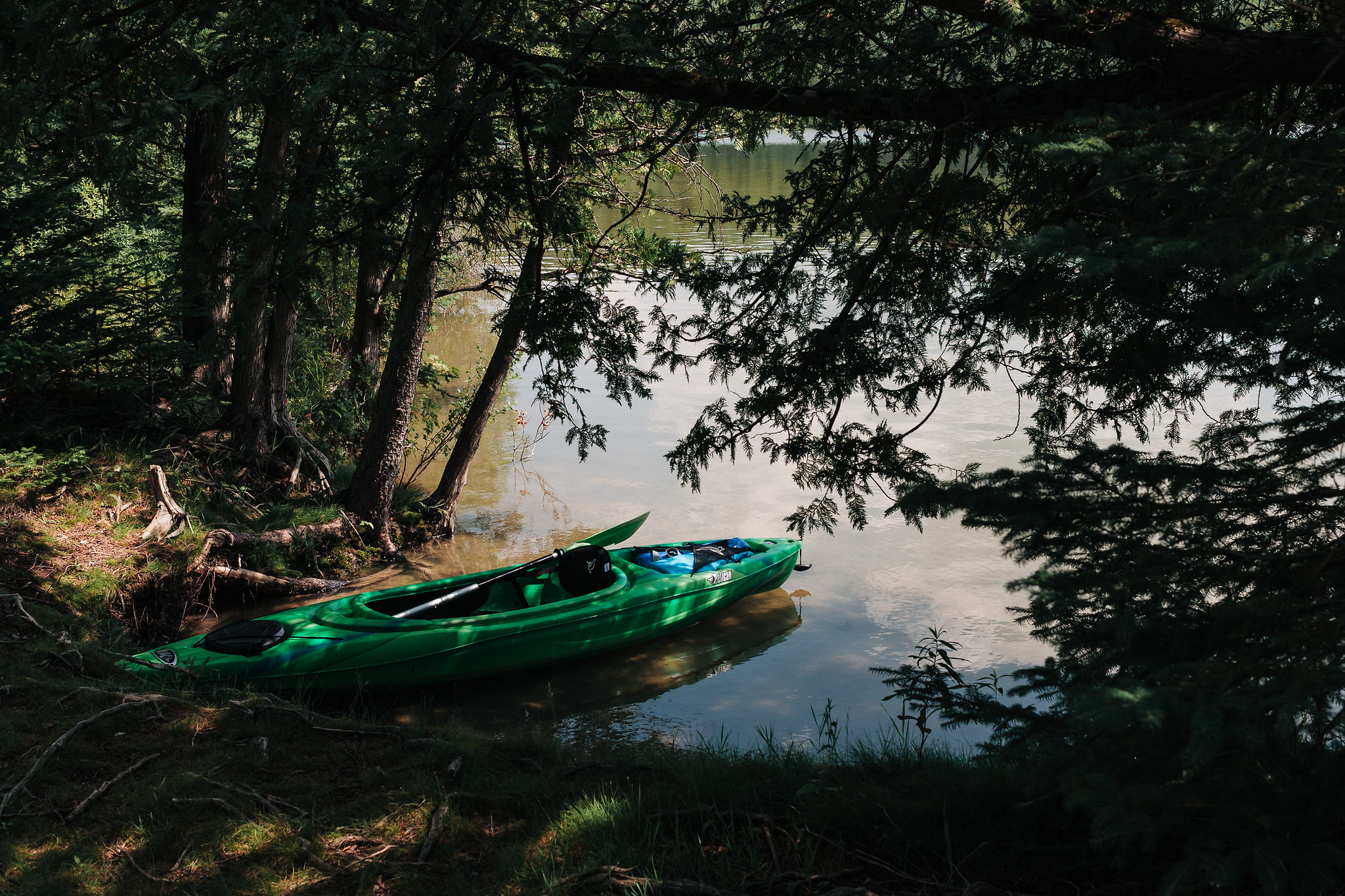
Matt and Jennifer were high school friends of mine, and we headed out to Mud Lake on what turned out to be one of those perfect July evenings – where the golden-hour light does all the work, and everything just clicks.

It was the first time I’d ever shown up to a shoot with an actual plan. Jen had come prepared with multiple outfits and ideas, and we worked through different setups and styles throughout the night.

And then the sun started to set and – voila – instant magic.

Looking back, I didn’t really know what I was doing in a technical sense. I was so new at photography. But I knew enough to recognize that I had two beautiful people in front of me on a beautiful summer night, and I just made the most of it.

Oh, to be young again.

When I look at those photos now, they take me back to what that evening felt like.

We had such a good time that they asked me to shoot their wedding a few months later. 

It was a magical summer night that really set the tone – my preferences, the magic of what light can do – for everything I’ve done ever since.


Chicago In Abstract

This year, I’ve laid out a challenge for myself:

Get weird.

My photography style revolves around documentary photos. I tend to capture things as they are: people, objects, scenes, abandoned buildings.

Sure, I’ll play with the light, shadows, and color grading. But the camera captures the scene, framed by me, and that’s it. I mostly pay attention to light, shadow, shapes, contrast, and color. 

What I have a hard time with is experimenting. Playing. Doing anything other than capturing scenes as I see them (with a few exceptions that I think turned out well).

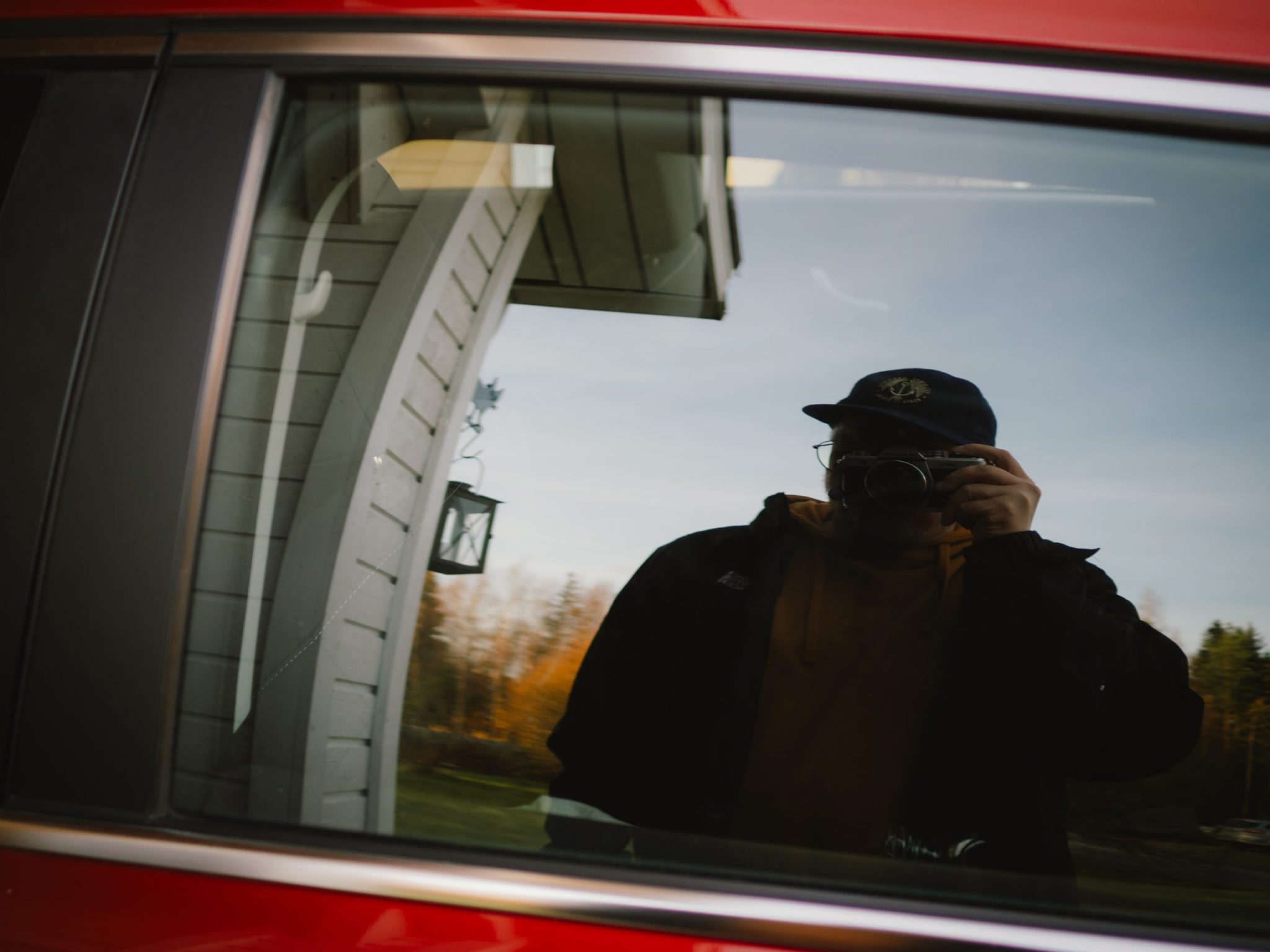
While we spent time in Chicago on spring break, I took the opportunity to use rainy days, windows, and reflections to play with the scenes around the city.

Even if nothing comes of it, it’s important to try something new and see where it goes.

Maybe nowhere. Maybe it’s a side quest.

“Why not?” is a great place to start. 


Spring Skies

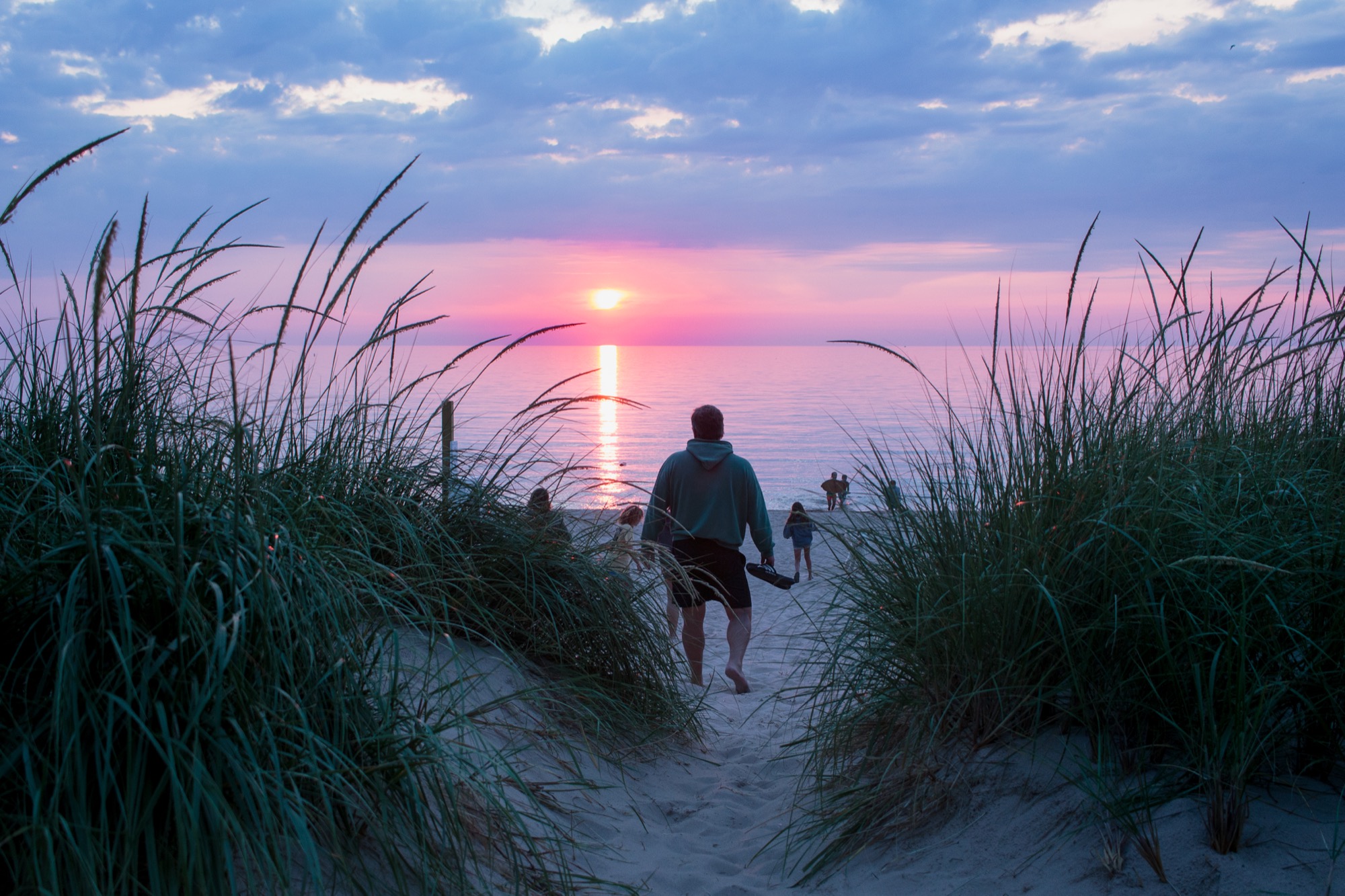
Beautiful sunset on an almost-spring evening. It was that kind of atmosphere that turns everything a different color. 

Even the kids had to take out their phones and capture the magic:

Captured on the Canon EOS M6 and EF-M Viltrox 23mm f/1.4.


Headlock on Hunger - Jackson, Michigan

Headlock on Hunger

Want to know a secret?

I’m a wrestling fan. Have been since I was a kid.

So when an old friend, who came out of a four-year retirement to wrestle, gave me a heads-up on some indy wrasslin’ for a good cause? Count me in. 

I took my daughter, who joins me for my annual Royal Rumble and Wrestlemania watches, to watch a series of surprisingly good matches. The Headlock On Hunger event even included a 20-man battle royale. 

This could easily become a longer-term project for me.

The sweaty gym setting. The vocal crowd. The hard hits and potential bumps – it was all there. And it was a blast to capture. 

Shot on the Canon 5D mark II and EF 100mm f/2.8, and EOS M6 with the Viltrox 23mm f/1.4.


Date Night

For Valentine’s Day, we were gifted a charcuterie-making class at Sandhill Crane Vineyards.

So: date night! We learned how to carve radishes, arrange cheeses, and cut pepper blossoms, all while enjoying live music and plenty of wine. 

To stay unobtrusive, I brought along my Canon EOS M6 and the Viltrox 23mm f/1.4 – a great combo for these kinds of low-light situations. 


Get Out

February was rough for me. Emotionally, work-wise – everything felt like it was crashing down.

My family noticed how irritable I was. I felt it, too: waking up every day tired, wanting to go to bed early every night.

I was in a funk. So I got out of the house.

It’s amazing what a little sunshine and fresh winter air will do for the spirit.

And not to oversimplify it, but getting in my car, driving around town, and making photos was exactly what I needed. 

I had my mental photo checklist handy – little spots around town that, given the right light, I wanted to visit and photograph. So I grabbed my trusty Canon 5D (classic!) and 40mm lens, along with a new pickup – the EF 200mm f/2.8 – and hit the town.

This evening was perfect, with the sun setting and the snow turning blue. I stopped at everything from mall parking lots to rooftop parking garages, and lots of places in between. 

“Make your own little adventure,” I kept telling myself. Grab the dog, throw the camera gear in the car, and hit the road. Just because.

It does a soul good.


Impromptu Portraits

We had the weekend in Chicago – just the two of us, two whole days to make some good trouble.

My wife, Jaime, is starting to put herself out there as a business owner. She’s a music therapist, so many of her professional portraits feature a guitar of some sort.

With her new enterprise, she wanted some professional images without an instrument. 

So we wandered around Chicago’s loop, walked inside some boutique hotel lobbies, and made some headshots before we got kicked out.

And it was fun. We felt like two teenagers who, at any moment, were going to get caught somewhere they shouldn’t have been.

There was one high-end luxury hotel in particular where I felt the lobby desk’s eyes were on us. But in each location, nothing happened. We got off scot-free. 

The photos? They were just what Jaime was looking for – wardobe changes and all.

If there’s a lesson here, it’s that you should use your photography superpowers to help people, especially people you know and love.

Take them up on their creative idea. You might have a great time doing it. 

All images shot on the Canon EOS M6 and a few EF-M lenses.


Chicago In Winter

It wasn’t our first time in Chicago during the winter.

This time, we were in town for the weekend to see Brandi Carlile and, the next day, wander into downtown Chicago for some new headshots for my wife (more on those later).

Wandering the streets around The Loop, I couldn’t help but grab some pictures. 

All images shot on the Canon EOS M6 and a few EF-M lenses.


What Makes Up a Life

You don’t need to be in a war zone for your images to have value. You don’t need to be documenting historical upheaval for your pictures to matter. The revolution happening in your living room, your kid learning to walk, your parent getting older, the slow accumulation of years on your own face, that’s history too. That’s the stuff that makes up a life.

Ali O’Keefe


Grandma’s House

Grandma Williams died on December 6.

Since then, we’ve been picking up the pieces – some figurative, some literal.

For instance, we adopted Grandma’s dog, Bruno. We had to take her cable box back and shut off her mobile phone.

We found Kodak Carousels with thousands of film slides in a closet, carefully labelled and organized by subject and year: Disney World, Kentucky horse shows, Alaska, and family dinners. Like my own film archiving project, this one will keep me busy, getting all those positive film slides scanned. 

Walking around the empty house, we remember what it was like at Christmas, full of family and noise. There are the awesome Star Wars curtains, the hundreds of puzzles, and the dinnerware that hasn’t changed in decades.

Nothing has really changed. And yet everything has. 

We used to sit by Grandma at church, up in the balcony, and go to lunch afterwards – usually Bob Evans or Olive Garden. 

She was a constant in our lives, our kids’ lives. Every birthday, Mother’s Day, or ice cream social.

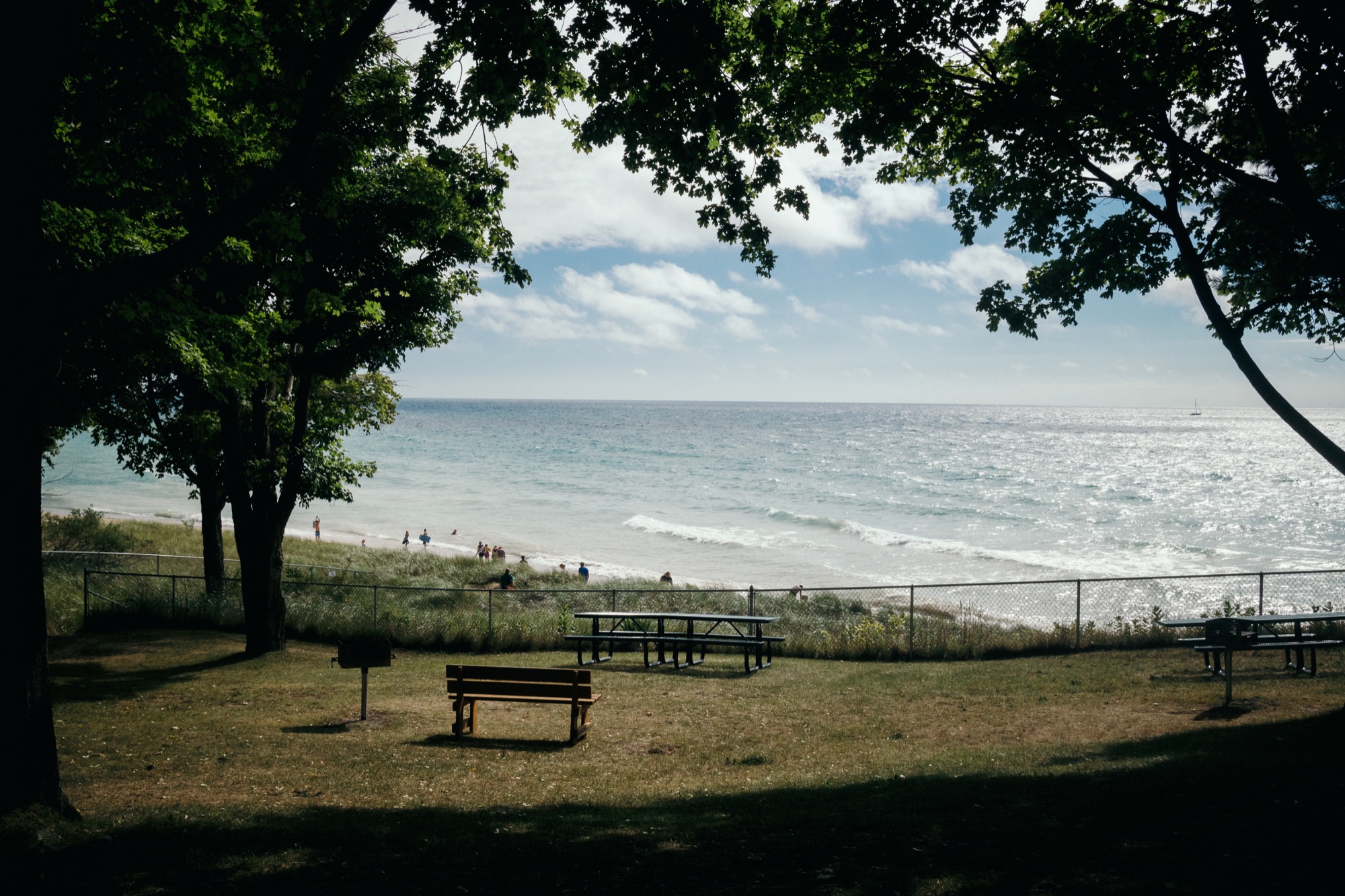
There were summer Sundays on Lake Michigan, at our usual spot in the South Haven state park. 

Now: an empty house, tax records going back to the 1960s, and all this stuff.

She was an incredible woman – strong and proud. After 90-plus years, there’s a lot of legacy and love to sort through now, too.

So here we are, at Grandma’s house.


How Photography Creates Emotional Connection

Emotion is the heart of candid photography. Real emotion cannot be forced. It appears naturally when people feel comfortable.

Candid photos often show subtle feelings. A relaxed posture, a thoughtful pause, or spontaneous laughter adds depth to the image. These small details help viewers feel connected.

Because the moments are real, the emotion feels familiar. The viewer recognizes themselves in the image. That connection makes candid photography memorable.


The Enduring Photo: Winter at South Haven, Michigan

Looking through my photo archives recently, I stumbled on photos from a memorable winter trip with my now-wife to South Haven, Michigan. The result of that trip was one of my favorite photos.

I know: we Michiganders are wacky. In college, I took a spring break trip north, to Toronto, instead of south, as most sane people do.

And here we were, a fairly young couple during a freezing cold February, taking a weekend holiday to the icy Lake Michigan shore. We spent a day walking around South Haven, talking to some locals, and wandering over to the lighthouse to catch an amazing winter sunset. 

It was there, on the walkway out to the lighthouse, that I caught this couple holding hands while they shuffled along the path:

It might be one of my most enduring pictures: it won first prize in my local county fair photo competition, it remains one of my most-viewed photos on Flickr, etc. This photo is one of my favorites, too (though it’s hard to go wrong in South Haven, especially in the summer). 

When we talk about photos and light as feelings, this is an example of an image that has endured.


Archiving Family Photos: My Process

For people of a certain age (elder Millennial here), we grew up on the edge of film photography and digital photography. We witnessed the transition unfold firsthand. Our childhoods were captured on film, while our 20s and 30s were mobile and digital.

It’s kind of like when our grandparents’ celebrities – Bob Hope, for example – were still alive when we were kids, but maybe a little past their prime. We knew of them, understood their importance, but weren’t emotional when they passed.

We saw it all come and go, and we had to make the transition from one phase to another. Print photos were still a big thing until about 20 years ago. And now, with film photography making a comeback, it’s like we (and the folks a little older and younger than us) are rediscovering physical photos. 

Take family photo albums. They’re like heirlooms. Chances are, people around my age were blessed with thick, ring-bound family albums. If we’re lucky, we still have them.

I had a treasured set of photo albums that I recovered after my mother passed away. But, my brain asks, what if something happens to those albums? What if they get wet? Or lost?

That’s why, a few years back, I made it a project to scan all my childhood photos for safekeeping. If something ever happened to the actual physical photos, I made sure to have a backup.

And now, I’m backing up that backup to Flickr – in a semi-private album. I pay for a Flickr Pro membership, which gives me unlimited uploads. If my backup drives were trashed, I have an off-site system to keep those photos safe. 


How do I create the scanned backup?

  1. I take all of my photos and scan them – putting several pictures on the scanning bed, to help with efficiency (see above)
  2. Next, I crop each individual photo out of the scan and save it, labelling it by the year and subject name
  3. With the photos scanned and saved, I keep all of these scans safe and sound via the two backups above: an external hard drive, and an off-site backup

There are lots of ways to do this. My method takes some time and patience, but I have control over the whole process, front to back. 

So while I still live in both worlds – print and digital – I found a process that uses both types of media to keep my family photos secure. 


Film February

Film, it seems, is all the rage again.

It’s the ultimate anti-AI photography platform: analog, messy, imperfect. As digital photography gets better and better, some of us want to slow down and embrace the physical.

My own film journey is…nothing noteworthy. I have a few film cameras, a bag full of various films in my freezer, and every once in a while, I’ll pick up my Canon AE-1 or Olympus Trip and snap a photo around the house, when the light is just right. 

I recently sent off a few roles to The Darkroom to get developed. When they came back, the photos were…all right. A little messy and imperfect. The funny thing was, it was like traveling back in time.

“When did I take that?” I ask myself. I even forget which film it was. 

This month, I’m diving into my film archive and sharing some select pictures on Instagram and Flickr

For me, film photography is the ultimate experiment. The top of the I-don’t-care mountain. Whatever comes, comes.

Enough time passes between developed rolls that the years don’t matter. The subject doesn’t matter. Nothing matters.

Just the image, the light, and the moment captured.


Allowing Our Intuition

Against Explaining

What if, from time to time, we allow our intuition to lead, both in creating and experiencing art, without immediately asking to justify itself? If we are not afraid to enter unknown, unexplainable spheres in creating and receiving it, and if we hold off trying to understand the process and technique just a little longer to just focus on its effect on us? Could we, perhaps, also come to an understanding of it? Could we still know a painting even if we don’t know its intention?

In a world where explanation, verification, and optimization are increasingly necessary, perhaps art can be the space where we can develop and learn to trust our own intuition.

Birgit Buchart

Advice worth remembering.

I don’t do new year resolutions, but something I’m trying to commit to in 2026: experimenting more. Trying new things out.

If 2024 and 2025 were a return to form, 2026 can be a zig zag. Not that I’m bored with my process or style, but I also want to stretch a bit. Get uncomfortable. Maybe try some more film photography. 

Trust my intuition more.


Artists In Jackson - Jessica Leeland

Artists In Jackson: Jessica Leeland

Art has always been central to Jessica Leeland’s life. 

“I’ve always done it,” she says. “My brother was an artist. My parents were artists.” 

Music, theater, and psychology – together with the visual arts – shaped her early creative world, giving her what she calls “the arts in the whole realm of my life.”

That foundation eventually led Jessica to discover art therapy in college, something she “had no idea” existed until professors recognized her ability to connect with others and encouraged her to explore it. 

Jessica soon realized that art could be used not just for expression, but to help people. 

“That was my favorite thing, finding out that you could actually help people by utilizing it,” she says.

Choosing Education at a Critical Moment

Jessica initially planned to pursue clinical art therapy, but a sudden opportunity changed everything. 

When a music teacher unexpectedly left a local elementary school, she was faced with a choice: continue the art therapy path, or help kids in a different, but related, way. 

“I thought, ‘If I don’t jump now, I’ll never do it,’” she recalls.

Rather than waiting years to complete art therapy’s clinical requirements, Jessica chose to step into teaching and advocate for arts education where she felt it was missing. 

“Kids need the tools now, in elementary,” she says. 

In education, Jessica could give students access to creative tools early, before those opportunities disappear. 

“You can still play sports and be an artist. You can still go be a doctor and be an artist. You just have to balance the schedule.”

Artists In Jackson - Jessica Leeland

Teaching as Creative Advocacy

In the classroom, Jessica merges artistic practice with therapeutic principles. She emphasizes pausing, reflecting, and making choices. 

“It’s okay to pause,” she tells students. “And then watching them and hearing them speak the words, ‘no means no. Those are my boundaries.’ Those are healthy. This is OK.”

Jessica remembers one moment that confirmed she was exactly where she needed to be. 

“A child told me they had never held a paintbrush before,” she says. “That was their first time painting. When that hit me, I knew I was meant to be here.”

Over time, she has seen the impact. Students repeat her language back to parents. Former 4H participants return and tell her, “You told me last year to do this.” For Leeland, those moments are everything. 

“That’s game over for me,” she says. “That’s it.”

Her Own Studio Practice

Despite the demands of teaching and family life – she’s married with two kids – Jessica remains committed to her own art. 

“If I don’t create for myself in a certain amount of time, I become bitter,” she says. “It’s me flushing my brain out.

Her Art 634 studio is essential – a place where her brain knows it is time to create.

Jessica’s work spans life drawing, paint pouring, acrylic paintingArtists In Jackson - Jessica Leeland, and ongoing experimentation. 

“I’m very much a try it out, test it kind of person,” she explains. 

Much of her work is human-centered, shaped by anatomy, psychology, and emotional experience. 

“It just needs to come out of me,” she says.

While her art began as something “for nobody but myself,” sharing it has become part of the process. Teaching, creating, and continuing to evolve are inseparable for Leeland. 

“This is exactly what I was looking for,” she says.

Follow Jessica's studio on Facebook

Lisbon, Portugal

Sunny Day for Street Photography in Lisbon, Portugal

Do you ever find yourself in a photography situation where everything clicks?

The light is just right, the weather is perfect, and all the conditions snap into place for a great day of photo making?

That was me in Lisbon, Portugal, on our trip.

After we landed from our tuk tuk tour of the city, we wandered the streets of the Baixa de Lisboa neighborhood

Think of Baixa as a easily-navigable shopping district. The busy neighborhood follows a clean grid layout, making it feel open, orderly, and walkable.

There were a few hills, but none of the steep ones we had just toured around in the Alfama district.

And in the middle of the day, the bright sun lit up the place, casting perfect shadows on the buildings and pedestrians as we walked around.

All of this – the buildings, the sunlight, and people wandering around – made for perfect street photography conditions. It fit my style, and I took full advantage.

After taking some of these photos, I caught my breath. I was in picture heaven. 

Lisbon, Portugal

This lady, watching me take photos on the busy walkway, came up to me and started singing. Lovely!

We made our way down to the Rua Augusta to the Arco da Rua Augusta, in view of the Tagus River, then back up to the Hotel do Chiado, where we grabbed lunch at their rooftop bar. 

It was here that I grabbed what might be my favorite photo series from the whole trip.

Across from our table was this very animated Frenchman talking business with a local. The way the shadows and light fell across him made for a beautiful scene – so much so that I couldn’t stop making photos. Luckily, he didn’t seem to notice.

That night, we finished up our trip with a sailboat ride on the Tagus River. 

Shot on the Canon EOS M6 and (mostly) the EF-M 32mm f/1.4.