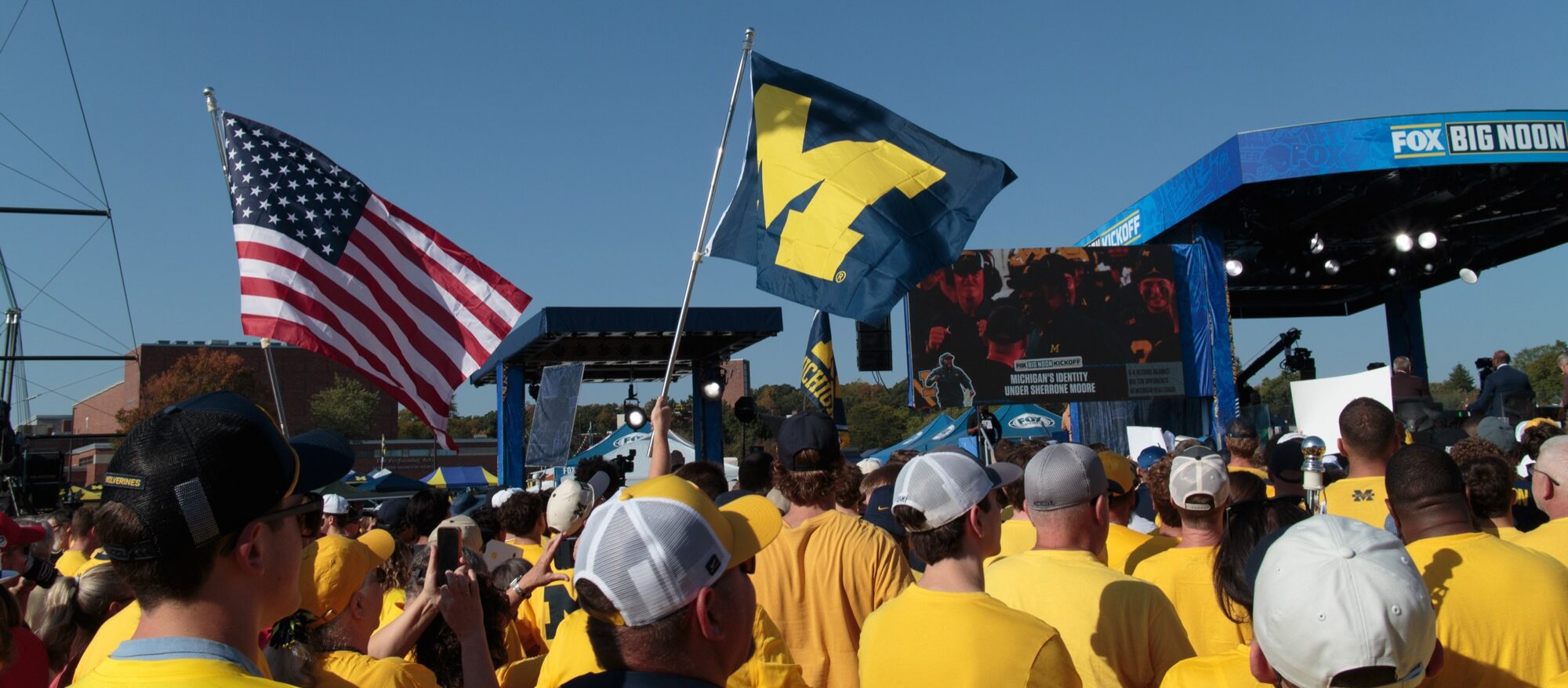
Back to the University of Michigan’s Big House, the largest stadium in America, this time to watch the Wolverines take on the University of Wisconsin.
My friend, Don, and I started out at Fox Sports’ Big Noon Saturday TV taping, live from the high school across the street from Michigan Stadium.
If you treat these big game settings as street photography, you can capture the fun and excitement of all the fans. I brought my Canon EOS M2 as my light and portable gear, easily bringing it everywhere I went. I even put it in my back pocket and breezed past the security checkpoint.
The weather was warming up – and quickly – as we headed into the stadium. By halftime, the temperature climbed to the unseasonable 80-85 degrees F.
We had to take a break and drink some water in the shade. We weren’t the only ones.
This didn’t feel like fall football in October. This felt like summertime.
By the start of the fourth quarter, the game was well in hand for Michigan. I grabbed a few final photos on my way out of the stadium, taking advantage of the bright sunlight and all those maize-colored shirts and jerseys.
Let’s go, Blue!
Photos shot on the Canon EOS M2 and EF-M 22mm f/2.
This New York Times profile on photographer Sally Mann – one of my family photography heroes – is one of those periodic reminders of the importance of making photos at home.
Sally became well-known (and, sadly, controversial) because of her intimate family portraits. She has since moved on to landscapes and other forms of photography, especially as her children became adults.
I feel that transition happening in my own life, too. For the past 10 years, since my daughter Madelyn was born, family photography has been my main creative outlet: photos around the house, family vacations, and capturing moments as my kids get older.
In the past year, however, I have had more time for creative projects outside of my family and home. I rebooted my Artists In Jackson project, I’m taking more time to take little adventures around my community, and I’m revisiting projects that I worked on long ago.
It feels good! And I have a metric that shows my return to other kinds of photography – my Lightroom photo count:
Over the years, my photo count has decreased. Now, for the first time in a long time, I’m taking more photos than I have in years past – by a lot. That feels good, too.
But despite doing more photography, I haven’t lost sight of the importance of my own household. The kids are more mobile and active these days, but I still try to steal a shot when I can.
Family photography is still the most important kind of photography. It’s just that now, I have found my way back to other projects.
There’s a lot of talk in the photography world about “everyday carry” cameras, or fixed-lens compact cameras (like the Fujifilm X100 series).
You need a portable camera, the thinking goes, to carry with you everywhere you go so you don’t miss out on those moments in between.
When I first purchased the original Canon EOS M, its “everyday carry” potential hit me immediately. “Here’s the camera I can throw in my front seat and take everywhere,” I remember thinking. That philosophy played out for 12 years, and I’ve enjoyed having the Canon M system in my life.
There are issues with the OG M, however: It’s slow to focus, and the screen blackout after taking a shot is obnoxious. Over the years, I’ve learned to live with these shortcomings. But ever since the dawn of Canon’s M system, these issues have plagued the camera line – and understandably so.
We never got the M’s successor, the Canon EOS M2, here in North America. I did hear about it, though, and longed for its faster autofocus and overall improvements in snappiness.
When my M finally gave up the ghost, I decided to upgrade my everyday carry and snatch an M2 from Japan.
Again, I loved my Canon EOS M, despite its flaws. It was the perfect example of “good enough,” and I appreciated the EF-M 22mm f/2 lens, which remained on the front of the camera at all times. In effect, it served as a fixed-lens compact camera for me. The 35mm field of view helped the M serve as my X100 with the benefit of Canon’s comfortable colors and usable interface.
Since using the M2, I remembered how slow the M was, because this little camera is much better at autofocus and has a dramatically reduced screen blackout after pressing the shutter. In fact, it was startling to go back to an M and be reminded of how pokey it is.
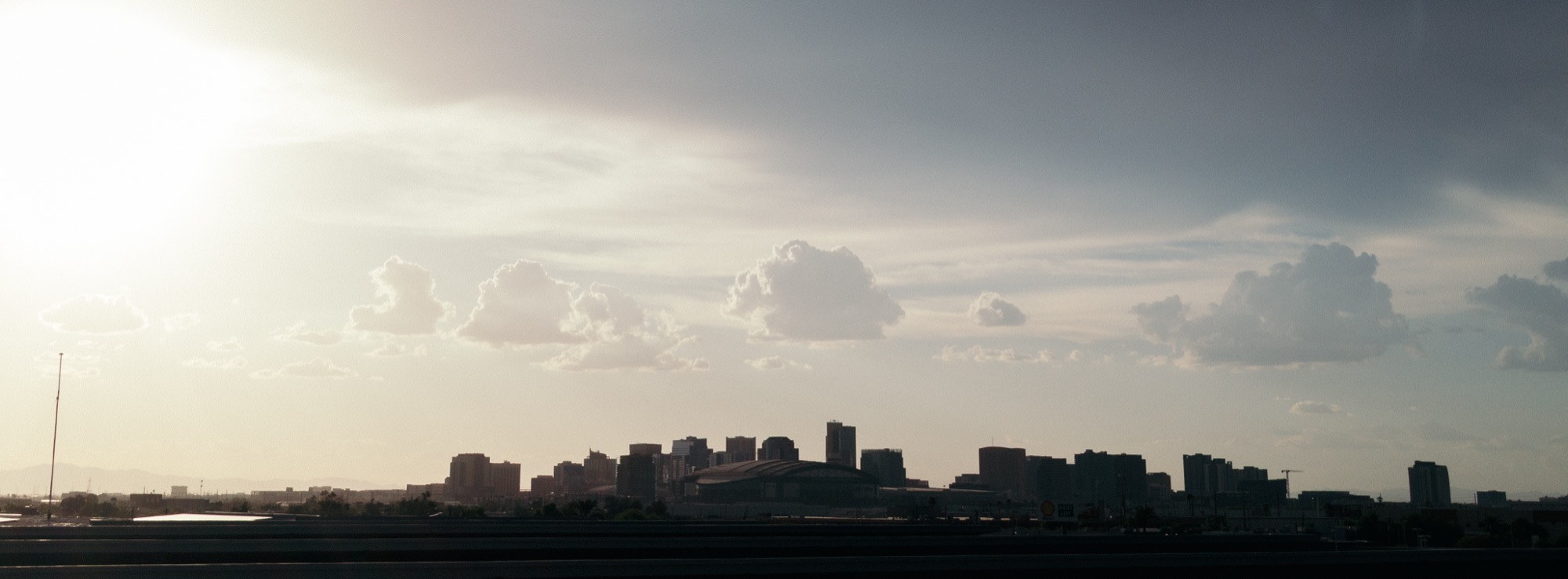
Now, the M2 is not going to win any speed awards. The whole M system is notoriously slow. However, taking this M2 out to Phoenix, Arizona, for a work trip (above and below), the speed benefits were immediately apparent.
The features I loved about the original M were all still here in the M2: fantastic image quality, body toughness, ease of use, and – this might be a just-for-me thing – the use of the delete button on the scroll wheel to reset the touch screen focus point (something I miss dearly on the newer M cameras).
To put it more pointedly: the M2 is a comfortable, familiar piece of kit. Just a bit better.
It’s also just a tad smaller and has added wifi functionality that will help if you use Canon’s mobile app. It has the same touchscreen as the M, which can be difficult for some folks to use in bright conditions. However, after using the M for years, I’ve made peace with the lack of an electronic viewfinder or flexible screen. Even in the hot Arizona sun, I can still make this fixed touchscreen work.
Another cosmetic thing I love about the M2 is its color and style. I grabbed the blue and brown version, which fits in perfectly with my photography aesthetic. The best description of my gear is, What if Indiana Jones had a camera, strap, and bag? That’s the style I’m after. So this little M2 fits in perfectly with the rest of my kit.
The only thing that doesn’t fit, cosmetically, is the black and silver EF-M lens color scheme. Just as you shouldn’t wear a black belt with brown shoes, the black EF-M lenses clash somewhat with this blue and brown camera body. Silver doesn’t look great either.
Yes, the M2 is 12 years old. No, the video specs aren’t the best. Nor is it a speed demon.
But if you’re dedicated to the M system and EF-M lenses, and you enjoyed the original Canon EOS M, the M2 is a worthy successor.
All images, except for the camera portraits, were shot on the Canon EOS M2 and EF-M 22mm lens.
It’s not every day a couple of hot air balloons float above the neighborhood.
But when you’re block sits here on Lawrence and Highland Boulevard, on the south side of Jackson, Michigan, you’re not far from our local Hot Air Jubilee launch point.
So: balloons. Floating through a neighborhood.
On this neighborhood walk, I was approached by a guy who was watching me from his porch. He saw me taking a photo of a shadow and asked me why I was taking a picture of a license plate.
I tried to reassure him I was only taking photos of light and color around the street, but I think he was still suspicious.
“Didn’t you see those balloons?” I thought. They’re the real intruders worth worrying about.
Back when I was single with no kids, taking off on a Saturday drive to take photos was easy: I just got up and did it.
Now, with a family and more responsibilities, spending time out taking photos has been harder to do. Many of my weeknight activities involve taking kids to their lessons or school functions. There are doctor appointments and musical practice. Someone has to do the dishes and mow the lawn. And my wife and I have a relationship to nurture.
So what to do? How can a busy person support a photography hobby with such a constrained schedule?
My advice: take opportunities when you can, and don’t feel bad about it.
The concept of microadventures has gained popularity in recent years, where you take a weekend, or a day, and head out into the world to do…something — anything out of the ordinary.
For photography, it could be as simple as:
Waking up early and hitting the road to photograph a landscape or subject before the rest of your household even knows you’re gone. I do this on Saturdays when I know the weather and the light are optimal. Often, I’m back before everyone’s even had breakfast.
Taking advantage of work trips. I do this a lot with conferences, where you can head to a city across the country and wander into town to make pictures. Bring a camera with you on your next work trip and you can create something in the quiet moments.
Grab an hour when and where you can and check something off your to-photograph list. If we have nothing planned for the week, I’ll take a break after dinner and photograph a subject I’ve noticed during my travels around town. I’ll even stop somewhere on the way to pick up the kids (from the grandparents, from school, etc.) and capture something I’ve noticed.
This could be true of any creative project. The point is: make your own adventures whenever you can.
And for big projects? I communicate those with my family and ask for time to complete them. That may mean a few hours here and there during the week, but as long as you’re upfront about expectations and schedules, it shouldn’t be difficult.
The Irish Hills in south central Michigan continue to be an ongoing project – one of the places I return to, time and time again, to capture an area that I love.
Except it’s been nine years since I was out this way. Much has changed.
I brought along the Canon 5D Mark II and both the EF 40mm and 50mm lenses, and started with the little lakes that run along US-12.
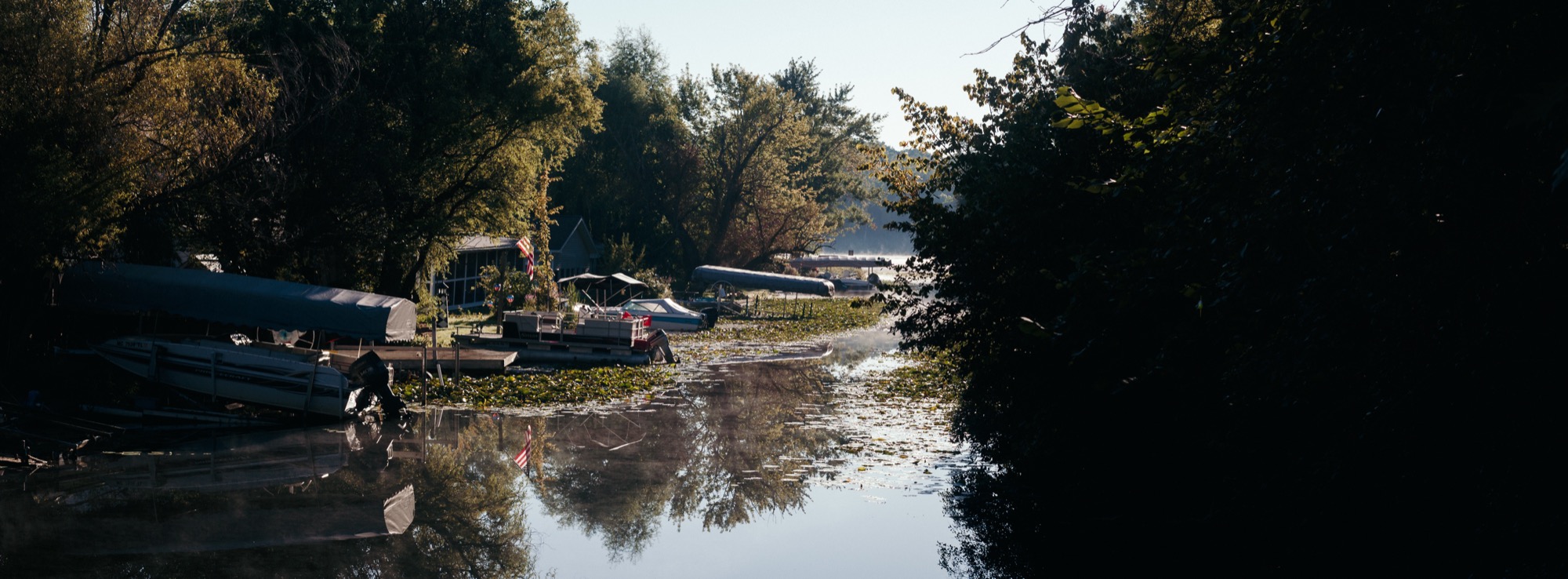
As luck would have it, the fog rolled in on this cool September morning and made for some good imagery down these long country dirt roads.
Further East on US-12, I stopped to revisit the amusement parks and classic Irish Hills roadside stops that I’ve spent years photographing.
Sadly, many of my old haunts were either torn down or converted into unrelated businesses (Prehistoric Forest, for instance, is now a golf cart rental shop). A lot can change over nine years.
To me, seeing all these classic Irish Hills stops being torn down or transformed means it’s more important than ever to photograph them before they’re gone.
Just a little further down US-12, I stopped by a few more lakes – Sand Lake and Evans Lake – because they still had a little bit of fog, and the light was just right.
The bright reds, especially, stuck out from the background of blue and green on these lakes.
Before the light disappeared, I headed back to my hometown of Brooklyn, Michigan, and stopped at a marina for some more boat shots before the fog burned off completely.
I grew up in this area. It’s always nice to revisit these familiar scenes when the morning light is just right. Photographing a place you love shows a special kind of respect.
Part of these morning trips involves simply driving around, exploring, and seeing what scenes catch my eye. Dead ends are never a bad thing – it’s all about the adventure.
So when leaving Brooklyn, I stopped at a few final places to look at them with a photographic eye.
It’s home, reimagined.
Shot on the Canon 5D Mark II with the EF 50mm f/1.4 and 40mm f/2.8.
Over the years, I’ve built up quite the Canon EF-M lens collection.
I have the tried-and-true Canon EF-M 22mm f/2 – a reliable, sharp, portable pancake lens that shines in every situation. The EF-M 32mm f/1.4 is the 50 mm equivalent, more for portraits and street photography. And then the EF-M kit zoom and 28mm macro rounds out the selection.
Viltrox, before Canon discontinued the EF-M line, produced three fast prime lenses, too, and I have two of them now: the 23mm f/1.4 and 56mm f/1.4.
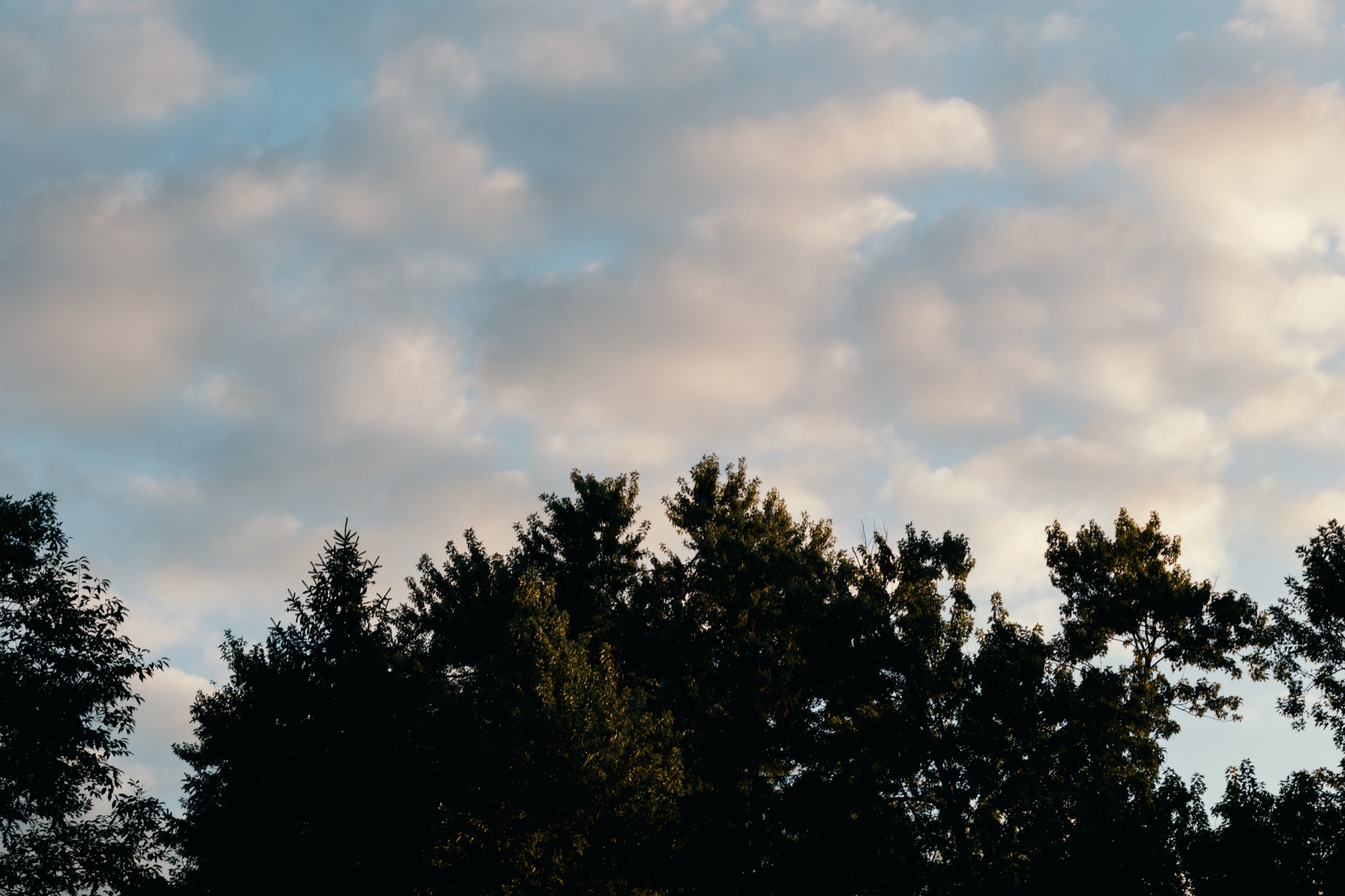
I took the 56mm for a test drive around the block as golden hour was lighting up the neighborhood.
The Viltrox 56mm is a chunky lens, featuring a tough metal construction, a nice lens hood for protection, and a substantial amount of glass to achieve a wide aperture.
It feels like a quality lens. It performs like one, too: a bit of chromatic aberration wide open, but stop it down a bit and the image quality is excellent.
There’s one little hiccup, though, and that’s that the lens tends to render images darker than they should be. When you preview the image on the back screen, it looks great, but as soon as you snap the photo, the final image feels a stop or two underexposed.
I can adjust my Canon EOS M6 to overexpose a hair or two to get a properly exposed image, so it’s not a big deal, but know the preview image may be misleading.
Viltrox’s 56mm equals about a 90mm field of view on the M’s APS-C sensor, giving you some reach that’s nice for portraits.
For a little north of $200, the Viltrox 56mm is an affordable lens to round out your Canon EF-M set.
Usually, the amateur is defined as an immature state of the artist: someone who cannot — or will not — achieve the mastery of a profession. But in the field of photographic practice, it is the amateur, on the contrary, who is the assumption of the professional: for it is he who stands closer to the noeme [thoughtfulness] of Photography.
It’s a helluva thing to leave beautiful Pentwater, Michigan – a quiet village along a sandy Great Lakes beach – and land in Brooklyn, New York, all in one day.
But here I was, landing at JFK airport on a Sunday evening.
I travelled to Brooklyn on business after a frazzled trip involving too much time in the car and too long a walk after parking.
The remedy was to drop my bags in the hotel room, clean up, and hit the nighttime borough streets with my Canon EOS M2.
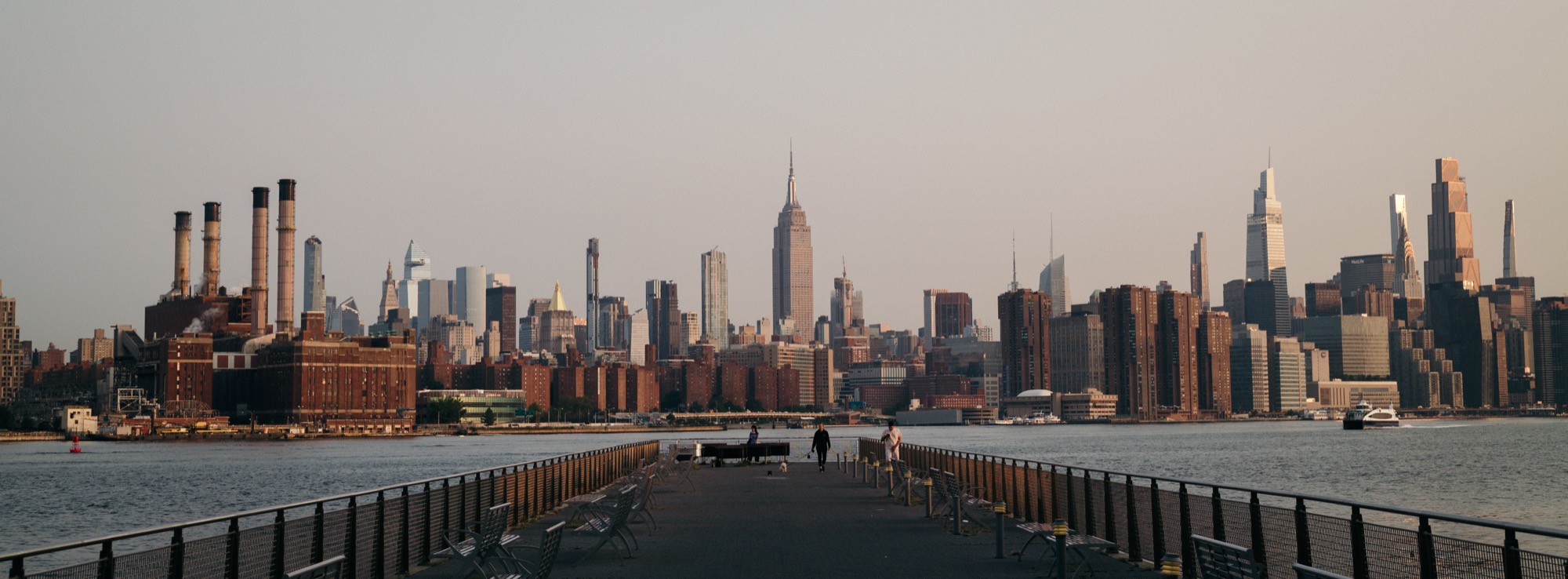
This was my first time in Brooklyn. I visited Manhattan years ago for a quick visit on my big New England trip in 2008. Now I had two days across the river to walk and explore.
After landing, I got up early the next morning and hit the East River for sunrise in New York. It was a beautiful morning, with sunshine and lots of joggers out.
For work, I stopped by Peter Pan Donuts for a work video shoot and grabbed some photos of this classic (and famous) bakery.
The team, and the donuts, were amazing. The kitchen was a bit crowded, but we managed to make it work for the video project.
From there, and fueled by a jelly-filled donut, I took the morning and walked around Brooklyn, walking the Brooklyn Bridge halfway to Manhattan and over the East River.
I brought along the Canon EOS M2, the successor to my beloved M. It keeps the form factor and toughness of the original M, and speeds up the autofocus and shutter blackout. The M2 and a few lenses were all I needed for walking around Brooklyn.
The city was hot and busy – a little too busy for my taste, especially having just left peaceful northern Michigan. By mid-afternoon, I was ready to hit the road to New Jersey for my next work assignment.
Our Methodist church hosts a summer family camp in Pentwater, Michigan, each August. My wife was a regular attendee growing up, but we – as a family – had never gone except for a brief visit a few years back.
This year, we decided to join our church and make it part of our summer getaway schedule.
Pentwater, Michigan, is one of those classic west coast Lake Michigan towns: small and exceedingly beautiful, catering to weekenders from Chicago, Grand Rapids, and Detroit.
That’s the village part. The Lake Michigan sand dune forest part? That’s what we came to experience.
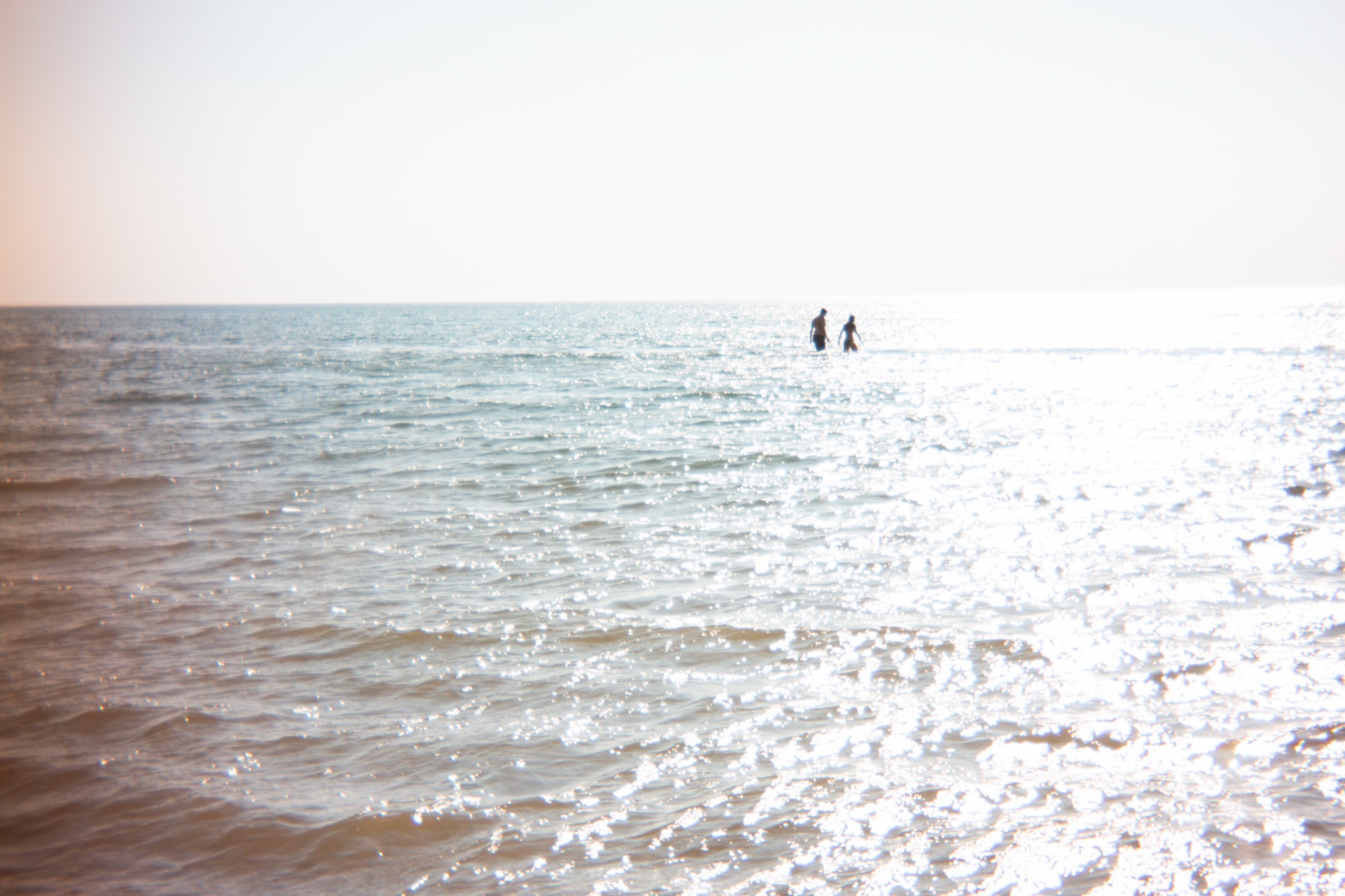
On one side of the sand dunes, you have pristine Lake Michigan sand and water – complete with a wildfire haze sunset.
On the other side, it’s dirt and bugs and camp sites. No technology, very little cell service, and the perfect setting for our kids to explore, make friends, and get messy.
The sad part was that I had to leave my family after the first few days for a business trip to Brooklyn, New York. For both trips, I brought along my new Canon EOS M2 to test out.
The challenge in Pentwater: keep the sand out.
All images shot on the Canon EOS M2 and 22mm lens.
I picked a $40 camera toy just in time to test it at Lake Michigan in Pentwater, Michigan: the Retropia disposable camera lens fitted to the Canon EOS M system.
First, it was exciting to still find an EF-M mount lens on sale. It’s nice to see a toy lens company supporting my beloved (dead) camera system.
Second, these retro disposable lenses are constantly on sale – just do a search on Instagram and you’ll face a never-ending barrage of lens ads.
I figured, $40? Shit, why not?
I read a lot of reviews with people saying, “Why would you pay so much for something so plastic / something you could 3D print yourself?” The answer is convenience: someone already made it, and it’s super affordable compared to most lenses.
Affordable, and kind of fun. It’s small, light, and has that fun cookie shape to it. It makes a good lens cap option, too.
Riley and I hiked into the Lake Michigan dunes to see how it performed in bright summer light.
The Retropia lens definitely has that low-fi vibe: purple fringing, a little soft, and when you point it at the sun, the real fun begins:
Lots of fun sun stars and ghosting.
Is the Retropia everything the ads promise? Maybe. Most of all, it’s a small, affordable option to create some “vibes” in your photos.
Our summer vacation to Nova Scotia and Maine was an endurance test for both driving (almost 70 hours worth) and photography (two weeks worth of photos to organize and edit).
There’s probably such a thing as “too much travel,” and we were right up against that limit. But we also had an amazing time and got to experience a beautiful portion of North America.
A few final thoughts on our 2025 adventure:
The kids, thankfully, can now fully entertain themselves in the car. They’re old enough now to manage their activities, keep themselves busy, and not ask us parents for too much attention.
The driving was worth it. Yes, there was a lot. But I loved seeing Canada and the U.S. this way. I’ll never forget driving through New Brunswick and rounding a corner to see a beautiful lake at the bottom of a valley, or following the St. Lawrence River through Quebec and seeing where it empties into the Atlantic Ocean.
My photography kit was perfect. Having the super-compact and capable Canon EOS M6, along with a few lenses, was all I needed. I’ve created a video review of the camera – check it out on YouTube, featuring some of the photos from this trip.
Now I’m off to work on our annual summer vacation photo book.
Just a few years ago, Jen Dixon couldn’t brush their teeth, let alone imagine being surrounded by community and creativity.
“I was agoraphobic for five years,” they explain. “Didn’t meet people. I was training for COVID before COVID.”
The isolation was deepened by chronic illness, pain, and years of battling to be seen—not just as a person living with disabilities, but also as a nonbinary creative with a past shaped by trauma and tenacity.
Today, Jen stands surrounded by microscopes, T-shirts, illuminated signs, handmade cellular art, and a growing circle of collaborators who genuinely believe in them.
“Right now, I think the real art is learning to trust myself again,” they say.
A Scientific Soul in a Maker’s World
Jen’s path hasn’t followed any straight lines. They first studied computer programming while working full-time and caring for a terminally ill fiancé.
But after a near-death experience caused by a massive blood clot following a roller derby injury, they re-evaluated everything.
“I remember crawling across the floor thinking, ‘This is your last moment. Experience it,’” Jen recalls. “And after surviving that, cubicles just weren’t going to cut it.”
What followed was a dive into botany, volunteering at Iowa State’s herbarium, and eventually entering a PhD program.
Their love of science came with an endless hunger to understand.
“One of my professors said I was an artist with the soul of a scientist,” they say. “That felt true.”
Jen’s artistic practice came to life while teaching plant systematics in Iowa.
When a visually impaired student entered their classroom, Jen faced a challenge: how to share the microscopic beauty of cellular structures with someone who couldn’t see them?
That night, they created a clay version of a microscope slide and transformed invisible wonders into tactile art. If the student couldn’t see the cell, then they would be able to feel it.
“I don’t know how well it worked for her,” they say, “but for me, it unlocked something. It made me think: what if everyone could feel this beauty?”
Creating with Curiosity, Sharing with Empathy
From there, Jen’s art grew out of curiosity and constraint. While bedridden, they began sketching detailed cellular forms in Procreate, finding comfort in radial symmetry and microscopic inspiration.
Eventually, they started laser-engraving these intricate images into wood and velvet.
“I just wanted to see if it would work,” they say. “It was all experimentation.”
Jen’s art now includes protest T-shirts, building signage, velvet-burned botanical forms, and tactile pieces made of wood and reused materials.
“It all came from wanting people to experience wonder—even if they can’t see it the traditional way,” Jen explains. “There’s got to be a way to share that.”
Today, Jen’s studio is a living lab—a DIY playground of soldered lights, etched acrylic, scavenged pipe supports, and refurbished microscopes.
“Everything is a version one,” they laugh. “The next version will be better, but I have to start somewhere.”
Building a Community That Builds You Back
Jen is now helping to build a community at The Sparks (formerly the Commercial Exchange), where collaboration drives creativity and progress.
From teaching others how to build and reusing materials to organizing artist showcases, they’ve found their voice again.
“I used to think I didn’t have any value unless I met society’s expectations,” they say. “Now I just try stuff. And it’s working. All these different paths in my life, they have all culminated into skills and work that’s relevant and useful.”
Even through lingering self-doubt and social anxiety, Jen persists – out into the sun and into an artistic team.
“I’m deciding how I engage with the world now,” they said. “I see the potential for the future, even if it’s scary. I catch the future out of the corner of my eye. And I’m scared to look right at it because it may disappear.”
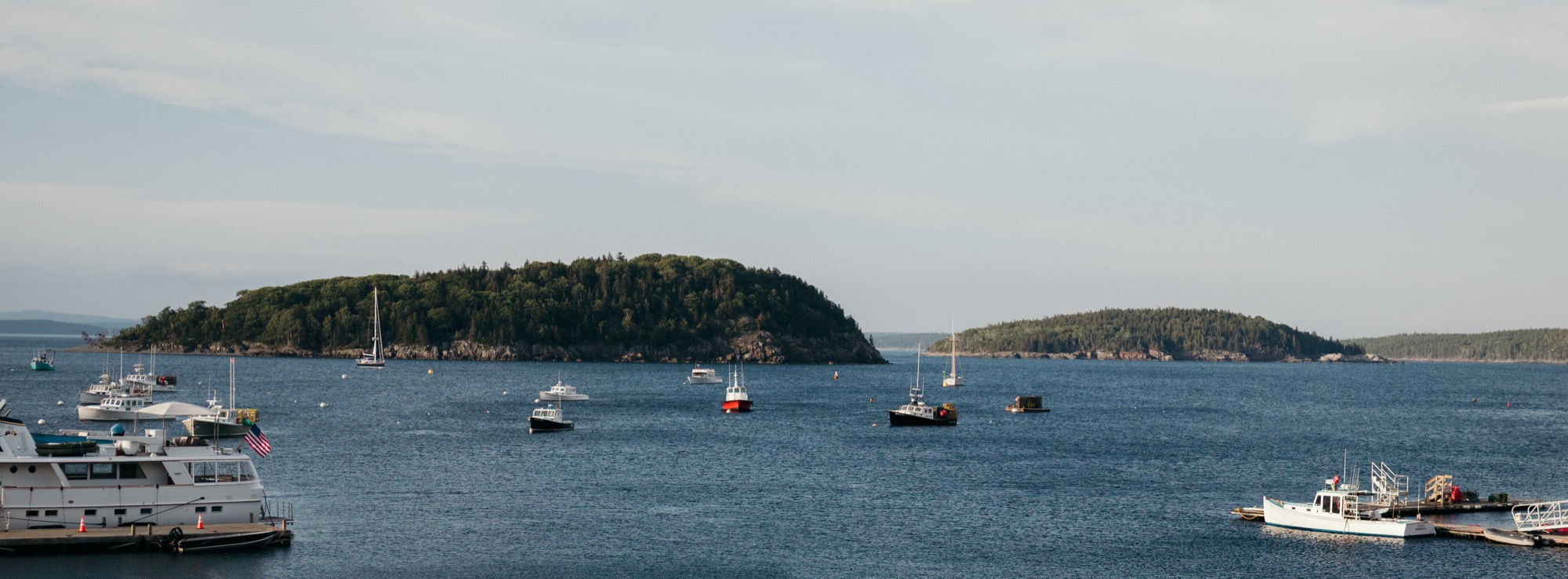
We had two opportunities to visit Bar Habor, Maine: one after we completed our Acadia National Park adventure, and the other was via a lobster boat ride.
Our first visit, after the park, was during a beautiful evening where the town was hopping with people and activities. It’s summer, so of course us tourists were out.
The shops and restaurants were packed, and the sunset light was perfect for capturing some street photography. I saw tons of colors and characters, the perfect recipe to grab pictures around the town.
When we came back, we hopped on a lobster boat for a tour of Frenchman Bay.
It was a great tour. We learned about lobsters, about the fishing industry, and even took a loop around a lighthouse, where seals were squatting on the rocks.
For the first time, we all got to hold a lobster. After grabbing them out of the lobster nets, the kids had a chance to throw the lobsters back into the bay.
Now I know, first hand, where those delicious lobster rolls come from.
Shot on the Canon EOS M6 and a select few EF-M lenses.
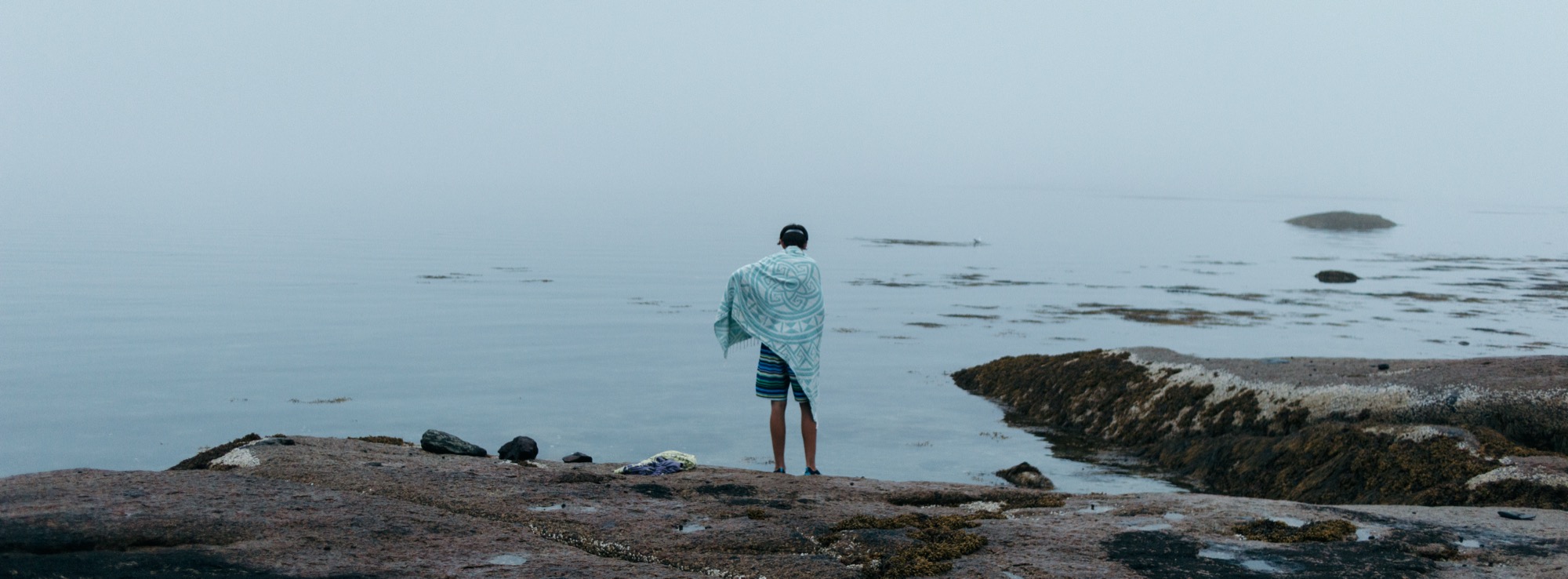
Much like we saw at Peggy’s Cove, sometimes the fog would roll in off the Atlantic Ocean and flood our little corner of Maine in a dense haze.
After the first time the fog rolled in, I made a point to check each morning to see if it was foggy out. I had this spot in mind up the peninsula, where boats were gathered by the shore, and I thought, “This would be an amazing foggy spot for pictures.”
One misty morning, the fog made an appearance, and I seized my chance to head up the coast and grab pictures at that boat landing. But then something funny happened: the further North I drove, the less foggy it was. When I landed at that spot, there was no fog at all.
Bummer.
Luckily, it was foggy enough during our week there that getting out and taking photos was not a problem.
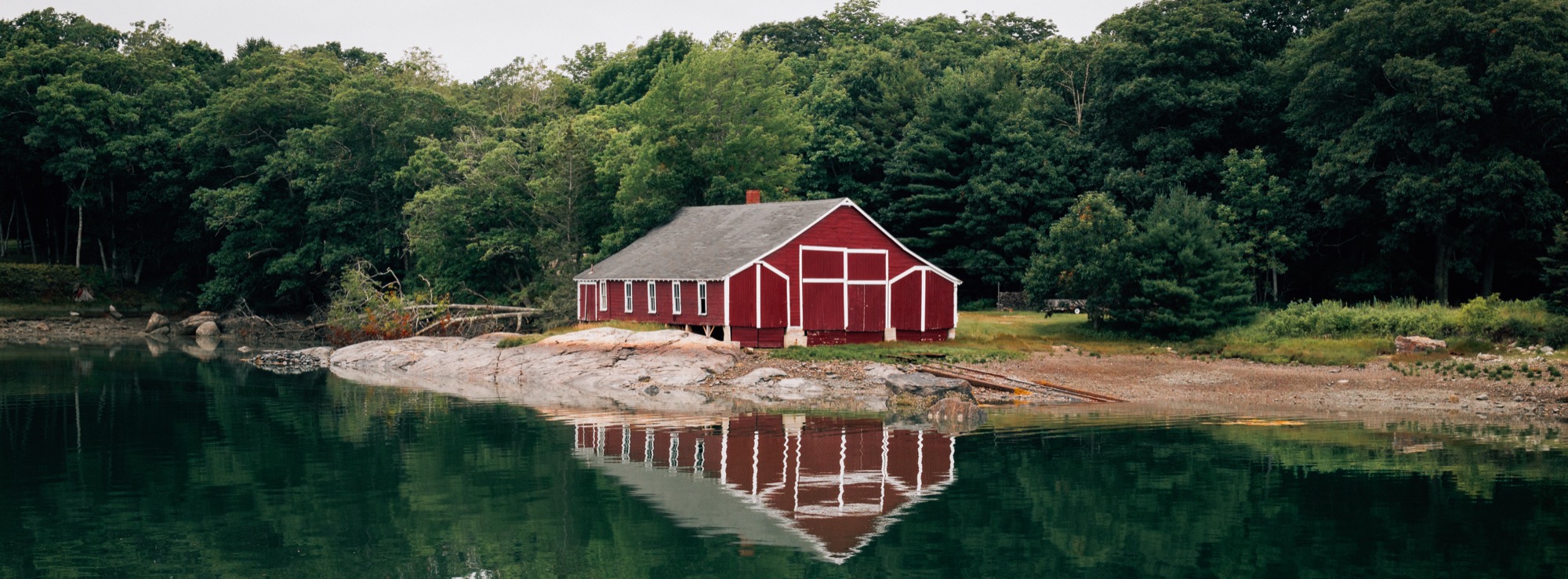
It was so fun to wander around Flye Point and see the entire landscape reimagined.
Shot on the Canon EOS M6 and EF-M 22mm f/2 and 32mm f/1.4.
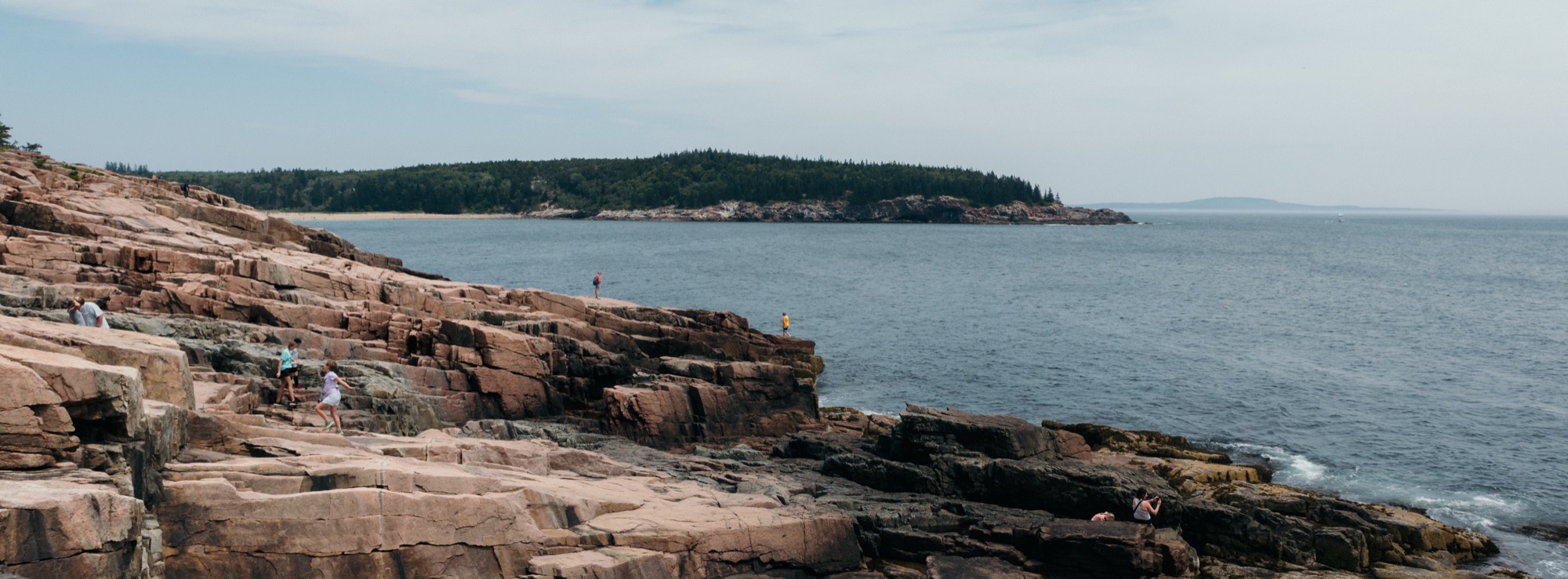
Acadia is not the biggest national park, but for sheer variety, it has a lot to offer: great hiking, mountains, oceanfront scenery, with ponds and rivers galore.
The park helped me appreciate the benefits of Canon’s lighter mirrorless kit. When you’re hiking up and down mountains, the portability of the EOS M series was definitely a benefit. And the image quality never suffers.
It’s a shame Canon discontinued the M series. With the R series, cameras got bigger, lenses got bigger, and apart from a few of the APS-C and point-and-shoot bodies, there’s nothing like the M series in the lineup anymore. Trips like this highlight the need for a smaller kit.
We worked our way around the park and by mid-day, we finished up and headed into Bar Harbor, Maine, for dinner.
After leaving Canada by way of New Brunswich and the border, we landed in Brooklin, Maine, our home for the next week.
We arrived at nightfall, so we had no glimpse of the peninsula where we sat.
Not until I got up early the first day and went to the beach.
This was the Maine I remember. And for that first morning, I had it all to myself.
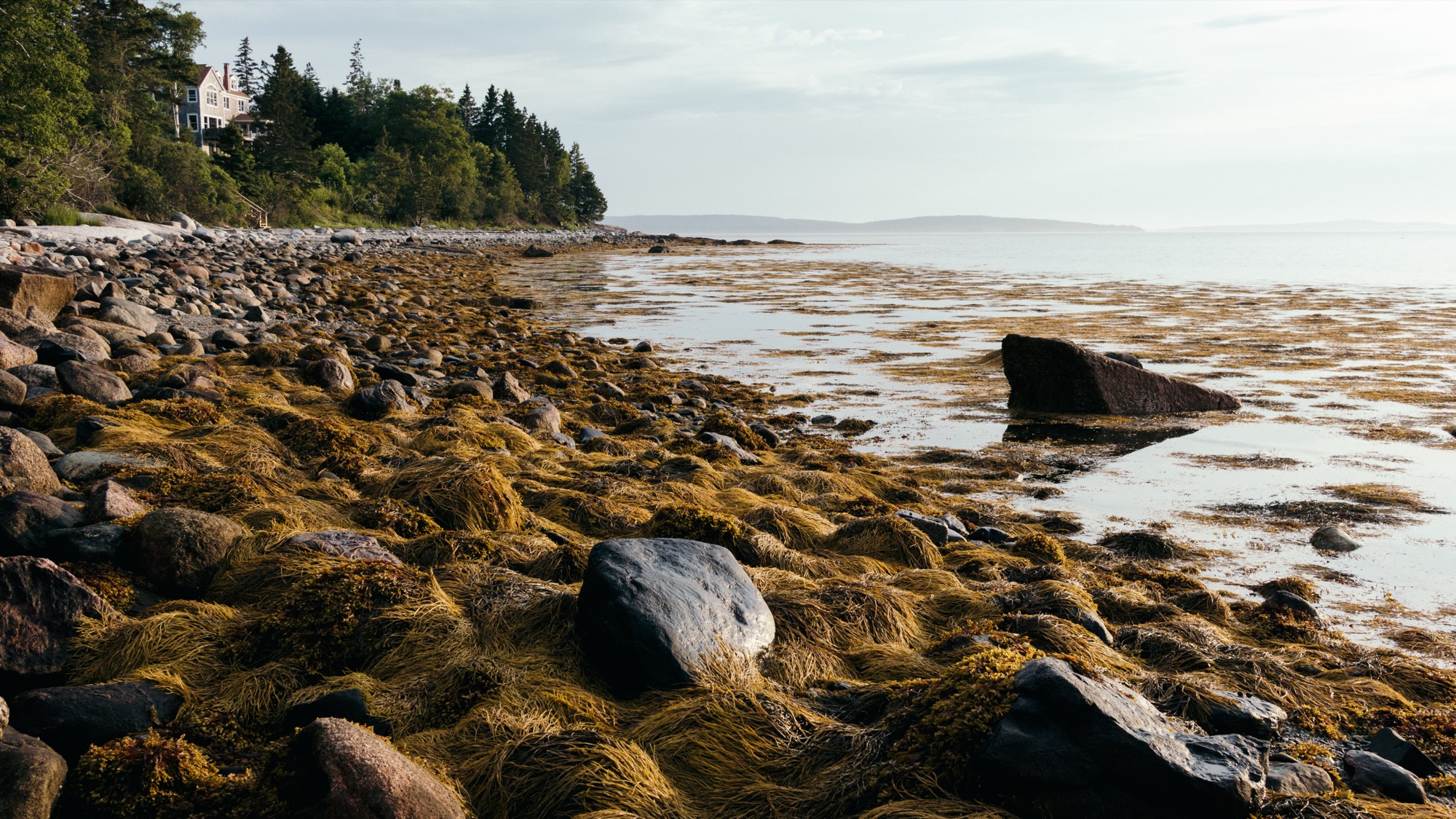
I did what I always tend to do and went exploring – up and down the coastline, through the set of cabins on this part of the shore, taking advantage of the early morning light.
Then the family woke up, and we explored the jagged, rocky beach together.
The tide was a new thing for us Michiganders. Here on the peninsula, we had to pay attention: there were several islands you could walk out to at low tide. But come high tide, you might get stranded.
And the bay’s ocean water, just like in Nova Scotia, was freezing. So we mainly played on the rocks.
Later that night, after dinner, we took a stroll back down to the coast to watch blue hour come in at high tide.
Maine was different. More rugged. A little more wild. And there was lots more to see.
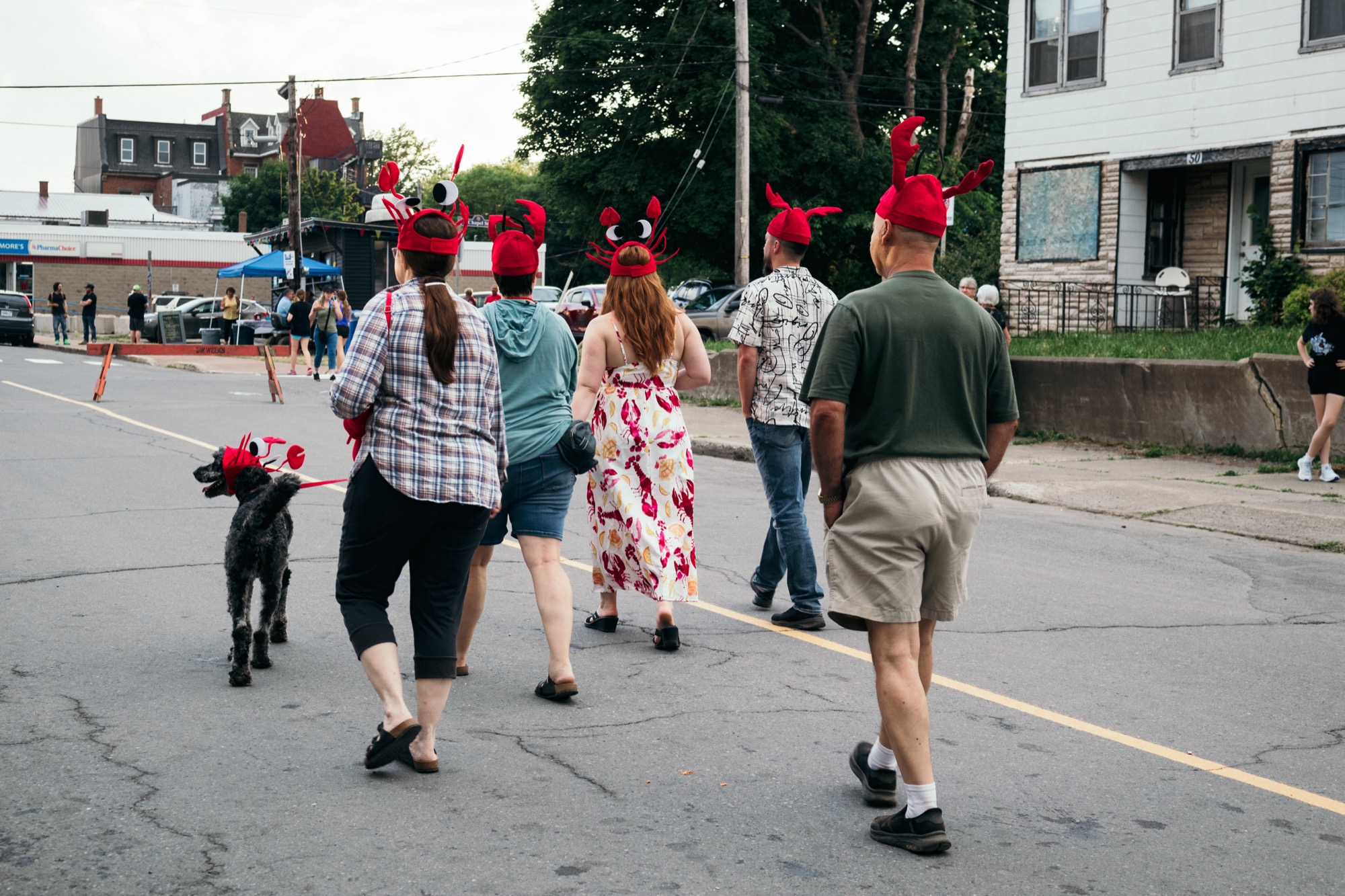
To us Americans, Pictou, Nova Scotia’s Lobster Carnival was nothing short of a wonder.
Pictou is a small town. But walking around on the last day of our Canadian trip, you’d think the whole town had turned out. And why not? On the East Coast, lobsters are a big deal.
Pictou made them a big deal.
A mini fair, with rides and games, a concert in the park, and one of the best lobster rolls I had so far this trip – Carny had it all.
We couldn’t have picked a better way to say “goodbye” to Canada.
Before we left town, we stopped and had ice cream. Tomorrow? Through New Brunswich and on to Maine.
Shot on the Canon EOS M6 and EF-M 22mm f/2 and 32mm f/1.4.
Imagine a New England state-size island, full of its own little towns and natural wonders, and that’s Cape Breton – off the eastern coast of Nova Scotia.
It was a bit of a drive to get there, but boy, it was worth it.
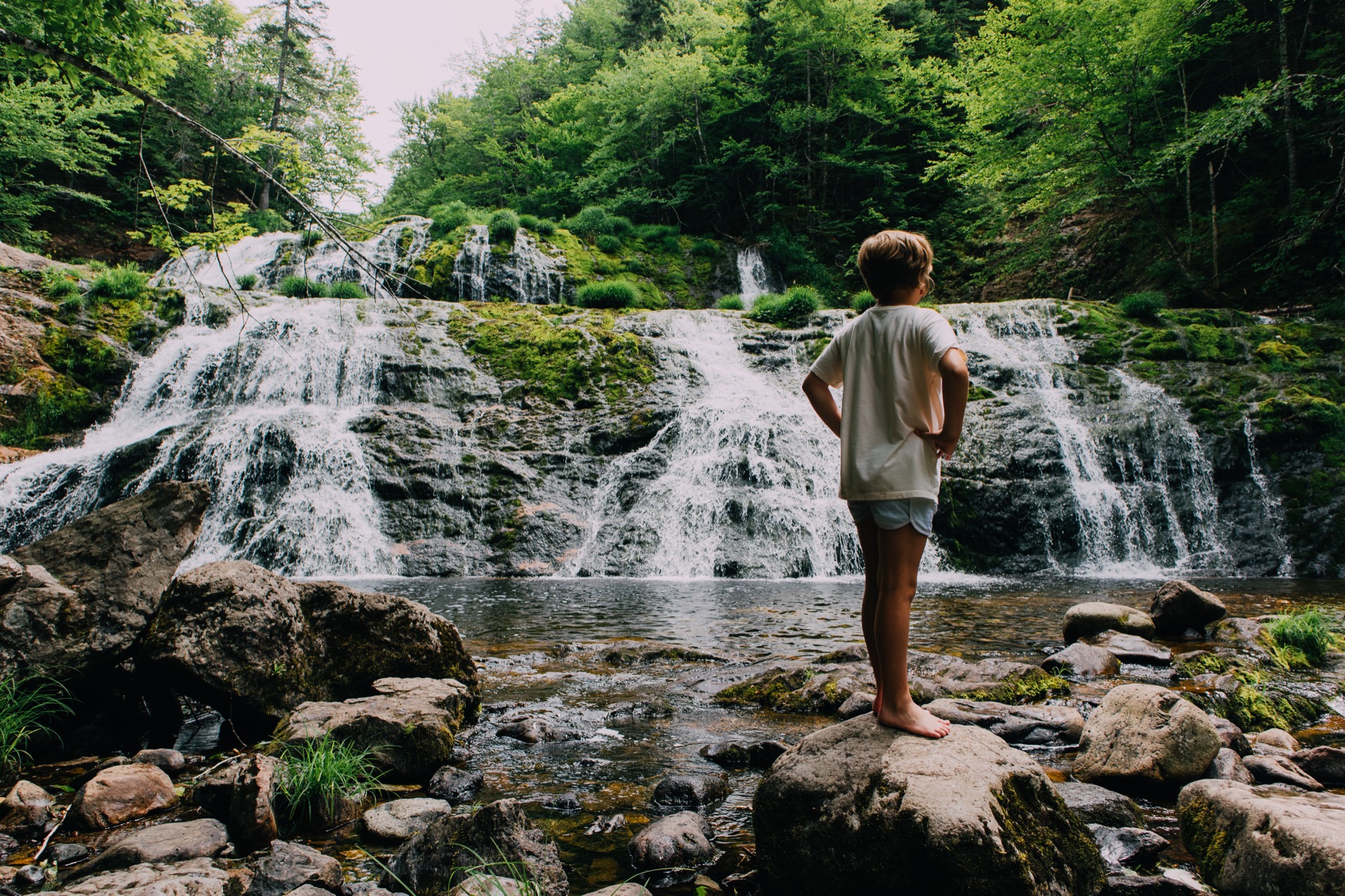
First, we took some nature trails and discovered Egypt Falls along the western section of the island.
For the kids, it was a grueling hike up and down the trail. But at the bottom? One of the most beautiful waterfalls I’ve ever seen.
After Egypt Falls, we hiked the Lewis Mountain trail, a hidden gem behind a set of power lines. To get there, you take a lovely drive around Bras d’Or, the large inland body of saltwater.
The trail, a gentle incline through a beautiful northern forest, followed a stream where (I’m proud to say) my family took a swim.
Driving around the island, there was plenty to see.
To close out the trip, we had dinner in Baddeck, where I couldn’t resist eating an entire lobster.
Shot on the Canon EOS M6 with the EF-M 22mm f/2 and kit zoom lenses.