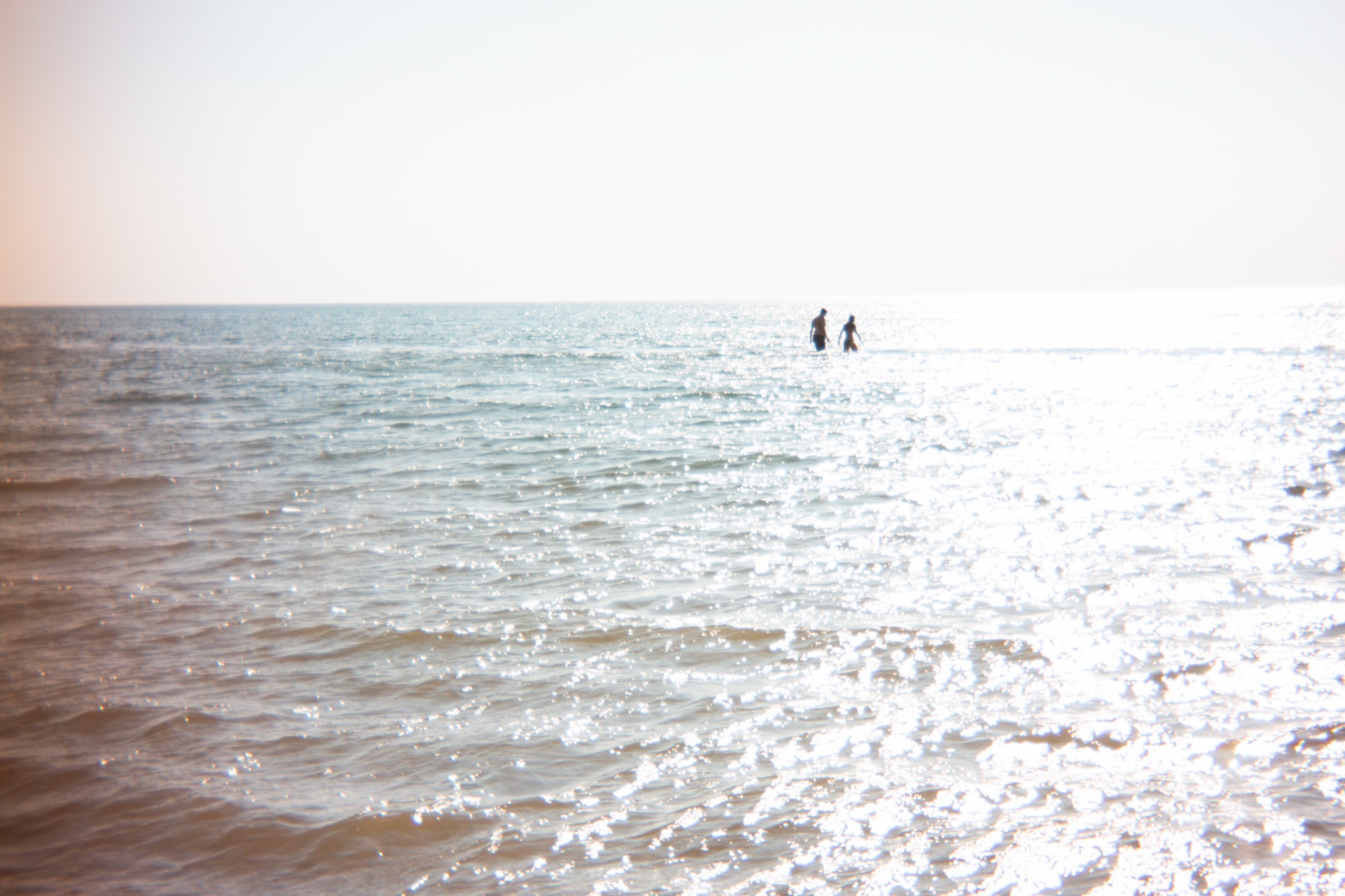
This August, we headed back up to Pentwater, Michigan – a beautiful west-coast town along Lake Michigan – for a week of sand, waves, and fellowship with some of our church members at Family Camp.
No wildfire haze masking the sunsets this year. In fact, during one sunset, I took our stand-up paddleboard and rowed out into Lake Michigan to watch the pink and blues take over the sky.
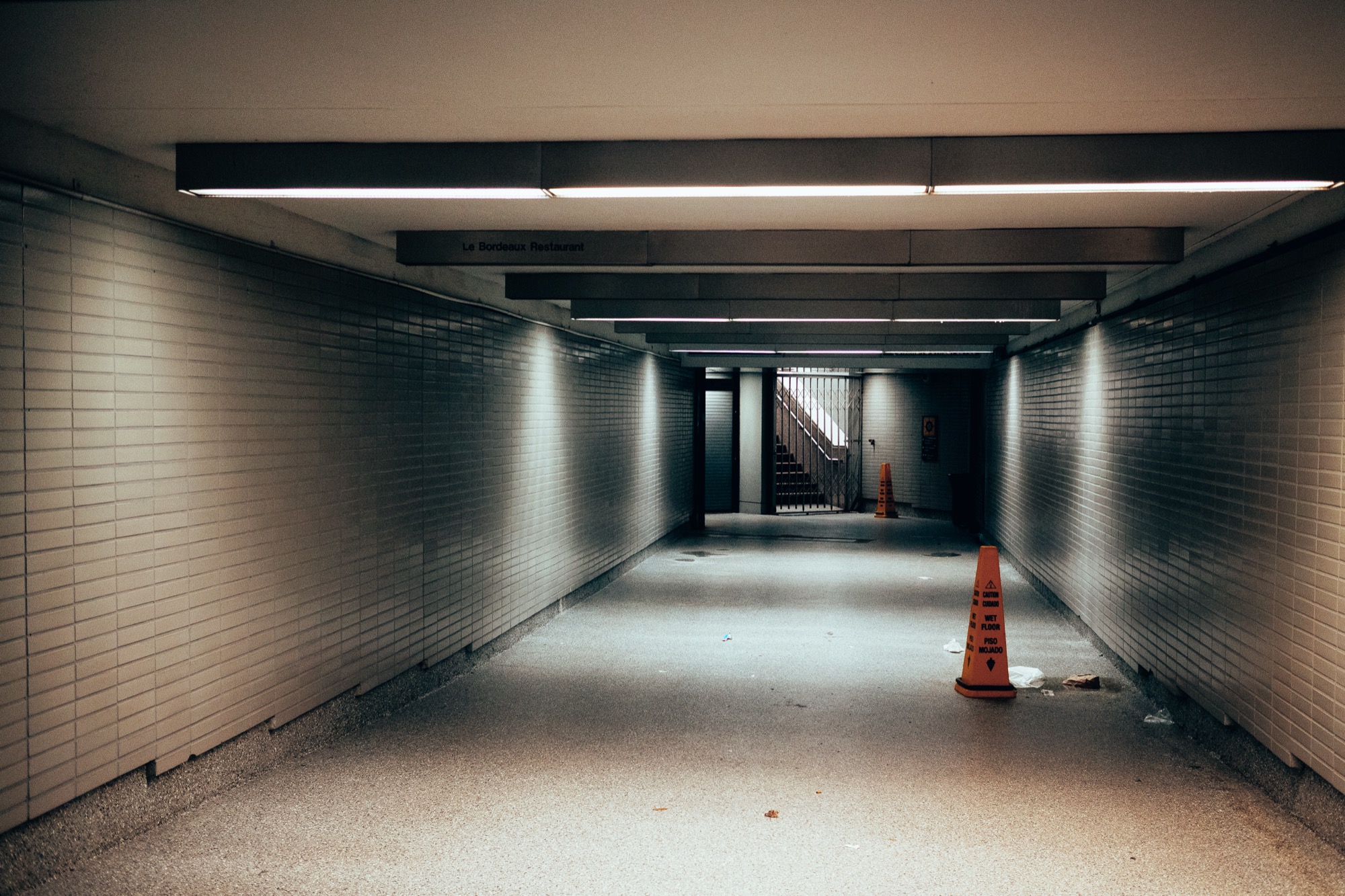
All images shot on the Canon EOS M2 and the EF-S 24mm f/2.8.
My photography style revolves around documentary photos. I tend to capture things as they are: people, objects, scenes, abandoned buildings.
Sure, I’ll play with the light, shadows, and color grading. But the camera captures the scene, framed by me, and that’s it. I mostly pay attention to light, shadow, shapes, contrast, and color.
What I have a hard time with is experimenting. Playing. Doing anything other than capturing scenes as I see them (with a few exceptions that I think turned out well).
While we spent time in Chicago on spring break, I took the opportunity to use rainy days, windows, and reflections to play with the scenes around the city.
Even if nothing comes of it, it’s important to try something new and see where it goes.
I often struggle with street photography. For one, I don’t live near a major metropolitan area, so I don’t get a lot of practice.
And for two, when I do street photography, I feel like I capture people from too far away. Rarely, I’ll get the right conditions and have a great session or day out in the city.
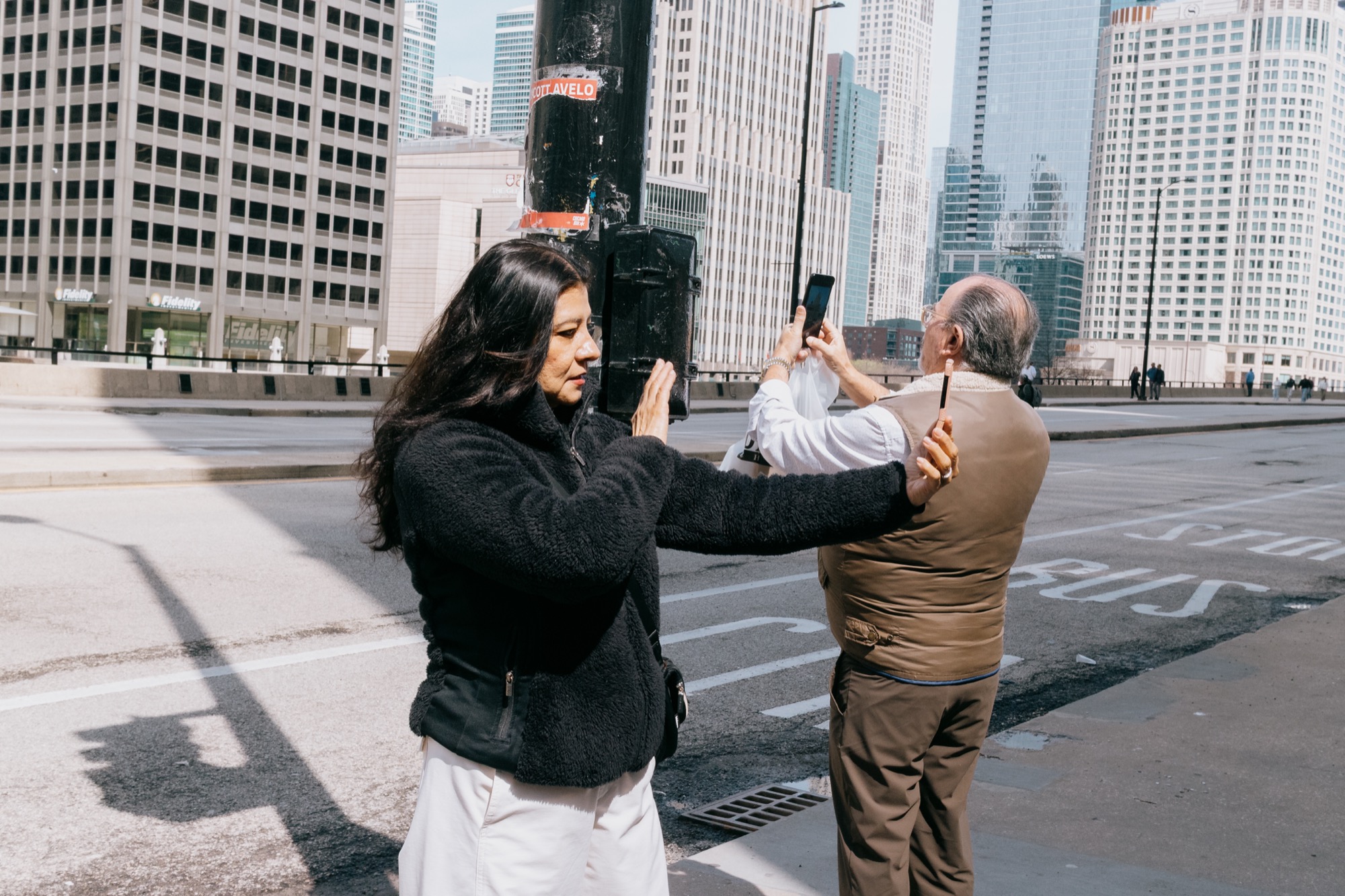
During our most recent trip to Chicago, I gave myself a challenge: get closer. Capture people, not necessarily scenes with people.
With the Canon EOS M2 and 22mm f/2, that means I have to get close – sometimes uncomfortably close. But that’s part of the challenge.
And you grow with a little bit of discomfort, right?
Walking around town with my family, I tried to stay incognito with my little mirrorless camera. I set the lens to f/8 and try to react quickly to grab a person on the street.
Sometimes it worked great. Other times, I would misfire or miss focus. But over the long weekend, I grabbed enough close shots of people that I started to get comfortable with this new way of shooting.
Here’s what I noticed: people stare at their phones. It’s such a modern thing, but it’s true – you rarely catch someone just looking, walking, sitting, or engaging in conversation without a glowing screen in front of them.
I really noticed that when I got back and looked at the photos. Phones everywhere.
All in all, the challenge was successful.
Even with the limitations of a 35mm field of view and a slow-focusing M2, there were enough opportunities to grab people (and pets!) face-on, and enough anonymity in a big city like Chicago, to get some decent street photography.
Back to Chicago – this time with the kids on Spring Break.
I brought along the Canon EOS M2 and EF-M 22mm f/2. One lens, one perspective, one view of the Windy City.
Or lots of views: through windows, outside and inside, on the train, people walking through the streets.
Street photography wasn’t the point of this trip. It rarely is, but taking along a camera to catch the sights – well, you grab things as you see them.
And as always, I saw a lot. So you can expect a few days of Chicago photos here on the blog.
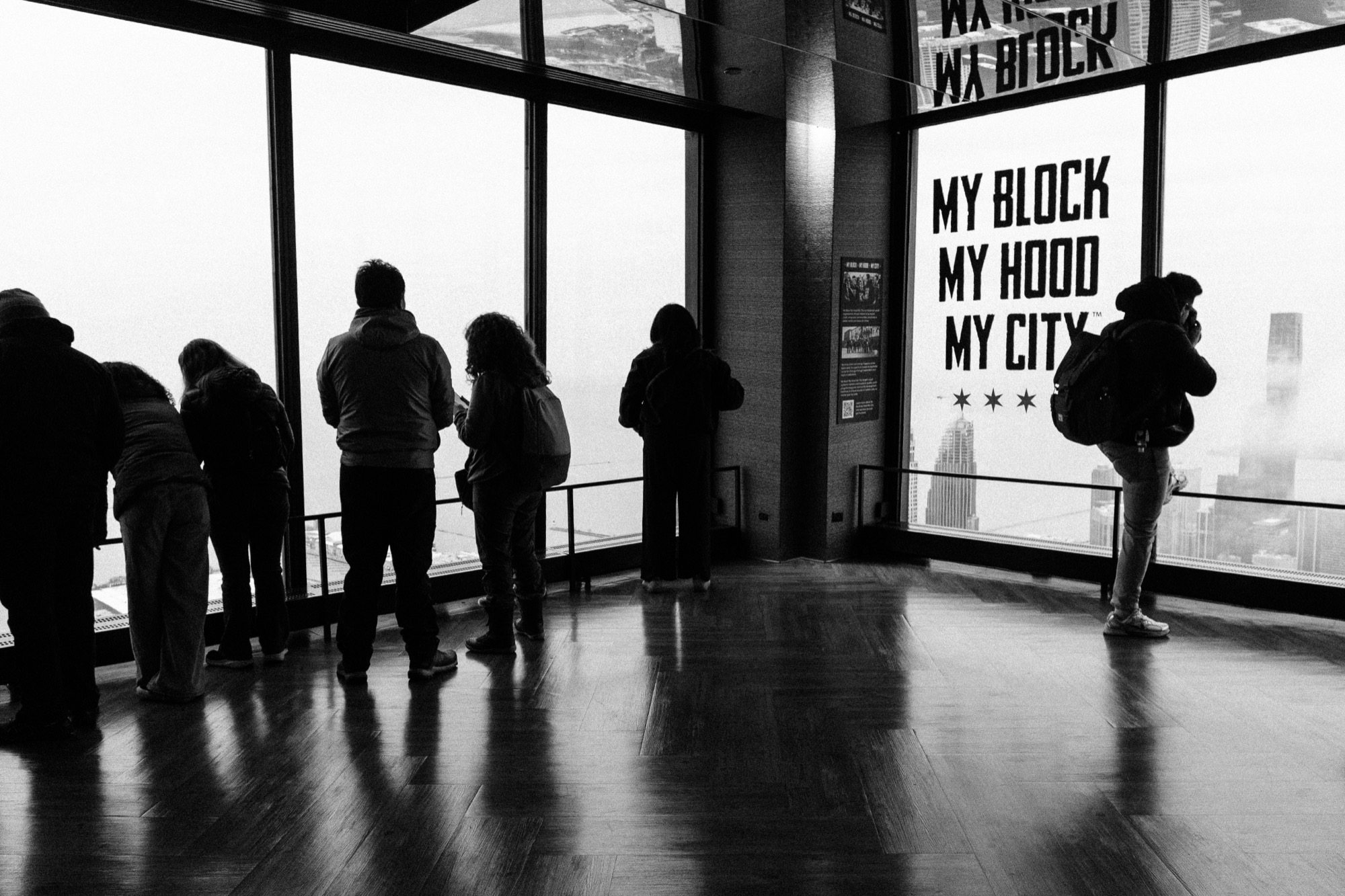
Today? It’s all black and white using Mastin Labs’ Tri-X 400 emulation in Lightroom, my favorite as of late. Nice grain, just the right amount of contrast.
That’s my kind of monochrome. For my kind of town.
There’s a lot of talk in the photography world about “everyday carry” cameras, or fixed-lens compact cameras (like the Fujifilm X100 series).
You need a portable camera, the thinking goes, to carry with you everywhere you go so you don’t miss out on those moments in between.
When I first purchased the original Canon EOS M, its “everyday carry” potential hit me immediately. “Here’s the camera I can throw in my front seat and take everywhere,” I remember thinking. That philosophy played out for 12 years, and I’ve enjoyed having the Canon M system in my life.
There are issues with the OG M, however: It’s slow to focus, and the screen blackout after taking a shot is obnoxious. Over the years, I’ve learned to live with these shortcomings. But ever since the dawn of Canon’s M system, these issues have plagued the camera line – and understandably so.
We never got the M’s successor, the Canon EOS M2, here in North America. I did hear about it, though, and longed for its faster autofocus and overall improvements in snappiness.
When my M finally gave up the ghost, I decided to upgrade my everyday carry and snatch an M2 from Japan.
Again, I loved my Canon EOS M, despite its flaws. It was the perfect example of “good enough,” and I appreciated the EF-M 22mm f/2 lens, which remained on the front of the camera at all times. In effect, it served as a fixed-lens compact camera for me. The 35mm field of view helped the M serve as my X100 with the benefit of Canon’s comfortable colors and usable interface.
Since using the M2, I remembered how slow the M was, because this little camera is much better at autofocus and has a dramatically reduced screen blackout after pressing the shutter. In fact, it was startling to go back to an M and be reminded of how pokey it is.
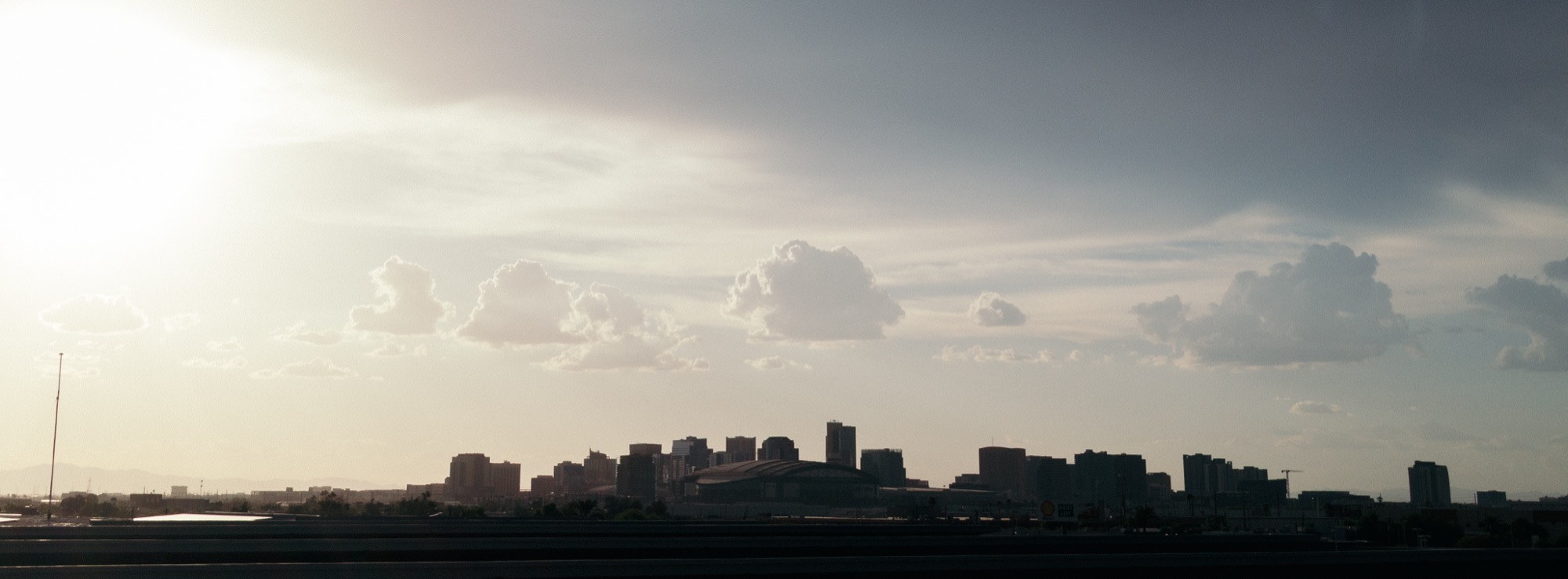
Now, the M2 is not going to win any speed awards. The whole M system is notoriously slow. However, taking this M2 out to Phoenix, Arizona, for a work trip (above and below), the speed benefits were immediately apparent.
The features I loved about the original M were all still here in the M2: fantastic image quality, body toughness, ease of use, and – this might be a just-for-me thing – the use of the delete button on the scroll wheel to reset the touch screen focus point (something I miss dearly on the newer M cameras).
To put it more pointedly: the M2 is a comfortable, familiar piece of kit. Just a bit better.
It’s also just a tad smaller and has added wifi functionality that will help if you use Canon’s mobile app. It has the same touchscreen as the M, which can be difficult for some folks to use in bright conditions. However, after using the M for years, I’ve made peace with the lack of an electronic viewfinder or flexible screen. Even in the hot Arizona sun, I can still make this fixed touchscreen work.
Another cosmetic thing I love about the M2 is its color and style. I grabbed the blue and brown version, which fits in perfectly with my photography aesthetic. The best description of my gear is, What if Indiana Jones had a camera, strap, and bag? That’s the style I’m after. So this little M2 fits in perfectly with the rest of my kit.
The only thing that doesn’t fit, cosmetically, is the black and silver EF-M lens color scheme. Just as you shouldn’t wear a black belt with brown shoes, the black EF-M lenses clash somewhat with this blue and brown camera body. Silver doesn’t look great either.
Yes, the M2 is 12 years old. No, the video specs aren’t the best. Nor is it a speed demon.
But if you’re dedicated to the M system and EF-M lenses, and you enjoyed the original Canon EOS M, the M2 is a worthy successor.
All images, except for the camera portraits, were shot on the Canon EOS M2 and EF-M 22mm lens.
It’s not every day a couple of hot air balloons float above the neighborhood.
But when you’re block sits here on Lawrence and Highland Boulevard, on the south side of Jackson, Michigan, you’re not far from our local Hot Air Jubilee launch point.
So: balloons. Floating through a neighborhood.
On this neighborhood walk, I was approached by a guy who was watching me from his porch. He saw me taking a photo of a shadow and asked me why I was taking a picture of a license plate.
I tried to reassure him I was only taking photos of light and color around the street, but I think he was still suspicious.
“Didn’t you see those balloons?” I thought. They’re the real intruders worth worrying about.
I picked a $40 camera toy just in time to test it at Lake Michigan in Pentwater, Michigan: the Retropia disposable camera lens fitted to the Canon EOS M system.
First, it was exciting to still find an EF-M mount lens on sale. It’s nice to see a toy lens company supporting my beloved (dead) camera system.
Second, these retro disposable lenses are constantly on sale – just do a search on Instagram and you’ll face a never-ending barrage of lens ads.
I figured, $40? Shit, why not?
I read a lot of reviews with people saying, “Why would you pay so much for something so plastic / something you could 3D print yourself?” The answer is convenience: someone already made it, and it’s super affordable compared to most lenses.
Affordable, and kind of fun. It’s small, light, and has that fun cookie shape to it. It makes a good lens cap option, too.
Riley and I hiked into the Lake Michigan dunes to see how it performed in bright summer light.
The Retropia lens definitely has that low-fi vibe: purple fringing, a little soft, and when you point it at the sun, the real fun begins:
Lots of fun sun stars and ghosting.
Is the Retropia everything the ads promise? Maybe. Most of all, it’s a small, affordable option to create some “vibes” in your photos.