lens

How to Save Money On Photography Gear In This Economy

Canon EOS M6 photographing a winter landscape

Call me a cheapskate, but I don’t believe in overpaying for camera gear.

And in this economy, with inflation and technology prices still rising, it makes sense to save money wherever you can. This is especially true if you’re a hobbyist like I am.

Are you pro? Then yes, go ahead and buy the latest and greatest for your needs. 

But all of us – hobbyists and pros alike – can afford to keep some hard-earned cash in our pockets. To help, I have a few tips to help you pay less on your next camera or lens. 

(However, if you’re purchasing a new SSD or RAM chip for your PC, good luck – those keep rising in price.)

Here are a few thought starters to begin:

  • Do you really need a new camera, or is your old model working just fine? 
  • Do you need the latest model, or can you buy the current or previous model and save a bit of money? 
  • Can you trade or sell your current camera or lens to help finance your new purchase? MPB, eBay, and Facebook Marketplace are all good starting points to get some cash for your gear. 

Here are some specific tips to help you save money when you’re camera or lens shopping:

  • Buy used: I do this almost exclusively, unless I’m buying refurbished (which, I suppose, is another kind of used). MPB, Fredmiranda, eBay, Adorama – all these sites have tons of used camera gear. If you are patient, and you know what you want, you can find great deals.
  • Rent before you buy, if you can: There’s no sense in spending a bunch of money on a camera if you end up not liking it. No camera system is bad these days, but you should pick one that fits your preferences. Better to rent a camera first to try it out. I often use Lens Rentals to try a different camera system.
  • Buy refurbished: Canon, Nikon, Fujifilm, and others all offer refurbished cameras and lenses that can save you serious money, sometimes hundreds of dollars on a new camera body. Amazon, eBay, Adorama, and other shopping sites also offer refurbished deals. I’ve never had a bad experience buying one, and I buy refurbished Macs and iPhones, too. 
  • Wait for sales: If you’re patient, you can wait until new camera models come out and buy the previous version, or wait for big sale events like Black Friday to pick up a good deal at retail stores or online. 

I picked up my first Canon DSLR, the T1i, on sale during Black Friday, and it was last year’s model in 2010. So I saved a bunch of cash on a photo kit by buying at just the right time.

Ever since, I’ve either purchased used or refurbished camera gear. My photography has not suffered by taking this approach, and I don’t think yours will either.

Especially in this economy. 

Retropia lens review

Retropia Lens on the Canon EOS M System

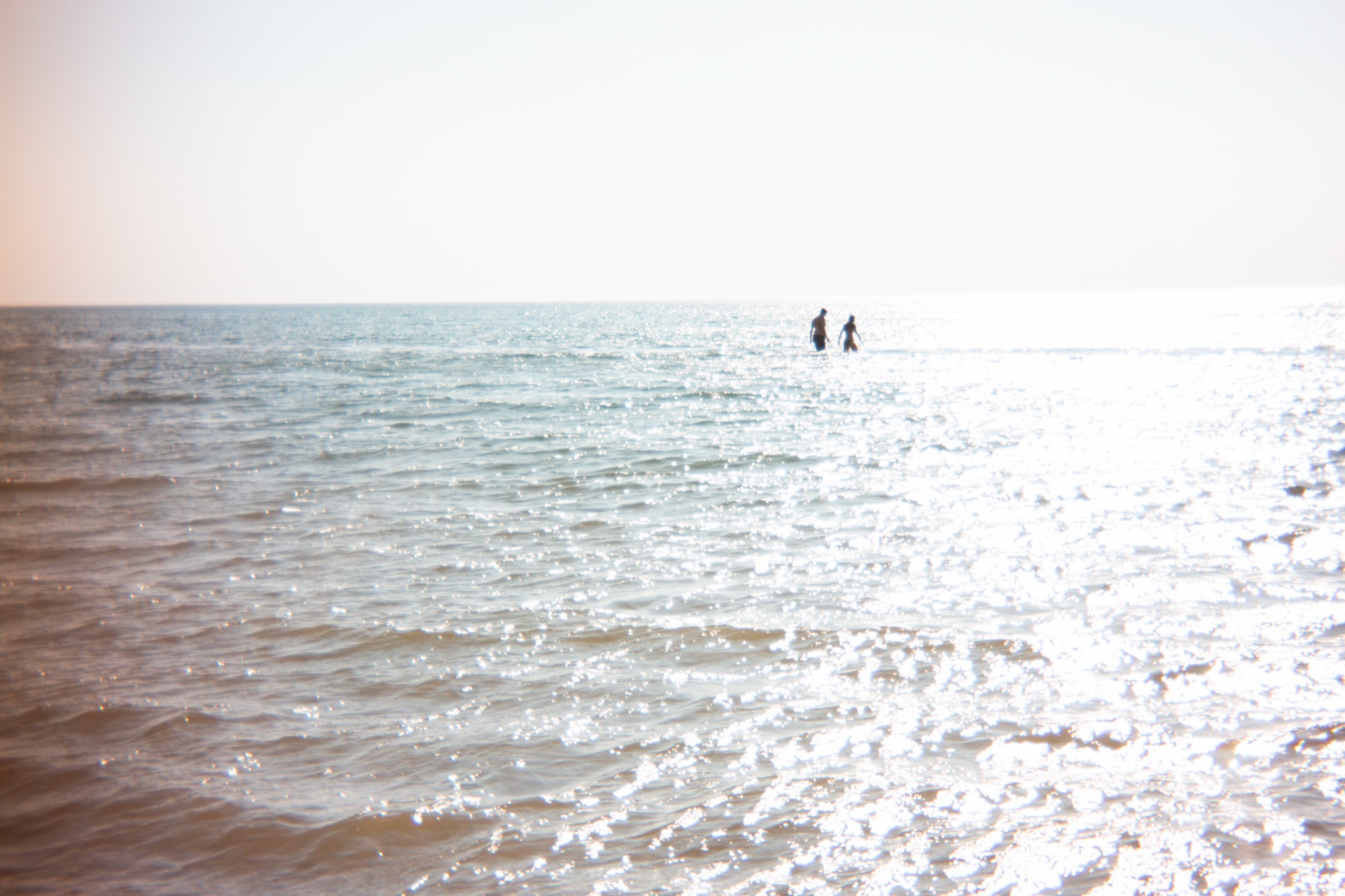
I picked a $40 camera toy just in time to test it at Lake Michigan in Pentwater, Michigan: the Retropia disposable camera lens fitted to the Canon EOS M system.

First, it was exciting to still find an EF-M mount lens on sale. It’s nice to see a toy lens company supporting my beloved (dead) camera system.

Second, these retro disposable lenses are constantly on sale – just do a search on Instagram and you’ll face a never-ending barrage of lens ads.

I figured, $40? Shit, why not?

I read a lot of reviews with people saying, “Why would you pay so much for something so plastic / something you could 3D print yourself?” The answer is convenience: someone already made it, and it’s super affordable compared to most lenses. 

Affordable, and kind of fun. It’s small, light, and has that fun cookie shape to it. It makes a good lens cap option, too.

Riley and I hiked into the Lake Michigan dunes to see how it performed in bright summer light.

The Retropia lens definitely has that low-fi vibe: purple fringing, a little soft, and when you point it at the sun, the real fun begins:

Lots of fun sun stars and ghosting. 

Is the Retropia everything the ads promise? Maybe. Most of all, it’s a small, affordable option to create some “vibes” in your photos. 


New Lens Tryout: Canon EF-M 32mm f/1.4 Review

It’s been a while since I purchased a new lens. The truth is, I really have all I need, even though the Canon R system keeps tempting me.

For my mirrorless system, I’m sticking with my trusty Canon M. Forever, I’ve had the EOS M 22mm attached to that camera. I see in cropped 35mm on that camera.

So when Canon had a fire sale on refurbished 32mm f/1.4 prime lenses for Black Friday, I thought, “Now’s the time to get something new.” 

(My other plan is to upgrade the camera itself, since my faithful M is almost 10 years old now. But we’ll see what next year brings.)

The 32mm is a 51mm equivalent on the M system. My comfort zone is in that 35-50mm range, but the extra F stop adds the opportunity for some shallow depth of field on a near-portrait fixed lens. All these years, I’ve been limited to a 35mm view on the M. This new lens was my chance to put another option in a camera I use 75% of the time.

And what a lens. It took some time to get used to this new field of view, but after fiddling with the unique focus system, I got the hang of it. When we went Christmas tree shopping this weekend, I saw it as a perfect chance to take the lens for a spin on a chilly, sunny midwestern December day.

As with the other M lenses, the 32mm is tack sharp. It’s stunning what these little, lightweight lenses can do. It does stick out from the front of the camera more than the pancake-style 22mm does, so getting the grip and balance just right took some time. It was also weird not to look through a viewfinder and see that 50mm field of view – the M has a touchscreen and touch-focus system. 

These are minor getting-adjusted points. It’s a great lens, and I can see building a truly lightweight, mirrorless system out of this, the 22mm, and maybe a wide-angle M lens paired with a new M camera. 


40mm and Go

40mm And Go

Everyone talks about 50mm being the focal length for 35mm photography. And I mostly agree.

But lately, my 40mm pancake lens is getting a lot of use – for good reason.

Five millimeters north of a 35mm lens, and just a hair wider than 50mm, 40mm sits in a sweet spot. It’s wide enough to get landscapes and cityscapes, and yet short enough to do people well, and get details.

I took a chance on my own Canon EF 40mm f/2.8 STM pancake lens. Not that it’s not a good lens. It’s a great lens. And very affordable – especially when you buy it refurbished, like I did.

No, I took a chance because I thought, “I so love 50mm, why do I bother with 40mm?” It turns out that because of the lens’s size, weight, and utility, it’s now my most-used lens. It’s almost permanently strapped to my 5D. I just pick it up and go.

The 40mm doesn’t stick out from the camera, making it great for close-up shots of the kids at home, or of people out in the city. It’s a great front-seat lens that goes with me to and from work every day for the random landscape shot. It’s flexible for the kind of shooting I do, and I appreciate it more and more every day.

And now that I’ve had it for about a year, I’m getting to see the world in 40mm – just as I did with 50mm (both are natural, of course, being “normal” lenses). My Canonet probably helped warm me up to 40mm before that, as did my Fuji X-E1 with the 27mm (40mm equivalent) pancake lens.

While the 50mm gets all the creative credit in the photo world, it’s good to know there’s a handy, slightly-wider alternative in the 40mm lens.


Things I Like: 50mm Lens

Things I Like: 50mm Lens

All of my “Things I Like” photos were taken with a Canon EF 50mm F/1.4 lens, pictured here – except this one, obviously, which was taken with an 85mm.

But the 50mm is my favorite. I, like a lot of beginning photographers, cut my teeth on the 50mm prime lens. Originally, I had the f/1.8 model that served me well for two years. In fact, I took a lot of my favorite photos – hell, maybe a majority of my photos – using that “Nifty Fifty.”

Over the holidays, I found Canon dropping the price on the f/1.4 model by $100 or more. I thought about it, and thought about it, and finally pulled the trigger in January. Canon has been updating – and raising the price on – their other primes, like the 28mm. I figured with the recent 50mm price drop, Canon would refresh it next. So I pulled the trigger and took advantage of the deal.

I use a 50mm f/1.4 almost exclusively at work, with a Canon 7D. It’s my go-to portrait and classroom lens. I love the quality, the color, and the contrast the lens produces. And I’m super glad to have one of my own now.

There are tradeoffs to having a 50mm lens on a cropped-factor camera like my T1i: you need space to work in, and you can’t capture a whole lot in the field of view. But I find it often takes intimate photos that can’t be beat.

The dream is to someday hook it up to a full-frame Canon. Some day.

For now, though, it’s still my go-to and favorite lens.