Heartbreaking
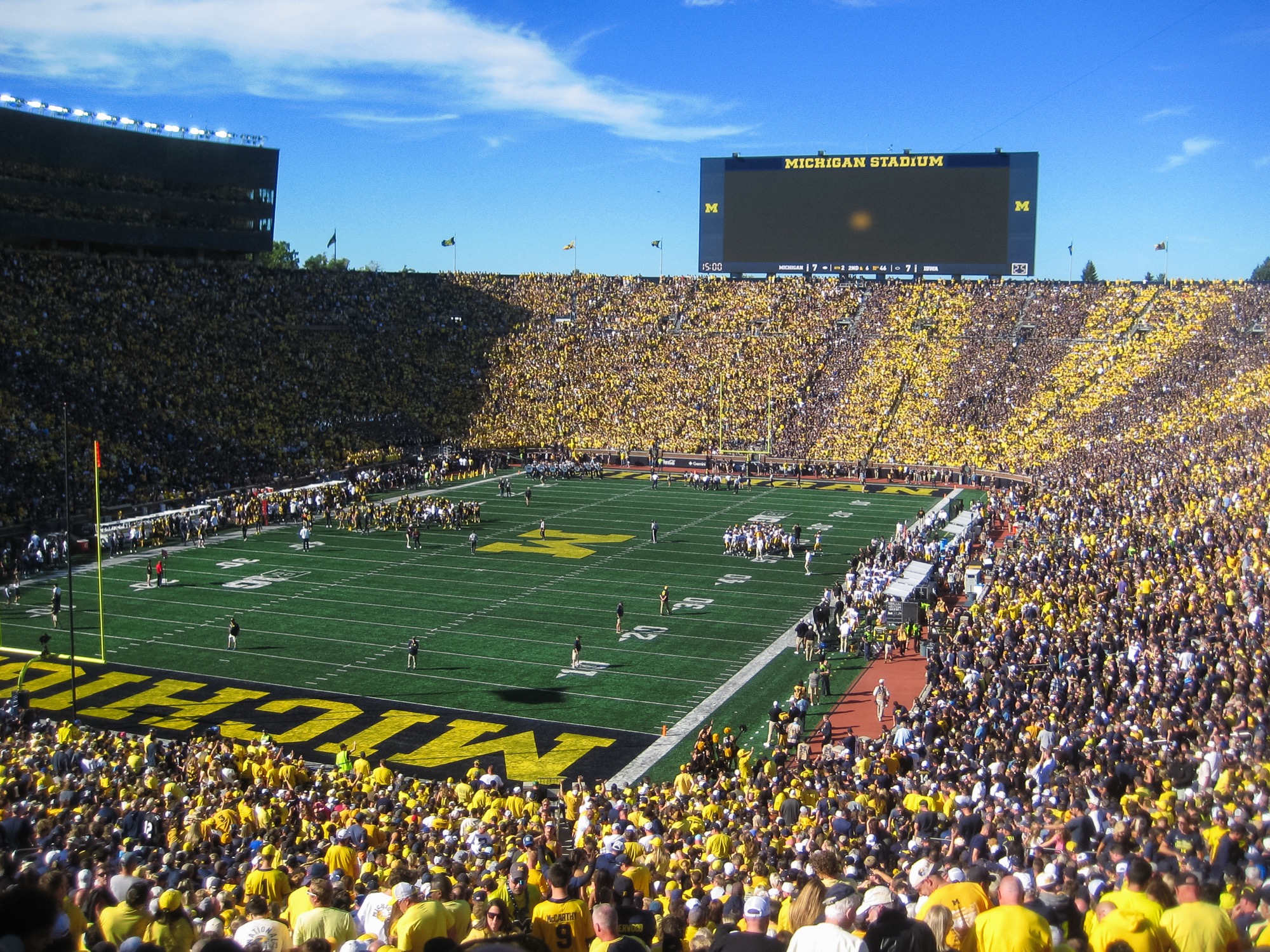
It was a beautiful day for football. Late September, sun shining, an engaged crowd in the largest American stadium.
And then, in the final second, it all fell apart.
Heartbreaking.
Shot on the Canon SD750 point-and-shoot.
It was a beautiful day for football. Late September, sun shining, an engaged crowd in the largest American stadium.
And then, in the final second, it all fell apart.
Heartbreaking.
Shot on the Canon SD750 point-and-shoot.
Chris Harvey’s video on hyper-local photography came at a good time to accompany my post on the façades project.
His main points – you know your area, you can watch it change over time, and the tired glut of “honey pot” travel locations – emphasize why I love photographers who capture their local landscapes and communities.
I don’t need another set of photos in Paris, France. But pictures in some quiet location in the countryside? I’ll take that all day long.
My parents and grandparents often talked about the businesses that came and went in Jackson, Michigan. Our downtown used to be vibrant, full of drug stores and theatres. Now, it’s mainly gift shops and taverns. Around town, beloved restaurants have closed. Family businesses shuttered.
Here in my lifetime, I’ve seen the same.

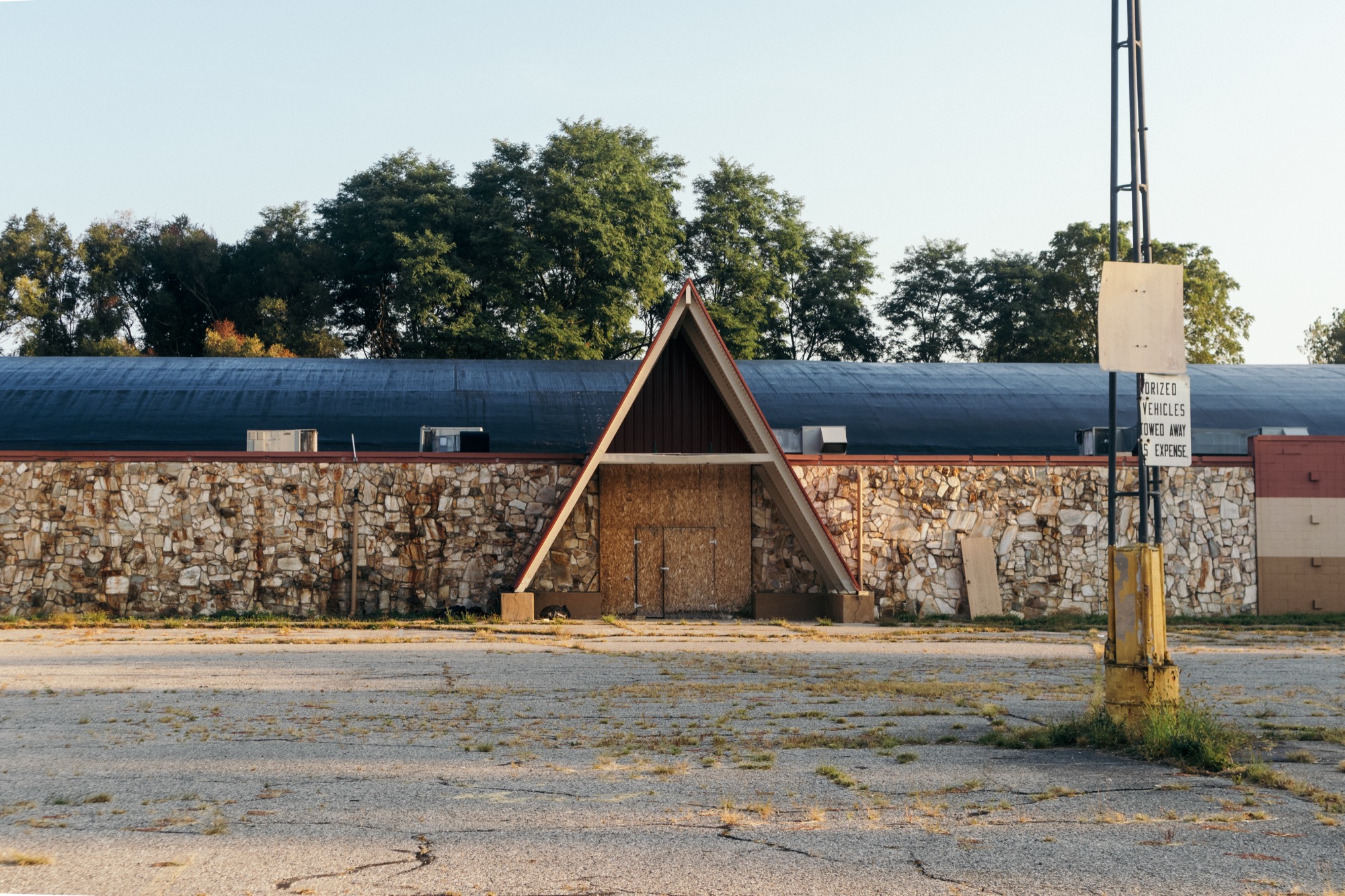
Over time, a typology project developed: to capture some of Jackson’s iconic façades before they disappear. It’s half nostalgia, half a love of abandoned buildings – with a little bit of community pride sprinkled in.
Much of my photography is rooted in history and small-A archaeology. I take photos of the Irish Hills before the little theme parks of my childhood disappear completely. Or Grandma’s house before it gets sold. Or rural houses before they crumble down.

As luck would have it, I grabbed photos of the iconic Gilbert’s Steakhouse days before it was demolished last September. I captured the little corner pizza shop in February before it got knocked down earlier this summer (above). I managed to take pictures of the colorful tax-return business before it became a drive-through coffee shop.
This has happened so often that, if I’m in the car with the kids and I pull over to take a photo, they joke that my photo will knock the building down.
There’s a short window of time between viable and gone. Nothing lasts forever. Might as well photograph those well-known places before time swallows them up.

Call me a cheapskate, but I don’t believe in overpaying for camera gear.
And in this economy, with inflation and technology prices still rising, it makes sense to save money wherever you can. This is especially true if you’re a hobbyist like I am.
Are you pro? Then yes, go ahead and buy the latest and greatest for your needs.
But all of us – hobbyists and pros alike – can afford to keep some hard-earned cash in our pockets. To help, I have a few tips to help you pay less on your next camera or lens.
(However, if you’re purchasing a new SSD or RAM chip for your PC, good luck – those keep rising in price.)
Here are a few thought starters to begin:
Here are some specific tips to help you save money when you’re camera or lens shopping:
I picked up my first Canon DSLR, the T1i, on sale during Black Friday, and it was last year’s model in 2010. So I saved a bunch of cash on a photo kit by buying at just the right time.
Ever since, I’ve either purchased used or refurbished camera gear. My photography has not suffered by taking this approach, and I don’t think yours will either.
Especially in this economy.

Let America be the dream the dreamers dreamed—Let it be that great strong land of loveWhere never kings connive nor tyrants schemeThat any man be crushed by one above.(It never was America to me.)O, let my land be a land where LibertyIs crowned with no false patriotic wreath,But opportunity is real, and life is free,Equality is in the air we breathe.– From “Let America Be America Again,” by Langston Hughes
Late August and early September in Michigan is like May in the Spring – perfect, sunny weather, pleasant temperatures, and cool nights.
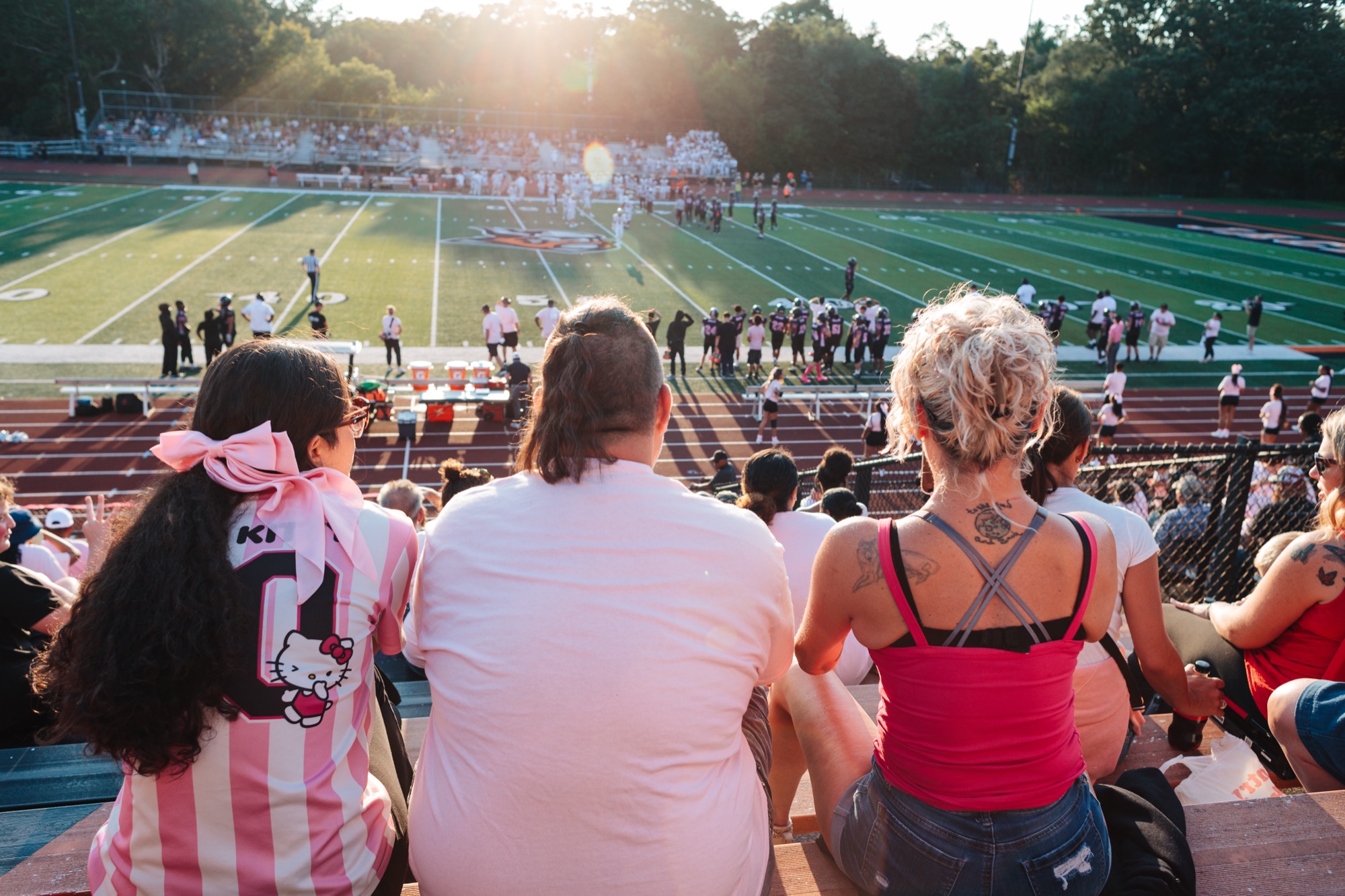
It’s also high school football season, and we attend our Jackson High games to watch Aiden in the marching band. Every once in a while, the football team wins, too.
This year, I took along by big telephoto lens, the EF 200mm f/2.8, to grab some photos of the band on the field – and some of the characters watching, too.
In high school, I played trombone in the marching band and had to focus on playing, marching, and putting on the halftime show. Now, as a parent, it’s nice to watch all the other parts play out, too.
Shot mostly on the Canon EOS M6 and EF-S 24mm f/2.8, but also with the Canon 5D and EF 200mm f/2.8.
The Jackson Art Association invited me to speak about my photography and portrait projects at their monthly meeting in September 2026 at the Ella Sharp Museum in Jackson, Michigan.
Here is my talk, “Love & Photography,” in full, with audience questions – covering my work, my style, and the big “Why?”
Many thanks to the JAA for having me at their meeting, and for bringing such great questions.
Some photos from our local comic, culture, and all things nerdy expo – taken on the Canon EOS M6 and Viltrox 23mm f/1.4 during a rainy afternoon in downtown Jackson, Michigan.
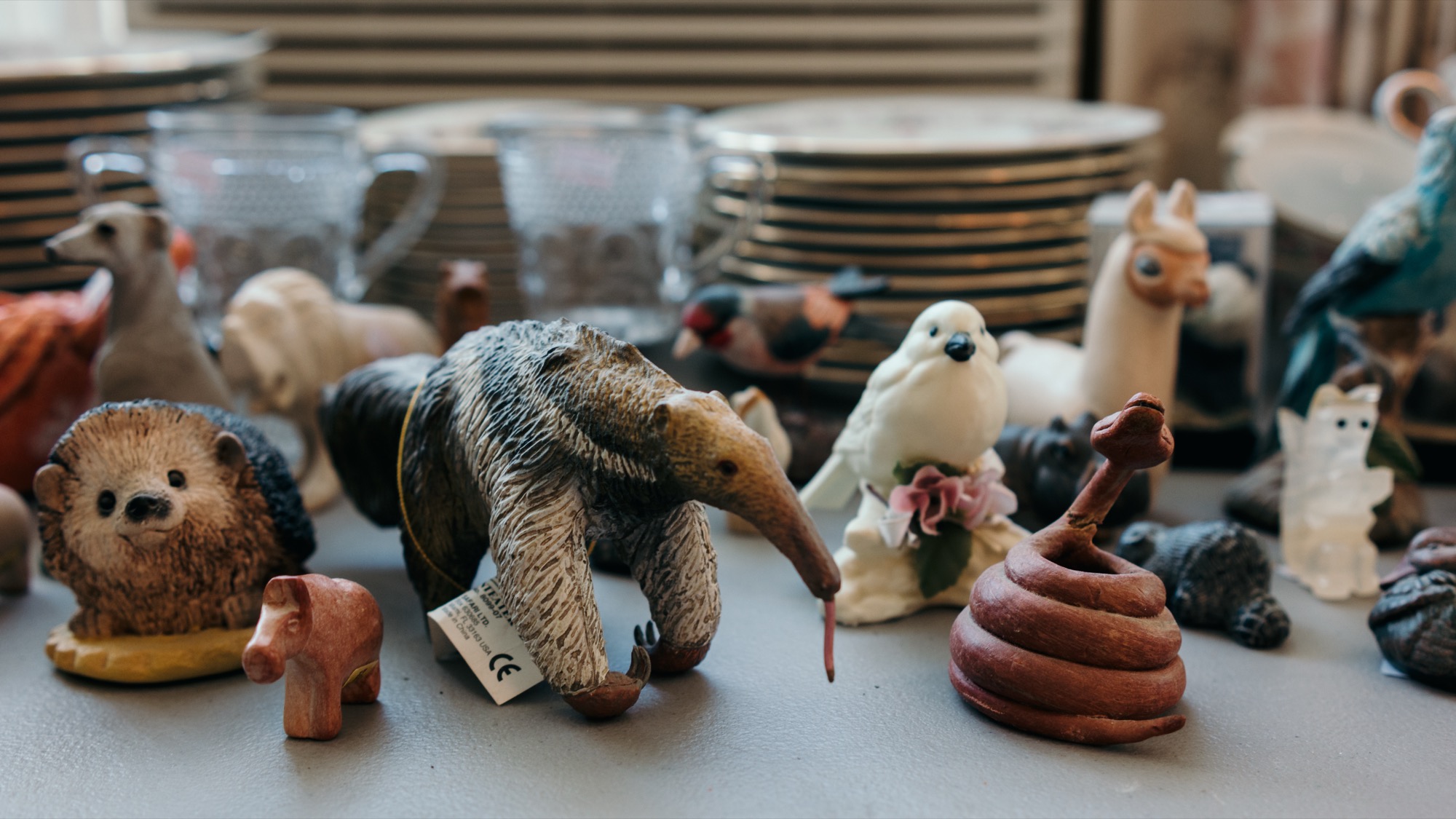
After my wife’s grandmother passed away late last year, we’ve had a lot of…stuff…to sort through.
Now that the family has had their picks, it’s time to put up signs, open the doors, and host an estate sale.
While we waited for customers, I sorted through grandpa’s slide film collection – more on that later – and helped carry furniture out to trucks.
In the quiet moments, I captured what was left on my Canon EOS M6 and Viltrox 23mm f/1.4.
Someone was there. Someone saw that, experienced that, made that.
Someone. Not something. That’s who makes art.
Couldn’t agree more, Jake.
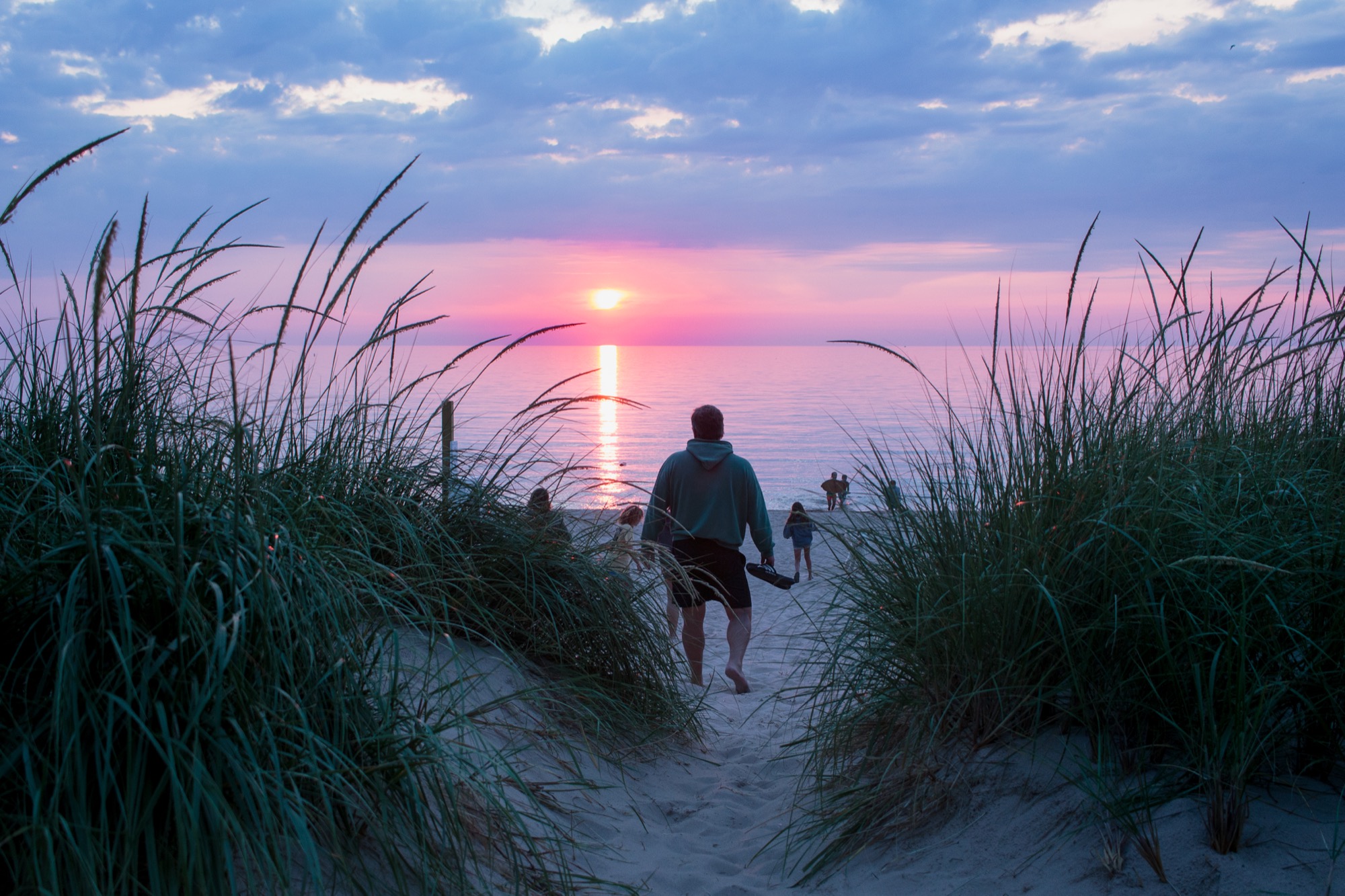
This August, we headed back up to Pentwater, Michigan – a beautiful west-coast town along Lake Michigan – for a week of sand, waves, and fellowship with some of our church members at Family Camp.
No wildfire haze masking the sunsets this year. In fact, during one sunset, I took our stand-up paddleboard and rowed out into Lake Michigan to watch the pink and blues take over the sky.
All images shot on the Canon EOS M2 and the EF-S 24mm f/2.8.
Last year, Canon released a simple, beginner-friendly, and affordable video-focused camera in the R50V. Along with the Canon R6V and C50, it also introduced a new, sleeker body style for these video cameras.
When I saw the R50V’s launch last year, my first thought was, “I love that body design.” It reminded me so much of the Canon EOS M system, particularly the Canon M, M3, and M6 series with no viewfinder.
Much like Canon’s first mirrorless system, the R50V was smaller, thinner, and arguably more portable than many of its predecessors.
So I tested one out for photography. Many reviews focus on the video capabilities of this camera, and for good reason: it’s a mini cinema cam.
The R50V came with a few built-in photo downsides: no physical shutter curtain, no electronic viewfinder (EVF), potential overheating, limited battery life, etc.
What better way to test some of these disadvantages than taking the R50V out to the desert heat of Arizona?
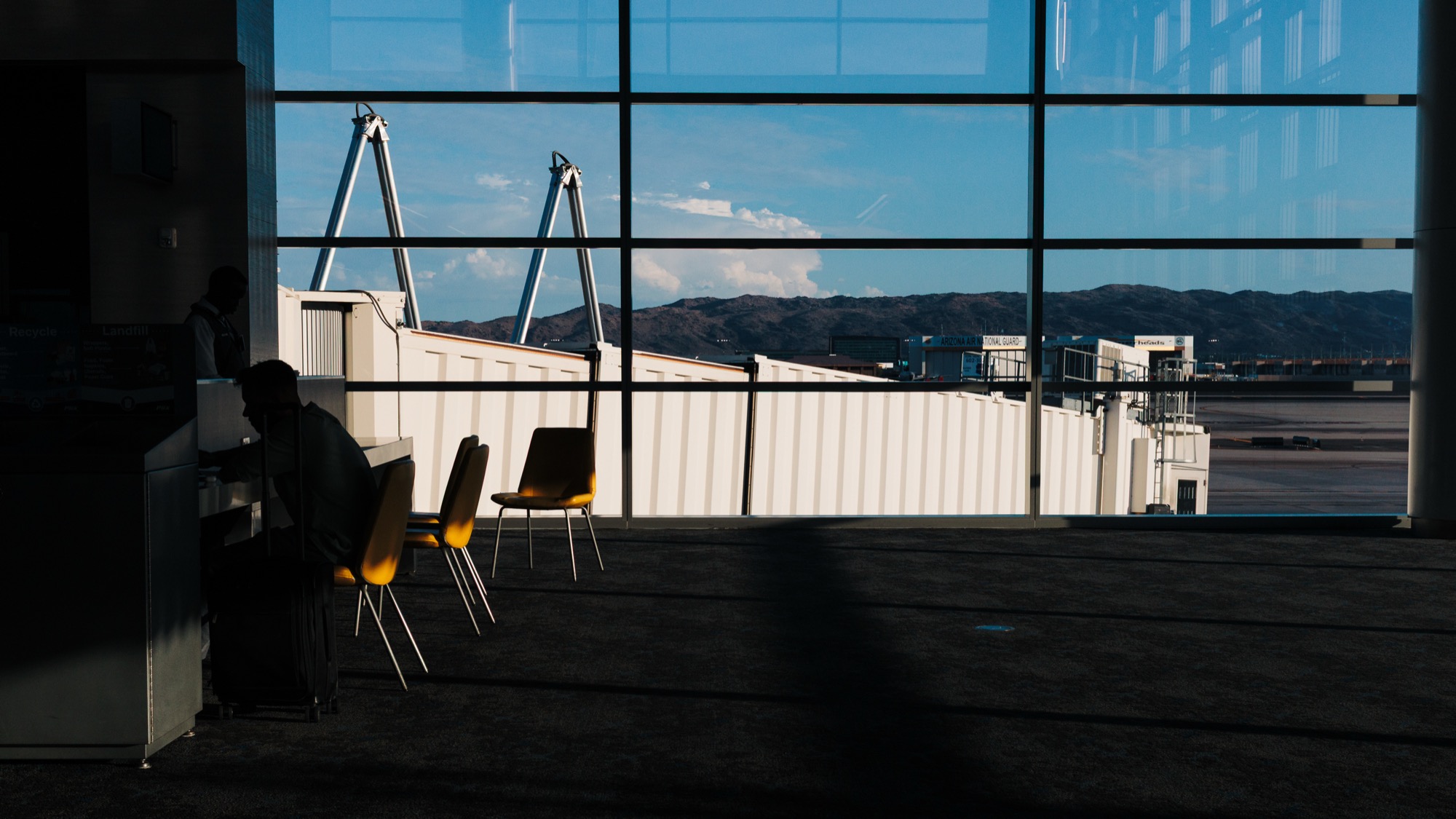
I took a work trip to Tempe, Arizona in June, and let me tell you, it was hot. Most days, it was 100+ degrees Fahrenheit hot. Coming from 75-degree Michigan, it was almost unbearable.
But I braved the sun and hit the streets to see if the Canon R50V – paired with the compact RF 28mm f/2.8 – could be used as a photo-first camera, despite the perceived drawbacks.
I’ll tackle these potential downsides one by one.
Arizona has no shortage of sunlight. One snag with EVFs is that if the sun is bright, it’s harder to see the back screen on cameras with EVFs.
In Tempe, I had to turn up the screen brightness to its highest level to keep scenes crystal clear. I was grateful that the screen wasn’t an issue, even with those bright desert skies.
I’ll credit my own comfort level with using Canon M cameras without EVFs, too. Using the R50V was like using my Canon EOS M6.
The Canon R50V was the first time I’ve used a camera with an electronic-only shutter. Walking around town, shooting architecture and street photography, I had no issues with the shutter.
Granted, I wasn’t shooting fast-moving subjects. I also wasn’t shooting a lot of artificial light, nor was I using flash (I rarely do). In these cases, the electronic shutter wasn’t an issue at all.
The Canon R50V uses the smaller LP-E17 battery, the same one used in smaller Canon mirrorless cameras like the RP, some older consumer-grade DSLRs, and the later Canon EOS M cameras. I use the LP-E17 in my Canon EOS M6, for instance.
In my experience, I had no issues worrying about battery life in my travels. The challenge may come if you’re using the R50V for video as well as photography. I brought along two batteries and had no issues with battery life during my travels.
Overheating is mostly a video issue. Once again, I had no issues with overheating while using the Canon R50V – even in the hot Arizona sun.

Because the Canon R50V is a video camera with an option for photos, if you’re looking for a photography-focused camera, this may not be it. With its lack of built-in flash capabilities, the R50V is not a studio camera, either.
But if you’re looking for a hybrid camera, or want to get started in video without losing picture taking, this is a portable, affordable, capable option.
You can pick up a refurbished Canon R50V at a nicely discounted price.
Watch my YouTube video where I share more thoughts about the R50V and you can see it in action:
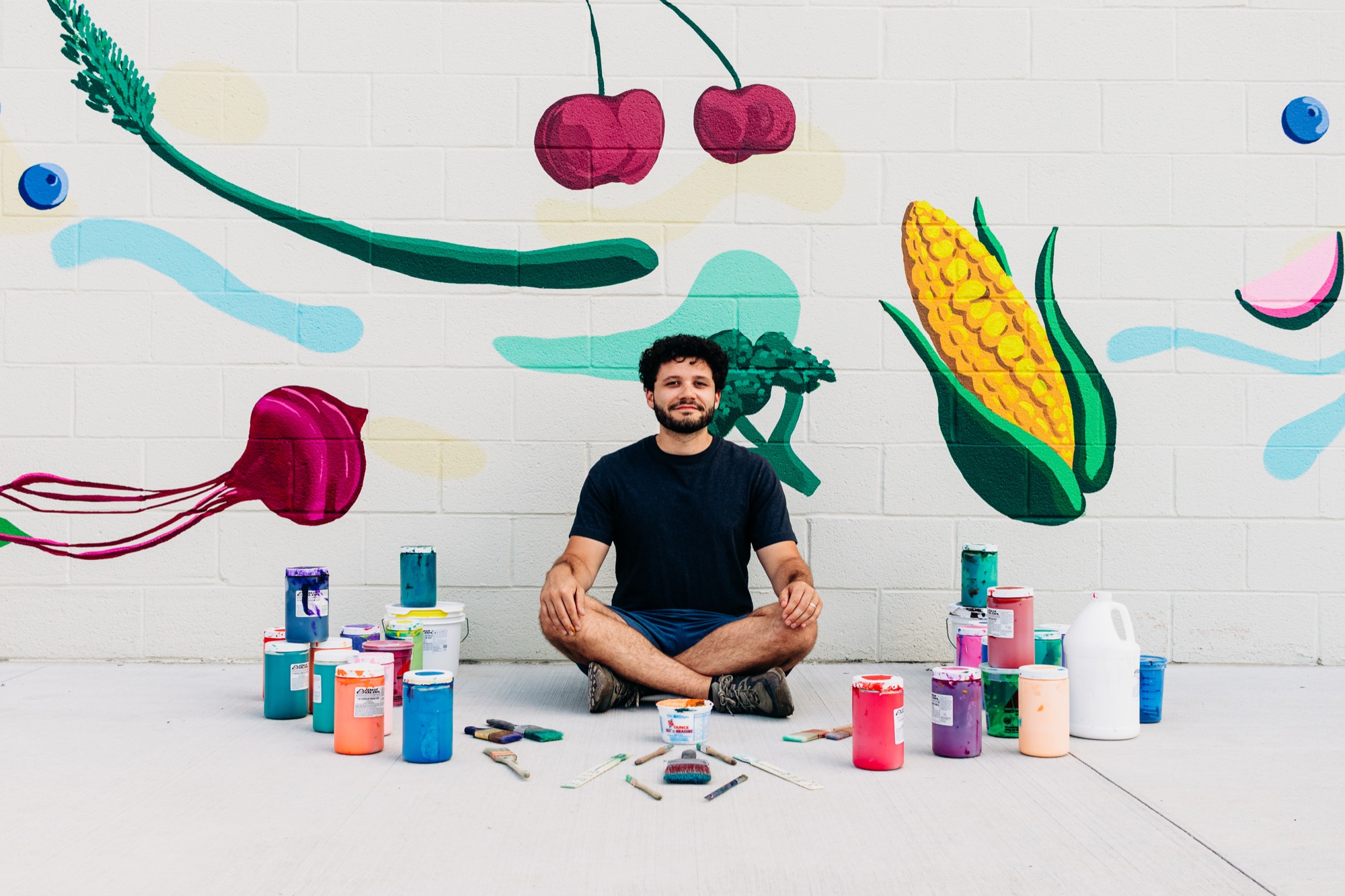
A few years back, Zach Snyder painted a hospital tunnel in Jackson with a freehand explosion of psychedelic color, connecting the Anderson Building, once a psychiatric facility, to the main hospital.
It turned out great, he thought, even though he had no sketch or plan.
After the mural was complete, the hospital reached back out. Patients were reacting to it, seeing shapes in the abstract color that weren’t meant to be there.
“Even people that weren’t in psychosis were like, ‘Is that supposed to be a dog?” Zach says.
Looking back, he understood why his mural caused such a reaction.
“In hindsight, I was like, ‘Why would I do that?’ No wonder.”
He went back and repainted the space himself, this time with flowers – something a little more gentle.
It was, he says, the first time he really did a mural.

That instinct – to go big first and adjust once real people react – runs through most of what Zach says about his path.
He grew up in Jackson, went to Jackson High, and started drawing seriously as a teenager holed up in his room.
“People started saying that’s really good, and then my ego got a little big, so I kept going,” he says.
He studied illustration at Grand Valley, where a painting class turned into the start of his artistic practice. His professor, Jill Eggers, noticed his resistance to painting still lifes and pushed him toward his own abstract color work instead, letting an assignment grow into a series that had nothing to do with the planned curriculum.
“She really nurtured my, I-don’t-want-anybody-to-tell-me-what-to-do attitude,” he says.
It gave him room to paint what he wanted and grow on his own terms. For his senior show, she suggested he try something large, so he built a 21-foot mural out of three 5-by-7 canvas panels and covered it in cheap mist-tint paint.
Today, that attitude helps him thrive in his perfect mural situations: a few notes or themes from the commissioner, but then total freedom to do his thing.
A gallery owner from that senior show connected him to his first mural job at Rockford Construction, where he learned to project and prep a wall.
He moved back to Jackson around 2019 and later painted the parrot mural on the Polly’s Country Market near Spring Arbor, a nod to a live parrot kept in the original store when it opened.
A woman confronted him mid-project over the purple background.
“Who in their right mind would paint that wall purple?” she asked. He second-guessed himself right up until it worked.
“Every project or everything I’ve ever done, I’ve been super nervous,” Zach says. “But it always turns out really great.”
Beating those nerves helped him create murals for Bright Walls, Grow Jackson, and several more in and around Jackson.
Today, Zach holds a full-time job at Consumers Energy and teaches art and design as an adjunct at Jackson College, work he credits with taking the pressure off making a living from his art.
“Once I got a full-time job, I thought, ‘okay, I can take a step back and really work on my craft without the pressure,’” he says.
He still paints murals a couple times a year, hosts vendor tables at ArtPop and the Art, Beer & Wine Festival, and moves between abstract shape work, digital drawing, landscapes, and the occasional portrait, mostly to see if he can pull one off.
Zach knows that range doesn’t build a marketable brand, and he’s okay with that.
“I don’t really ever want to limit myself,” he says. “I do everything just out of pure curiosity and enjoyment really.”
Color is what pulls Zach back in, whatever the format.
He traces some of that love of color and abstract forms to years of falling asleep to Pink Floyd, and the visionary work of artists Alex and Allyson Gray.
Mostly, though, Zach’s style comes from noticing things, like colors in nature or shapes in architecture. During spring a few years back, he watched the trees bloom and got fixated on how saturated the pinks and greens actually were.
Exploring color means he’s stopped trying to force any of his work into a single lane, or a single job.
“That’s how I landed where I’m at,” he says. “And I’m chilling. I like it.”
Visit Zach Snyder's website and follow him on Instagram.
There are times when I feel like an archeologist, or one of those National Geographic reporters who delves deep into the Amazon rainforest to discover a long-lost tribe.
For instance, I often go to heavy metal concerts. If you’ve seen me, I tend to stick out like a sore thumb. Maybe it’s all in my head, but I’m the average guy in the crowd who’s not covered in tattoos, chains, or sporting a mohawk haircut.
After photographing Abby Dawson for my Artists In Jackson project, I learned that she, her husband Phil, and her friend Gracie host a bi-annual festival called the Divine Pine Gathering:
Divine Pine Gathering is focused on traditional skill shares, ancestral knowledge, healing, arts, live music and movement.
DPG is as much a retreat into nature as it is a chance to connect to and learn from others. Divine Pine shows the power of love and community that results from gathering in an intentional way.
I love music and the arts, but for the rest of that description, I’m a newbie. So I came to this festival to take photos and learn something – another chance to be a relative outsider looking in.
And don’t get me wrong: I love this kind of experience. Since everything is new, everything is interesting, and I love using my camera to discover new ways of living. Of being.
And Divine Pine offered newness at every turn.
First, the land. Phil and Abby’s property in my hometown of Brooklyn, Michigan, was amazing. And huge. The festival sprawled across fields, under trees, up hills, and around wetlands.
I got my steps in walking from how-to classes to concerts to sound healing sessions.
Second, the people. Everyone was there for love and community, to learn and to live, and you could feel that in every concert, every talk, and every gathering that took place.
The vibes were everywhere, and those vibes were great.
I offered to take photos of the event in exchange for tickets to attend. This opportunity highlights that having a camera and offering your services will give you access to new experiences.
Selfishly, I wanted to be there, and if trading photos for tickets was the method, then I was up for it.
On Friday and Sunday of the festival, I brought along my Canon 6D with the Tamron 28-75mm f/2.8 as my general walking-around lens. It was flexible for most situations and, looking over the photos, did a bang-up job.
On Saturday, I brought along the rest of my family, so I traveled light with the Canon EOS M6 and mostly used the Viltrox 56mm f/1.4 for the reach. Sometimes I would switch to my kit zoom EF-M 15-45mm lens for extra flexibility.
In both cases, I made the right call. I got what I needed and never felt hampered by my photography gear.
What I came away with was an awesome new experience, some reconnections with old friends (and a few new ones), and a series of photos that I’m proud to share.
Those photos will help Phil, Abby, and the event team promote their next event on the Divine Pine website and social media.
For the last leg of our summer holiday, we traveled down to Hale, Michigan, to stay with my dad.
We try to do this every summer. My dad has an RV on his property, which helps us feel like we’re camping out, and we join my sister and other family members for a big get-together over the long summer weekend.
For the first part of our vacation, it was just us five – driving around Wisconsin and the Upper Peninsula, going hiking, venturing out to see new places. Now, it was a big, noisy crowd of family. A capstone on our two-week getaway.
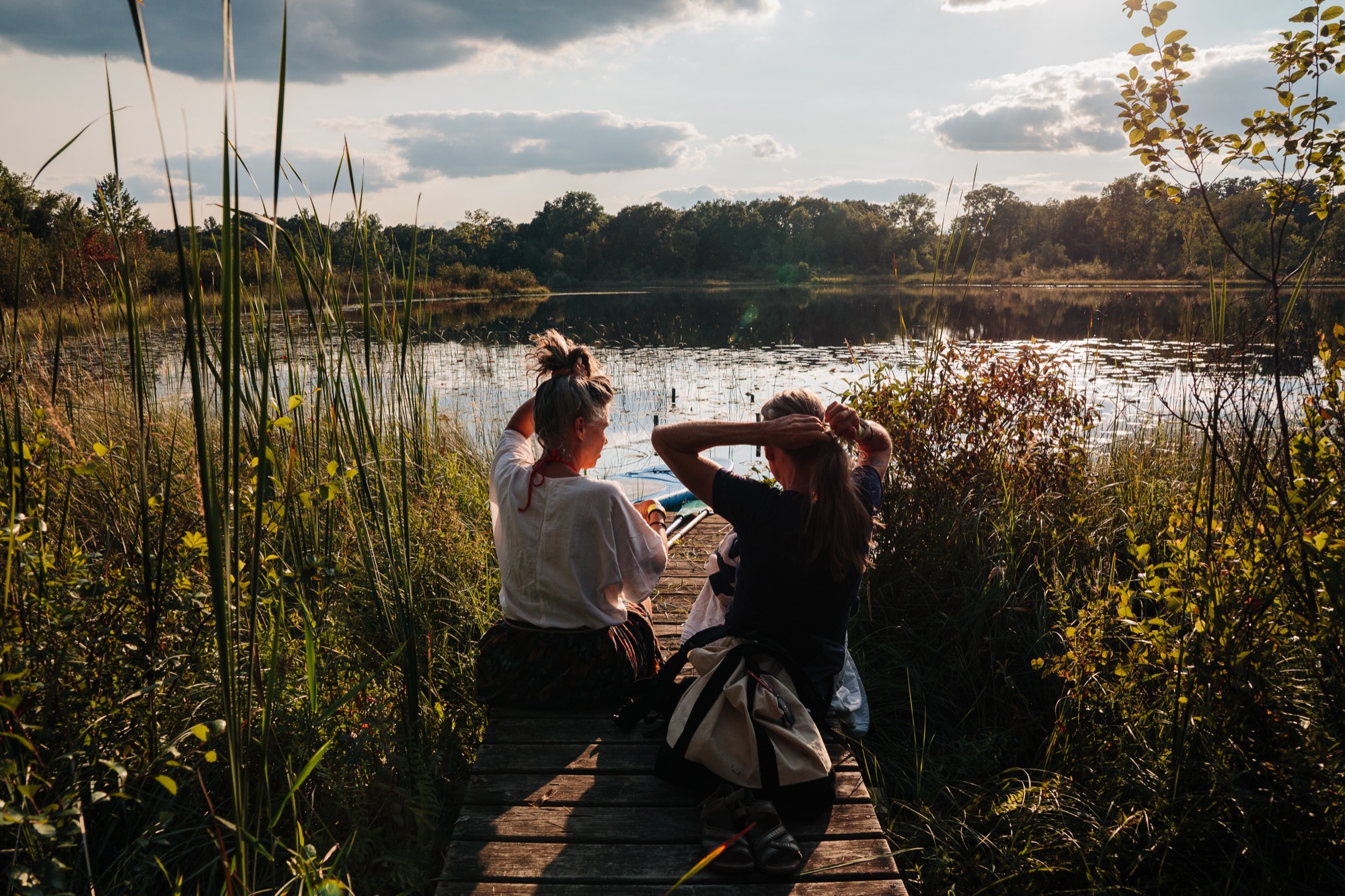
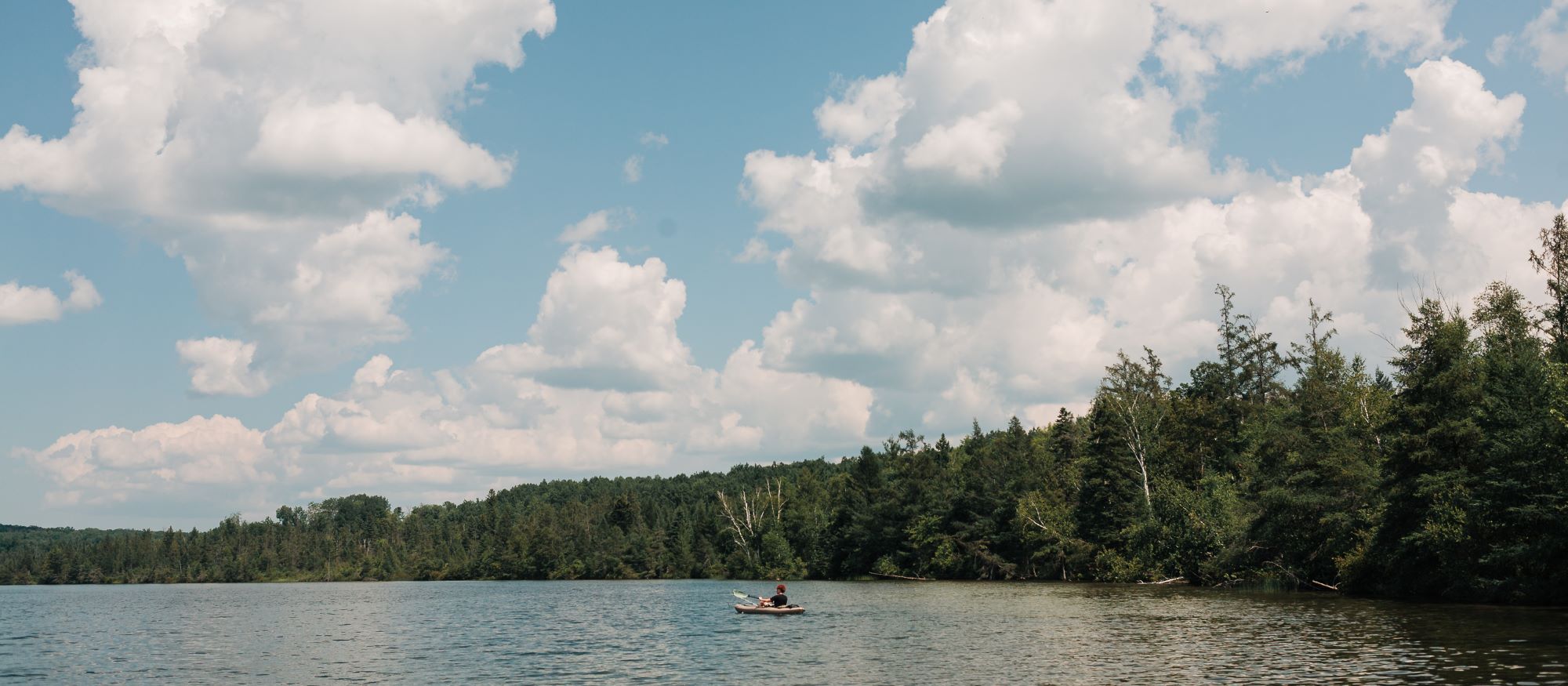
We went swimming and kayaking in the Rifle River Recreation Area, on a remote, wild lake. We grabbed the paddle board and paddled around Long Lake.
It was one of those #PureMichigan settings – the ideal version of what a vacation should be.
The sad part was that we’d be heading home after this was over.
But before that? We’d enjoy every minute of it.
Summer’s not over yet, after all.
Some bonus photos of the cabins and buildings near our Ironwood, Michigan, rental property.
Shot on the Canon EOS M6 and EF-M 22mm f/2.
Our usual summer holiday includes sticking to one spot, with a few exceptions.
This year, after we left Door County, we wandered around the Upper Peninsula of Michigan for a week – first in Ironwood, then in Escanaba.
It was a vacation spent living out of our suitcases, constantly on the go.
First, Ironwood. We picked this little city because of its proximity to the Porcupine Mountains, an ancient volcano system weathered down to our present modest range of basalt and conglomerate.
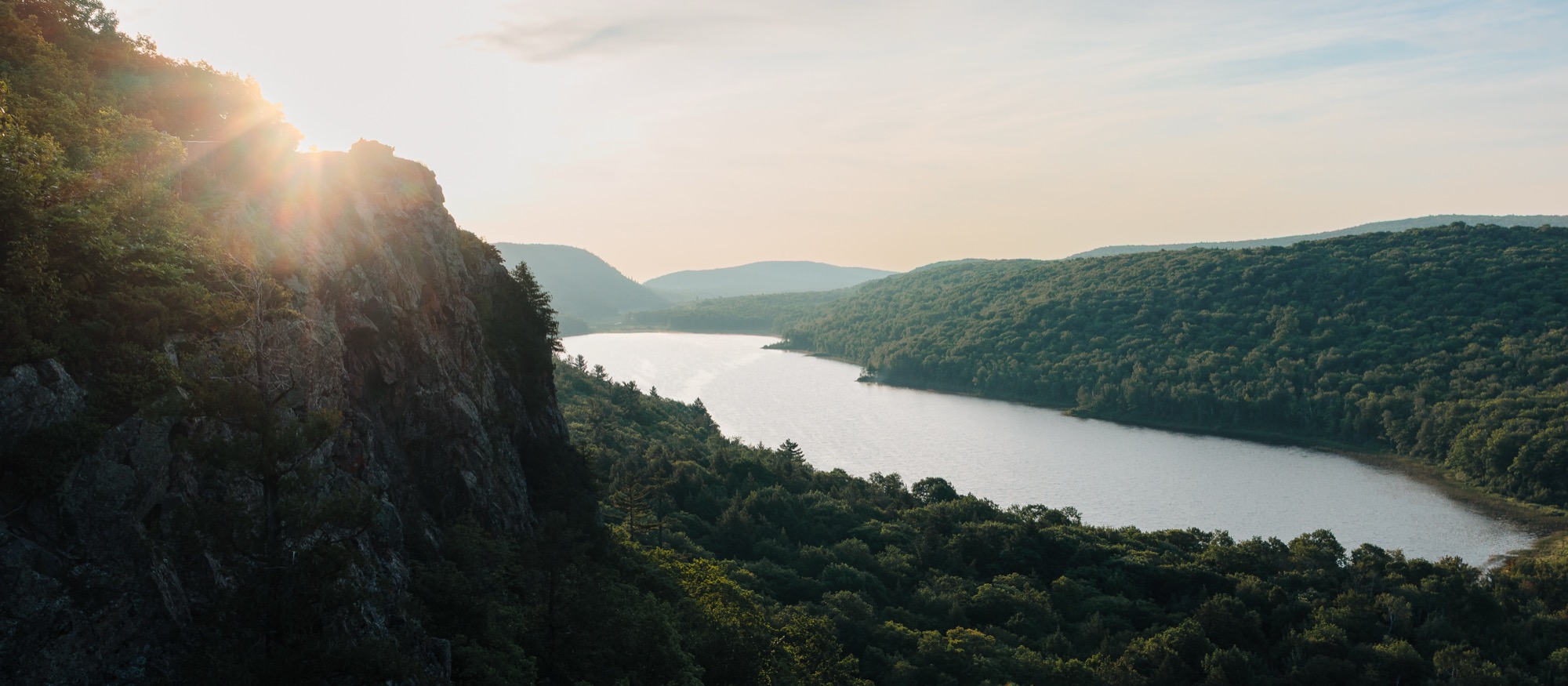
During our first full day in Ironwood, we woke up for sunrise over the Lake of the Clouds.
There’s nothing the kids love more than to wake up at 3 AM to go hiking in the woods – except for just about anything else. But the view? Totally worth it.
After a bit more hiking down to the lake, we stopped by the Lake Superior shore to grab lunch and look at the rocks along the beach.
I took just a few minutes to stop along the road, on the way back, to grab shots of the local businesses.
Our cabin sat alongside the Black River, which empties out into Lake Superior. Along the way, you can hike down to a series of waterfalls along the river.
What I loved about this section of our trip was the hiking. We didn’t get a lot of forest bathing in Wisconsin, but here we had woods a-plenty, and it was good for all of us to hear nothing but birds and the strong river running.
For these hiking trips, the Canon EOS M6 – with its portability and light weight – was perfect: small and capable.
After a few days in Ironwood, we drove down to Escanaba, Michigan, along Lake Michigan, for a different view of the Great Lakes. Here, we found a beach on Sand Island that was great for swimming and sunbathing.
We also explored a bit of downtown Escanaba and a dam that sat outside our cabin on the Escanaba River.
That was it for the Upper Peninsula portion of the trip. From here, we headed south across the Mackinac Bridge to Hale, Michigan, to meet up with my family and finish up our summer vacation.
It’s time again to return to Door County, Wisconsin.
This year, we kept things super simple: fewer trips up and down the peninsula, more time on the lake, more quality time together.
Apart from the no-see-ums, which made our kids look like they had chicken pox, we accomplished our goal.
Before we left, I told my wife I was debating whether to take my Canon 5D classic or the go-to travel camera, the Canon EOS M6. One was an ol’-reliable DSLR, the other was the light and svelte mirrorless option.
“Why don’t you just take both?” she said.
Take both?
I hadn’t thought of that. The M6 was my default travel option, but I knew the Canon 5D would help me capture those special moments down by the water.
I also took it on our hike through Potawatomi State Park, where we climbed the observation tower to look over Green Bay:
We stuck around Sturgeon Bay for a week, then loaded up the car for the second week of summer holiday in Michigan’s Upper Peninsula.
As always, Door County felt like home away from home.
The Canadian wildfire smoke rolled into town yesterday.
Wednesday, we went to bed with clear skies. Thursday morning, I took the dog out in the morning, and there it was: a terrible smell, a yellowish haze, and a dramatic decrease in air quality – so much so that many summer events around town are getting delayed or canceled.
After work, I drove around town to get a sense of the situation. It was dramatic at the Jackson County Airport, where they shut down operations because of the air quality.
Around our own neighborhood, it looked like a foggy day all day long. The farther you looked in the distance, the more haze you could see.
My girls popped outside to do some quick squishy gluing, but other than that, they stayed inside – a bummer for summer, when they should be outside playing.
Global weirding is real.
Shot on the Canon R50v and Canon 5D (classic!).
For Americans, we mostly think in terms of a week of vacation – summer vacation, Christmas break, whatever. Few of us take more than a week off work to go somewhere.
Europeans, however, often take up to a month. I know this firsthand, as many of my EU colleagues disappear in July and August.
For the past two years, our family has met those cultural norms square in the middle: two weeks away on summer holiday. Last year, we did Nova Scotia and Maine, while this year, we did a tour of Wisconsin and northern Michigan.
To some of my friends and colleagues, our two-week leave is a shock. “Must be nice,” they’ll say.
Here’s the thing: in the middle of summer, everyone’s gone. Much like the week after Christmas, late June through early August is summer here in the Northern Hemisphere. Leaving for vacation is what people do.
While our summer holiday never seems long enough, the two weeks of the break are restorative and relaxing. Yes, we go on adventures and work hard, climbing mountains and paddling around large bodies of water. We also get to rest our brains and enjoy where we are and who is with us.
Selfishly, I get a chance to take a ton of photos in new and interesting places, too.
As Americans, it’s easy to envy Europe’s summer holiday schedule. And I’m well aware that not everyone has the time or flexibility to be away that long. The secret is that you can take a little bit of that Continental spirit and apply it to your own situation.
I recommend it.
The latest stop on our Canon Picture Style voyage: Agfa RSX II.
One (of many) limitation of Canon’s Picture Style system: a lack of control over highlight and shadow tones. White balance is up to the camera, so you don’t have much control over color grading. Individual color HSL settings, levels, contrast, and sharpness – that’s about all you can adjust.
Unlike Fuji’s more fine-grained approach to film simulations, Canon’s system lacks both the film legacy and customization options.
What you end up getting is slight variations on a theme.
Agfachrome RSX II is a diverse positive film, a little soft and dreamy, but with a punch of contrast. The colors are vivid and true-to-life without being overwhelming, which made it a versatile choice across different subjects (it’s been discontinued for years now).
On Canon cameras, this Agfa Picture Style is…fine? It works. There’s nothing offensive about it.
But like many of these Canon film emulations, there’s nothing special about it, either. You don’t look at it and think, “Wow, that’s an accurate, useful positive film emulation.”
It’s nice that the skin tones are good, it has a touch of contrast, and yet it retains the slightly warm, soft look that the classic Agfa RSX II had. Muted greens. Saturated reds.
This Picture Style has been another all-purpose one for me (much like the Kodachrome Picture Style): flexible enough to fit my style and applicable in most situations. If you’re a JPEG shooter, you could use this as a reliable film emulation.
But like all these Canon Picture Styles, don’t expect Mastin-, RNI-, or VSCO-levels of film emulation.
Get this Agfa Picture Style in the VW collection, and check out my reviews of other Canon film emulations.
For our family, summer means trips to Lake Michigan. In two hours, you can be right next to one of the world’s great bodies of fresh water.
Summer also means Pentwater, a little west coast town in Michigan that we frequent – either visiting family friends or participating in our church’s summer camp.
Pentwater is a classic Lake Michigan town: busy during the summer, but unlike some of the towns to the south, it retains its small-town charm.
And then, just outside of town, you get these quaint Lake Michigan beaches and fish stores – perfect for a family picnic.
You can’t miss when visiting these little western Michigan towns. Just ask all the Chicago residents who travel this way in the warmer months; their Chicago Bears bumper stickers give away their hometown.