Looking through my photo archives recently, I stumbled on photos from a memorable winter trip with my now-wife to South Haven, Michigan. The result of that trip was one of my favorite photos.
I know: we Michiganders are wacky. In college, I took a spring break trip north, to Toronto, instead of south, as most sane people do.
And here we were, a fairly young couple during a freezing cold February, taking a weekend holiday to the icy Lake Michigan shore. We spent a day walking around South Haven, talking to some locals, and wandering over to the lighthouse to catch an amazing winter sunset.
It was there, on the walkway out to the lighthouse, that I caught this couple holding hands while they shuffled along the path:
It might be one of my most enduring pictures: it won first prize in my local county fair photo competition, it remains one of my most-viewed photos on Flickr, etc. This photo is one of my favorites, too (though it’s hard to go wrong in South Haven, especially in the summer).
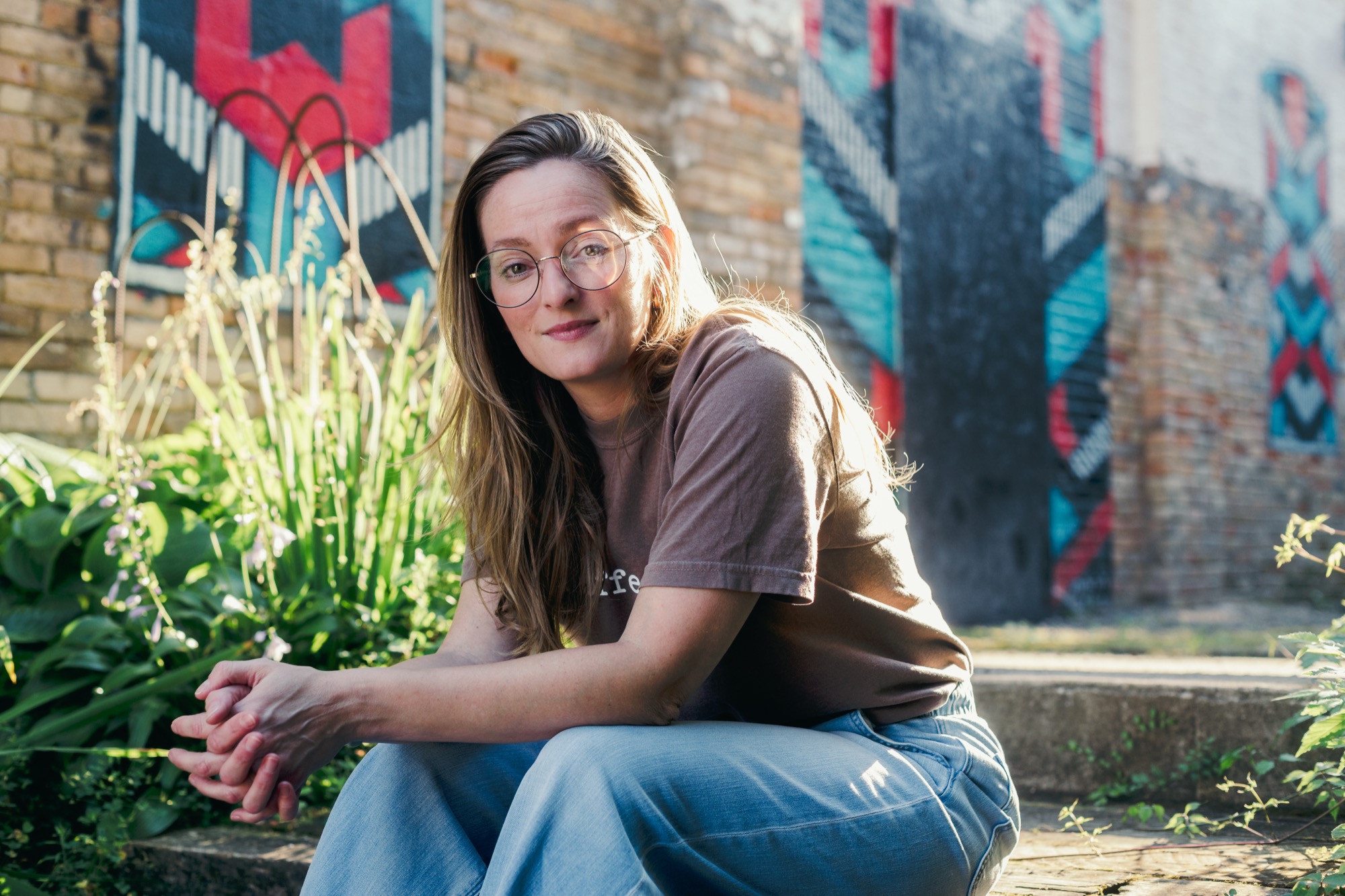
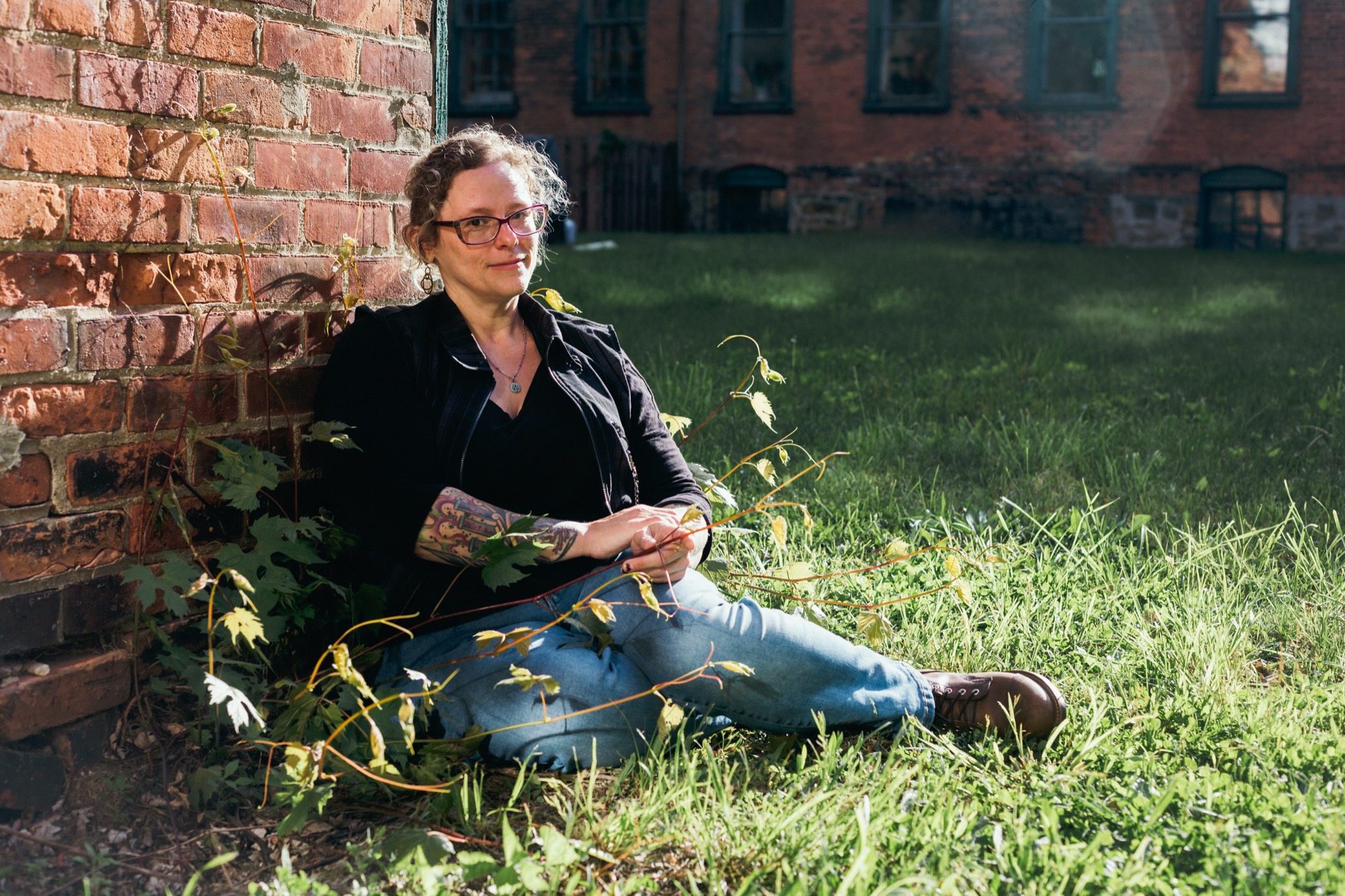
Art has always been central to Jessica Leeland’s life.
“I’ve always done it,” she says. “My brother was an artist. My parents were artists.”
Music, theater, and psychology – together with the visual arts – shaped her early creative world, giving her what she calls “the arts in the whole realm of my life.”
That foundation eventually led Jessica to discover art therapy in college, something she “had no idea” existed until professors recognized her ability to connect with others and encouraged her to explore it.
Jessica soon realized that art could be used not just for expression, but to help people.
“That was my favorite thing, finding out that you could actually help people by utilizing it,” she says.
Choosing Education at a Critical Moment
Jessica initially planned to pursue clinical art therapy, but a sudden opportunity changed everything.
When a music teacher unexpectedly left a local elementary school, she was faced with a choice: continue the art therapy path, or help kids in a different, but related, way.
“I thought, ‘If I don’t jump now, I’ll never do it,’” she recalls.
Rather than waiting years to complete art therapy’s clinical requirements, Jessica chose to step into teaching and advocate for arts education where she felt it was missing.
“Kids need the tools now, in elementary,” she says.
In education, Jessica could give students access to creative tools early, before those opportunities disappear.
“You can still play sports and be an artist. You can still go be a doctor and be an artist. You just have to balance the schedule.”
Teaching as Creative Advocacy
In the classroom, Jessica merges artistic practice with therapeutic principles. She emphasizes pausing, reflecting, and making choices.
“It’s okay to pause,” she tells students. “And then watching them and hearing them speak the words, ‘no means no. Those are my boundaries.’ Those are healthy. This is OK.”
Jessica remembers one moment that confirmed she was exactly where she needed to be.
“A child told me they had never held a paintbrush before,” she says. “That was their first time painting. When that hit me, I knew I was meant to be here.”
Over time, she has seen the impact. Students repeat her language back to parents. Former 4H participants return and tell her, “You told me last year to do this.” For Leeland, those moments are everything.
“That’s game over for me,” she says. “That’s it.”
Her Own Studio Practice
Despite the demands of teaching and family life – she’s married with two kids – Jessica remains committed to her own art.
“If I don’t create for myself in a certain amount of time, I become bitter,” she says. “It’s me flushing my brain out.”
Her Art 634 studio is essential – a place where her brain knows it is time to create.
Jessica’s work spans life drawing, paint pouring, acrylic painting, and ongoing experimentation.
“I’m very much a try it out, test it kind of person,” she explains.
Much of her work is human-centered, shaped by anatomy, psychology, and emotional experience.
“It just needs to come out of me,” she says.
While her art began as something “for nobody but myself,” sharing it has become part of the process. Teaching, creating, and continuing to evolve are inseparable for Leeland.
“This is exactly what I was looking for,” she says.
For Gary Willcock, art is something built from the inside out.
His story begins with buildings.
“I studied architecture at the University of Michigan,” he says. “I worked for a company in Pontiac called Custom Home Design, for Architonics here in Jackson, and I used to moonlight doing drawings at night. I got into a lot of places, met a lot of people, did some fun things.”
Gary grew up in Michigan’s Upper Peninsula. As he moved around the state, he was raised in houses without plumbing or a refrigerator, where every wall and nail carried meaning.
“All those structures had a special place in my life,” he says. “After World War II, there was a huge building boom. Every vacant lot disappeared, and I got involved in it somehow. When my dad decided to build a house, I was part of that. I didn’t know anything about architecture, but I liked designing houses. They told me, ‘That’s an architect.’ So off I went.”
Even after he left formal architecture for design and engineering work, the mindset stayed.
“Wherever I’ve lived, I play with the building,” Gary says. “If I see an empty building, I start massaging it in my mind.”
Gary’s Living Sculpture
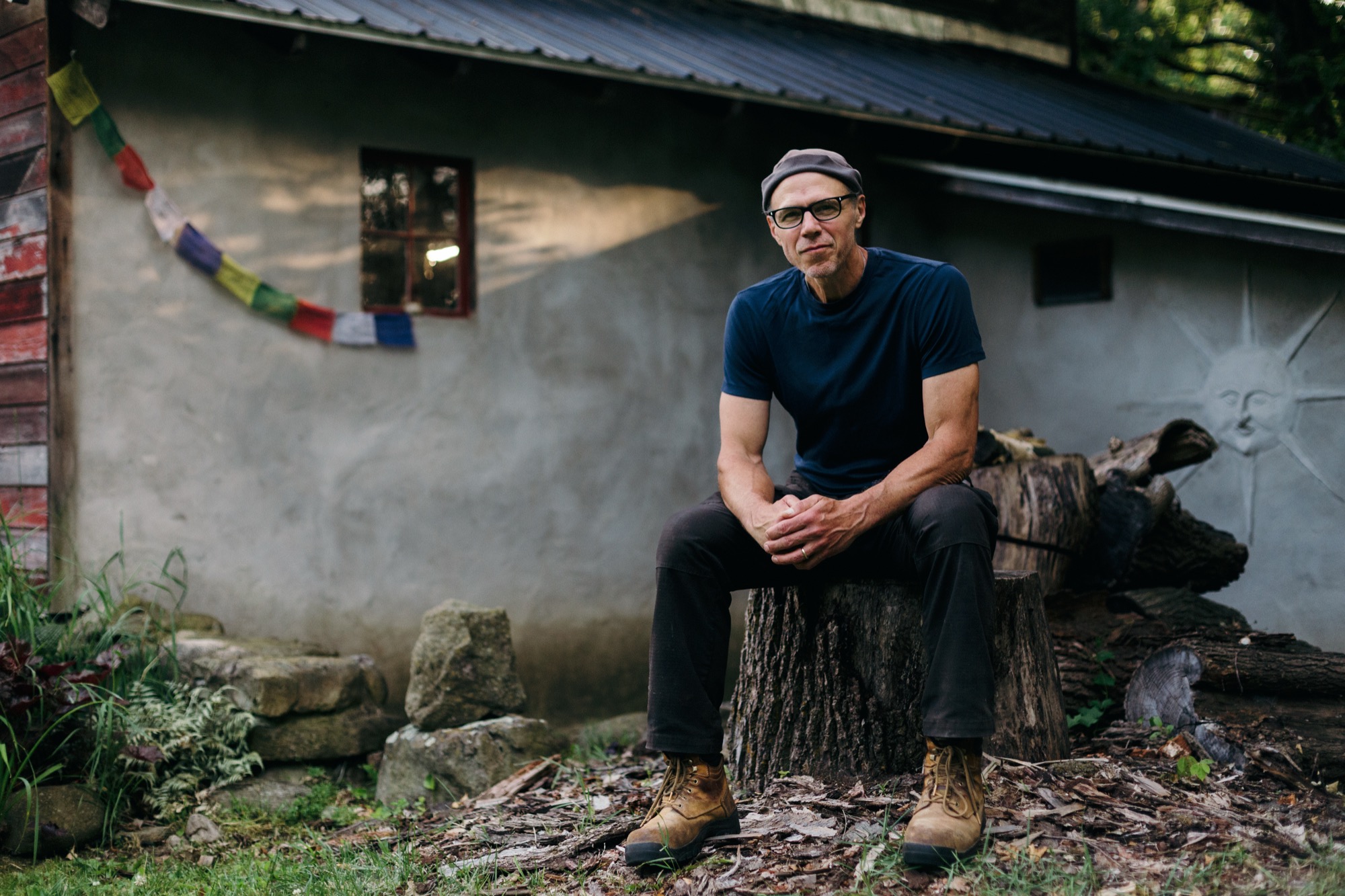
Gary and his wife Christie live on seven wooded acres south of Jackson, a place they call Wind Mountain.
“When I moved in here, this part of the house was just a covered slab,” he says. “I enclosed it, added a reverse gable, and kept going. Over the years, I’ve changed almost everything.”
He built patios, redesigned the kitchen, and drew every trim detail himself.
“This is all my design: the casing, the woodwork. I had it custom-made by the man who built my cupboards,” he says.
Christie calls their home “a living sculpture.” Gary agrees.
“At some point, I wanted my life to be a piece of art,” he says. “To live in this structure where I’ve created all this stuff. I’m walking through my own big sculpture, and it’s functional.”
Sculptures of Precision and Play
Gary’s sculptures merge precision and imagination.
“I’m rigid in some ways,” he laughs. “Right angles all the way. That’s from my mother: you didn’t color outside the lines.”
His background in product and machine design shows in the materials he chooses: anodized aluminum, steel, acrylic, and found parts.
“I think of machines as robots,” he says. “Even a car is a robot. A robotic horse.”
His fascination with robots goes back to childhood.
“For some reason, I never got rid of a toy robot I bought in about 1948,” Gary says. “I bought it at Montgomery Ward in Royal Oak. It cost a dollar.”
Years later, his oldest son found a reproduction and bought it for him, sparking a new collection.
“Then somebody else gave me one, and another, and pretty soon it became a thing,” he laughs. Now, robots, along with dogs, fill his shelves.
“They all have personalities,” he says. “Some of my sculptures do too.”
Light is another essential part of his work.
“I enjoy how it plays off different surfaces, how it bounces around through the holes,” he says. “Some pieces have lenses. You look in one end and out the other, like a telescope.”
His sculptures often carry names that hint at humor and personality: Light Scope, Nest, Red Foreman, SEA AWL.
“I’m corny,” he admits. “But I like it when people lean in to look. Art should make you curious.”
Champion of Local Art
Walk through Gary and Christie’s house, and every wall holds local art.
“If you want a creative community, you support it,” he says. “You show up to openings, you buy work when you can, you encourage people.”
“We buy it because we like it, not because we have to,” Christie adds. “The people who made this work are our friends.”
Gary smiles at that. “Art is connection. You don’t create in isolation.”
Making Meaning through art
After raising six children and working full-time, Gary returned to art in retirement.
“I had to work, so all this was on the back burner,” he says. “One day I told myself, ‘If you’re ever going to do something, you better get off your seat and do it now.’ ”
Now an active member of several local art communities and collectives, Gary continues to draw, design, and build.
“I think art gives meaning to life,” he says. “It reminds us to look closer, to pay attention, to see more.”
Known for his figurative and kinetic sculptures, Tim’s work blends whimsy with craftsmanship. His pieces often balance, spin, or sway – sometimes, just for fun.
“A lot of this stuff moves or has a purpose, but it’s not like a practical purpose,” he says. “I like the idea of making something that does something, but there’s really no reason for it.”
Early Creativity
Tim’s creative story begins far from Michigan, in the western U.S.
Growing up a creative kid in Albuquerque, New Mexico, and later spending time in Oregon, Tim was drawn to the outdoors and the tactile world of making things. His early fascination with Native American culture and ancient traditions, particularly those of the Hopi and Zuni tribes, shaped his artistic sensibility.
“We’d go to the dances at the Pueblo. That exposure made me more interested in a lot of different cultures,” he says.
Before sculpture became his calling, Tim built a career in construction and contracting. He specialized in marble and tile work, creating intricate inlays and custom medallions for homes and businesses in and around Naples, Florida.
“I always liked working with my hands,” he explains. “I started doing tile and marble, and then I’d make tables with inlays. It was creative, but it was also practical.”
Those years, and those early cultural touchpoints, taught him the skills and worldview that would later define his art.
Experimentation and Autonomy
Tim never studied sculpture formally. Instead, he learned by doing.
“I definitely progressed because a lot of the earlier stuff, when I look at it now, it’s kind of rough,” he admits. “I guess it was just experimenting.”
That spirit of exploration remains central to his work. For Tim, art is freedom.
“You don’t have a boss telling you no,” he says. “You’re your own boss. If someone doesn’t like it, that’s fine. And if someone does, that’s great.”
Figurative and Kinetic Sculpture
Today, Tim is best known for his figurative and kinetic pieces. His portfolio (and his property) is filled with curious representations and characters. In his studio, he’s carving a standing wooden figure. Out in the yard, there’s a head made of stone.
“To me, figurative art is more appealing. I don’t like abstract,” he says. “I always like just having an idea and thinking, ‘I’d like to see it actually exist.’ It’s almost like an invention.”
Tim’s studio in rural Jackson is a workshop of constant motion. He works with reclaimed materials, metal scraps, and wood, often starting with a single piece that sparks an idea.
“It’s the fun part to pick something up and then actually make it,” he says. “After it’s done, I’m not as worried about it anymore.”
Beyond his studio, Tim is an active presence in mid- and southeast Michigan’s art scene. He exhibits regularly in Detroit-area galleries and participates in local shows that bring together regional artists.
His work has become a familiar highlight at community art events, where its playful energy draws both collectors and casual viewers.
Brigit, his wife, sums up his appeal simply: “Tim’s work makes you smile. It’s clever and full of life.”
For Tim, that playfulness is the point.
“Either way, I just like making things,” he says. “If someone connects with it, that’s even better.”
Another Saturday morning, another small town in south central Michigan.
This time, I picked a sunny fall morning and drove south to Hillsdale, a small town that I haven’t seen in 15 years. I used to travel to Hillsdale for work fairly often. Today, it’s all photography, and a fresh chance to revisit this small city.
Hillsdale is about a 40-minute drive from Jackson, through the rural countryside, and it was a good opportunity to get to see this section of US-12 again.
The first stop? Lewis Emery County Park to watch the sun rise.
I met this gentleman who was struggling to find a fish.
“What are you photographing anyway?” he asked.
The scenery, I said, and to watch the colors change as the light came in.
“Well, if you see any fish around, send them my way,” he said.
Driving into town, I spotted this industrial section of town and pulled over to explore. The sun was coming up and lit up these bright white silos perfectly.
On the town square, near the courthouse, I walked around the farmers’ market and bought a delicious selection of apples.
At the farmer’s market, I ran into a co-worker and her friend.
“What are you doing down here?” she asked.
Have camera, will travel, I said.
Photos shot with the Canon 5D (classic!) and either EF 50mm f/1.4 or 40mm f/2.8.
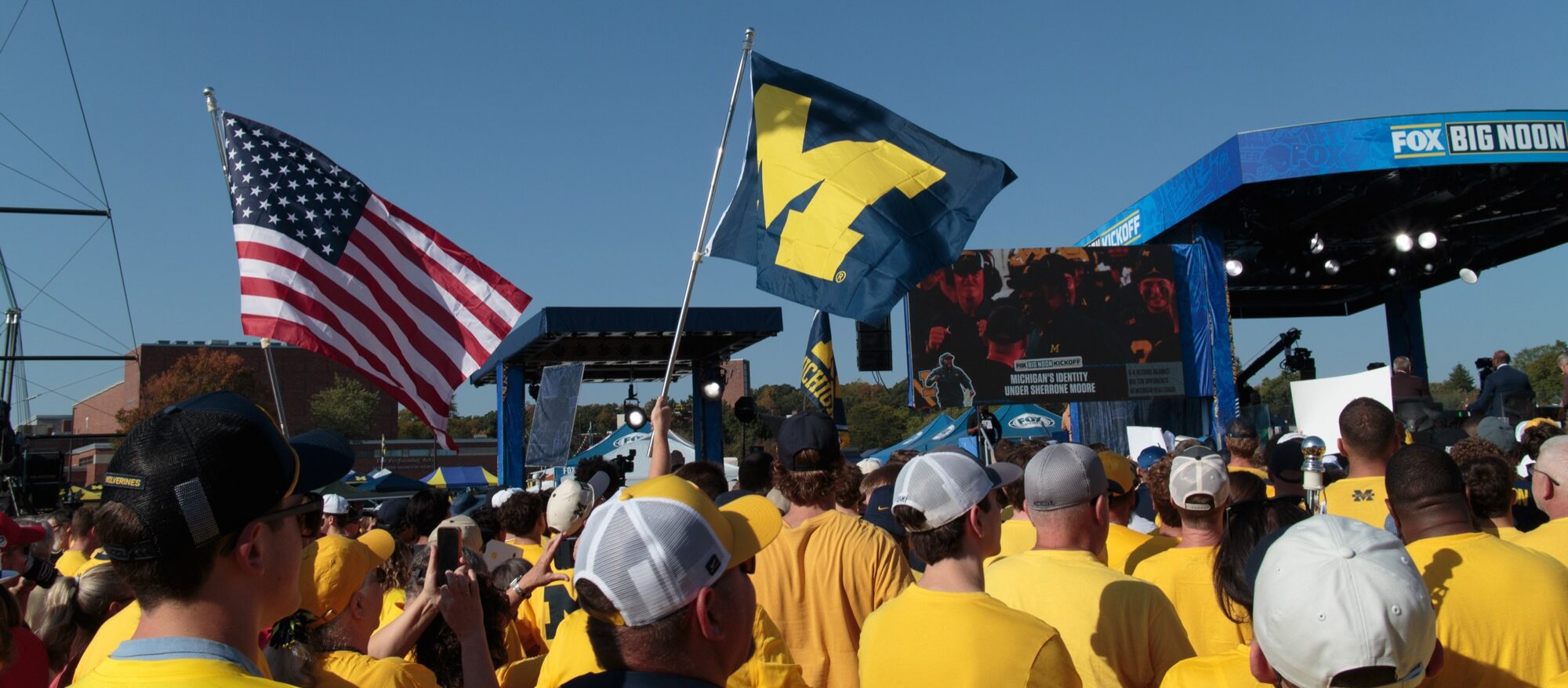
Back to the University of Michigan’s Big House, the largest stadium in America, this time to watch the Wolverines take on the University of Wisconsin.
My friend, Don, and I started out at Fox Sports’ Big Noon Saturday TV taping, live from the high school across the street from Michigan Stadium.
If you treat these big game settings as street photography, you can capture the fun and excitement of all the fans. I brought my Canon EOS M2 as my light and portable gear, easily bringing it everywhere I went. I even put it in my back pocket and breezed past the security checkpoint.
The weather was warming up – and quickly – as we headed into the stadium. By halftime, the temperature climbed to the unseasonable 80-85 degrees F.
We had to take a break and drink some water in the shade. We weren’t the only ones.
This didn’t feel like fall football in October. This felt like summertime.
By the start of the fourth quarter, the game was well in hand for Michigan. I grabbed a few final photos on my way out of the stadium, taking advantage of the bright sunlight and all those maize-colored shirts and jerseys.
Let’s go, Blue!
Photos shot on the Canon EOS M2 and EF-M 22mm f/2.
My family and I are participating in our local theatre production of The Full Monty.
When our family performed in Chitty Chitty Bang Bang in 2023, I was an observer as my wife and two girls starred in the show. This time, I joined the team as an ensemble member.
For our rehearsals, I asked for special permission to bring my camera and capture some behind-the-scenes pictures. These BHS shots are often my favorite kinds of photos. I feel like I would’ve been a great on-set movie photographer.
This is also a way I can give back to the production without working on the set, or the market plan, or having a starring role. By taking photos, I can capture the process. Along the way, the cast and crew can see how the show becomes The Show.
Throughout the month of rehearsals, I snagged hundreds of photos. Here are my 10 favorites and why I appreciate them so much.
#10: First Day of Rehearsal
I walked into the church basement, where we would live for weeks fleshing out the show, and was immediately caught by the light streaming in the sliding-glass window. This was a good sign: good, dramatic light. I knew I had a good situation to create interesting photos.
#9: View from the Stage
In the church where we rehearse, there is a stage where we don’t rehearse – which I think is kind of funny. Maybe it’s too small. But anyway, here’s a view from that stage as we practice.
#8: Jaime Feeling It
My wife, Jaime, is feeling something here. It was a fun moment to capture as the other actors read their lines.
#7: Contacts for Harold
Vicki (played by my wife, Jaime) and Harold are my favorite characters in The Full Monty. Initially, you see them as a materialistic couple that only cares about money, vacations, and displaying a false image of wealth and status. But soon you realize that they are deeply in love, and none of those material things matter. Here’s a moment where you see Vicki’s love for Harold in action, and it’s a hilarious moment in the musical.
#6: Makeup Time
Pure backstage goodness. Matt is our stage hand, and he plays a club owner in the musical – typical big, tough, handy guy. Here, he’s getting some makeup applied by his partner, Kris.
#5: The Boys
The six main characters of the show, here lined up on stage. I love how the negative space created by the shadow in front of the stage blacks out the entire theatre, leaving the focus on the guys with their hands raised.
#4: Reg In Light
Here, Tori looks like Bruce Wayne, barely in light, mostly in shadow. Tori was a frequent subject of photos because he’s such a character.
#3: Dressing Room
Before we got settled into the theater and backstage, I caught this quiet moment with Talon in the dressing room that I really like.
#2: Reg In Shadow
Like I said: Tori is a character, and here, that dynamic light in the church basement comes back into play. I fell in love with the light in our rehearsal space.
#1: Jerry In Repose
My favorite shot from rehearsals – this moment of quiet and rest from Talon, who plays Jerry, on the stage. It’s minimal, focused, and the contrast between Talon’s skin and the black stage floor is my kind of perfect.
I took a lot of photos during the process, and I’m very proud of the work. You can see more photos from our The Full Monty rehearsals on my Flickr profile.
BONUS: Horse Cracking Up
Allyn is a laugher, and I have a ton of him cracking up at some inappropriate comment. This one was my favorite 🙂
All photos were shot on the Canon EOS M6 with a variety of lenses.
It’s not every day a couple of hot air balloons float above the neighborhood.
But when you’re block sits here on Lawrence and Highland Boulevard, on the south side of Jackson, Michigan, you’re not far from our local Hot Air Jubilee launch point.
So: balloons. Floating through a neighborhood.
On this neighborhood walk, I was approached by a guy who was watching me from his porch. He saw me taking a photo of a shadow and asked me why I was taking a picture of a license plate.
I tried to reassure him I was only taking photos of light and color around the street, but I think he was still suspicious.
“Didn’t you see those balloons?” I thought. They’re the real intruders worth worrying about.
The Irish Hills in south central Michigan continue to be an ongoing project – one of the places I return to, time and time again, to capture an area that I love.
Except it’s been nine years since I was out this way. Much has changed.
I brought along the Canon 5D Mark II and both the EF 40mm and 50mm lenses, and started with the little lakes that run along US-12.
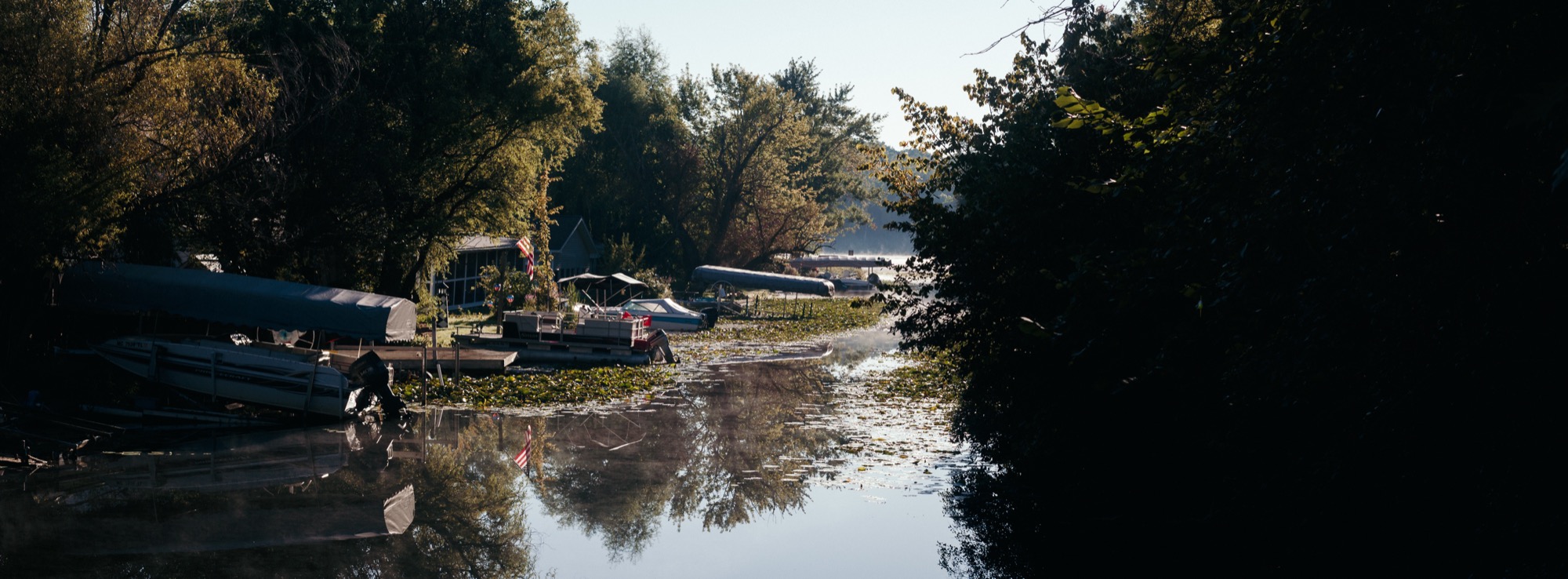
As luck would have it, the fog rolled in on this cool September morning and made for some good imagery down these long country dirt roads.
Further East on US-12, I stopped to revisit the amusement parks and classic Irish Hills roadside stops that I’ve spent years photographing.
Sadly, many of my old haunts were either torn down or converted into unrelated businesses (Prehistoric Forest, for instance, is now a golf cart rental shop). A lot can change over nine years.
To me, seeing all these classic Irish Hills stops being torn down or transformed means it’s more important than ever to photograph them before they’re gone.
Just a little further down US-12, I stopped by a few more lakes – Sand Lake and Evans Lake – because they still had a little bit of fog, and the light was just right.
The bright reds, especially, stuck out from the background of blue and green on these lakes.
Before the light disappeared, I headed back to my hometown of Brooklyn, Michigan, and stopped at a marina for some more boat shots before the fog burned off completely.
I grew up in this area. It’s always nice to revisit these familiar scenes when the morning light is just right. Photographing a place you love shows a special kind of respect.
Part of these morning trips involves simply driving around, exploring, and seeing what scenes catch my eye. Dead ends are never a bad thing – it’s all about the adventure.
So when leaving Brooklyn, I stopped at a few final places to look at them with a photographic eye.
It’s home, reimagined.
Shot on the Canon 5D Mark II with the EF 50mm f/1.4 and 40mm f/2.8.
Our Methodist church hosts a summer family camp in Pentwater, Michigan, each August. My wife was a regular attendee growing up, but we – as a family – had never gone except for a brief visit a few years back.
This year, we decided to join our church and make it part of our summer getaway schedule.
Pentwater, Michigan, is one of those classic west coast Lake Michigan towns: small and exceedingly beautiful, catering to weekenders from Chicago, Grand Rapids, and Detroit.
That’s the village part. The Lake Michigan sand dune forest part? That’s what we came to experience.
On one side of the sand dunes, you have pristine Lake Michigan sand and water – complete with a wildfire haze sunset.
On the other side, it’s dirt and bugs and camp sites. No technology, very little cell service, and the perfect setting for our kids to explore, make friends, and get messy.
The sad part was that I had to leave my family after the first few days for a business trip to Brooklyn, New York. For both trips, I brought along my new Canon EOS M2 to test out.
The challenge in Pentwater: keep the sand out.
All images shot on the Canon EOS M2 and 22mm lens.
Just a few years ago, Jen Dixon couldn’t brush their teeth, let alone imagine being surrounded by community and creativity.
“I was agoraphobic for five years,” they explain. “Didn’t meet people. I was training for COVID before COVID.”
The isolation was deepened by chronic illness, pain, and years of battling to be seen—not just as a person living with disabilities, but also as a nonbinary creative with a past shaped by trauma and tenacity.
Today, Jen stands surrounded by microscopes, T-shirts, illuminated signs, handmade cellular art, and a growing circle of collaborators who genuinely believe in them.
“Right now, I think the real art is learning to trust myself again,” they say.
A Scientific Soul in a Maker’s World
Jen’s path hasn’t followed any straight lines. They first studied computer programming while working full-time and caring for a terminally ill fiancé.
But after a near-death experience caused by a massive blood clot following a roller derby injury, they re-evaluated everything.
“I remember crawling across the floor thinking, ‘This is your last moment. Experience it,’” Jen recalls. “And after surviving that, cubicles just weren’t going to cut it.”
What followed was a dive into botany, volunteering at Iowa State’s herbarium, and eventually entering a PhD program.
Their love of science came with an endless hunger to understand.
“One of my professors said I was an artist with the soul of a scientist,” they say. “That felt true.”
Jen’s artistic practice came to life while teaching plant systematics in Iowa.
When a visually impaired student entered their classroom, Jen faced a challenge: how to share the microscopic beauty of cellular structures with someone who couldn’t see them?
That night, they created a clay version of a microscope slide and transformed invisible wonders into tactile art. If the student couldn’t see the cell, then they would be able to feel it.
“I don’t know how well it worked for her,” they say, “but for me, it unlocked something. It made me think: what if everyone could feel this beauty?”
Creating with Curiosity, Sharing with Empathy
From there, Jen’s art grew out of curiosity and constraint. While bedridden, they began sketching detailed cellular forms in Procreate, finding comfort in radial symmetry and microscopic inspiration.
Eventually, they started laser-engraving these intricate images into wood and velvet.
“I just wanted to see if it would work,” they say. “It was all experimentation.”
Jen’s art now includes protest T-shirts, building signage, velvet-burned botanical forms, and tactile pieces made of wood and reused materials.
“It all came from wanting people to experience wonder—even if they can’t see it the traditional way,” Jen explains. “There’s got to be a way to share that.”
Today, Jen’s studio is a living lab—a DIY playground of soldered lights, etched acrylic, scavenged pipe supports, and refurbished microscopes.
“Everything is a version one,” they laugh. “The next version will be better, but I have to start somewhere.”
Building a Community That Builds You Back
Jen is now helping to build a community at The Sparks (formerly the Commercial Exchange), where collaboration drives creativity and progress.
From teaching others how to build and reusing materials to organizing artist showcases, they’ve found their voice again.
“I used to think I didn’t have any value unless I met society’s expectations,” they say. “Now I just try stuff. And it’s working. All these different paths in my life, they have all culminated into skills and work that’s relevant and useful.”
Even through lingering self-doubt and social anxiety, Jen persists – out into the sun and into an artistic team.
“I’m deciding how I engage with the world now,” they said. “I see the potential for the future, even if it’s scary. I catch the future out of the corner of my eye. And I’m scared to look right at it because it may disappear.”
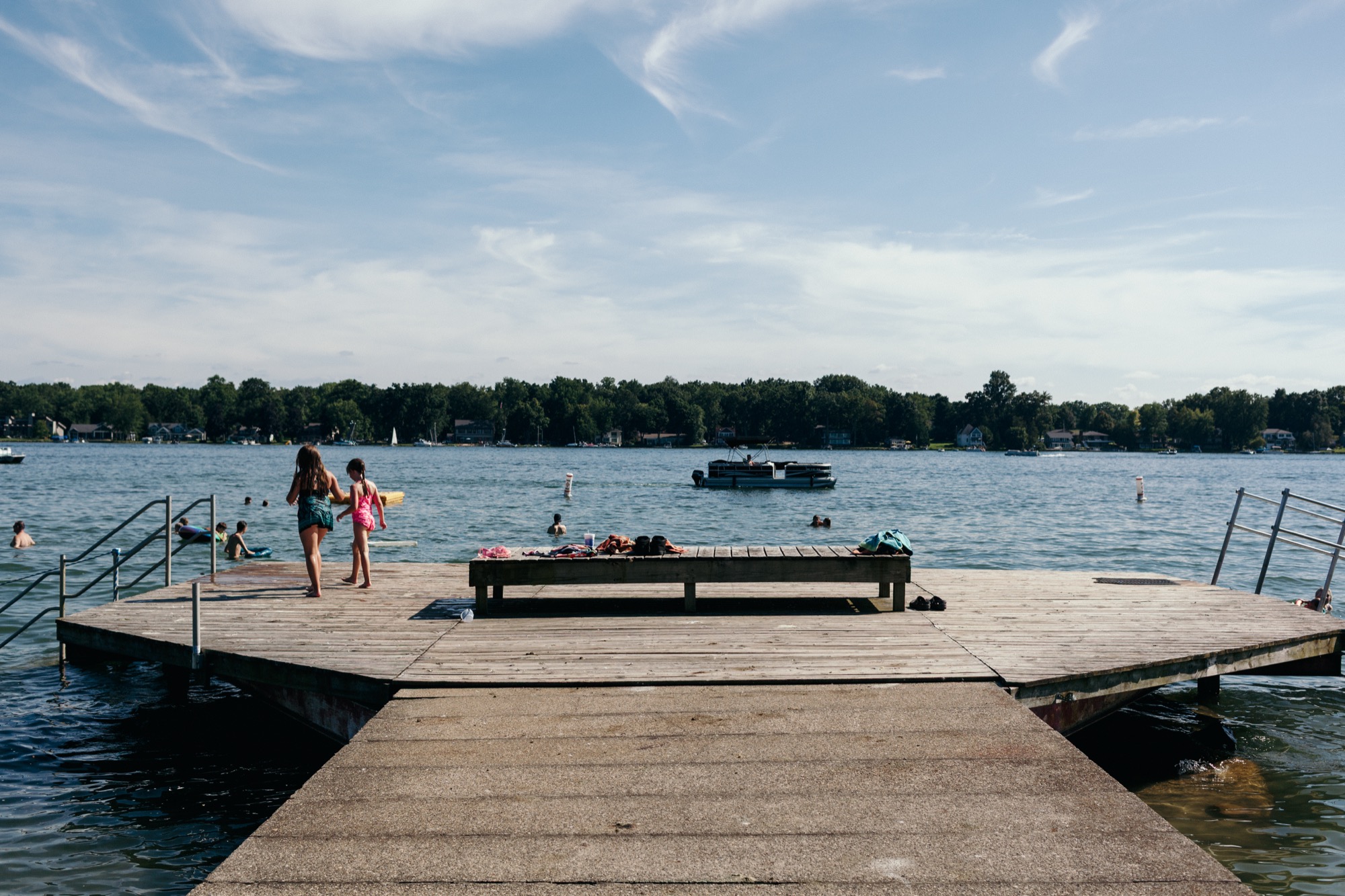
Here in Brooklyn, Michigan, where I grew up, you can’t spit without hitting a lake.
Clark Lake is the popular one, especially at the members-only Consumers Energy Boat Club. A few friends invited us to spend a warm summer Sunday by the beach with them.
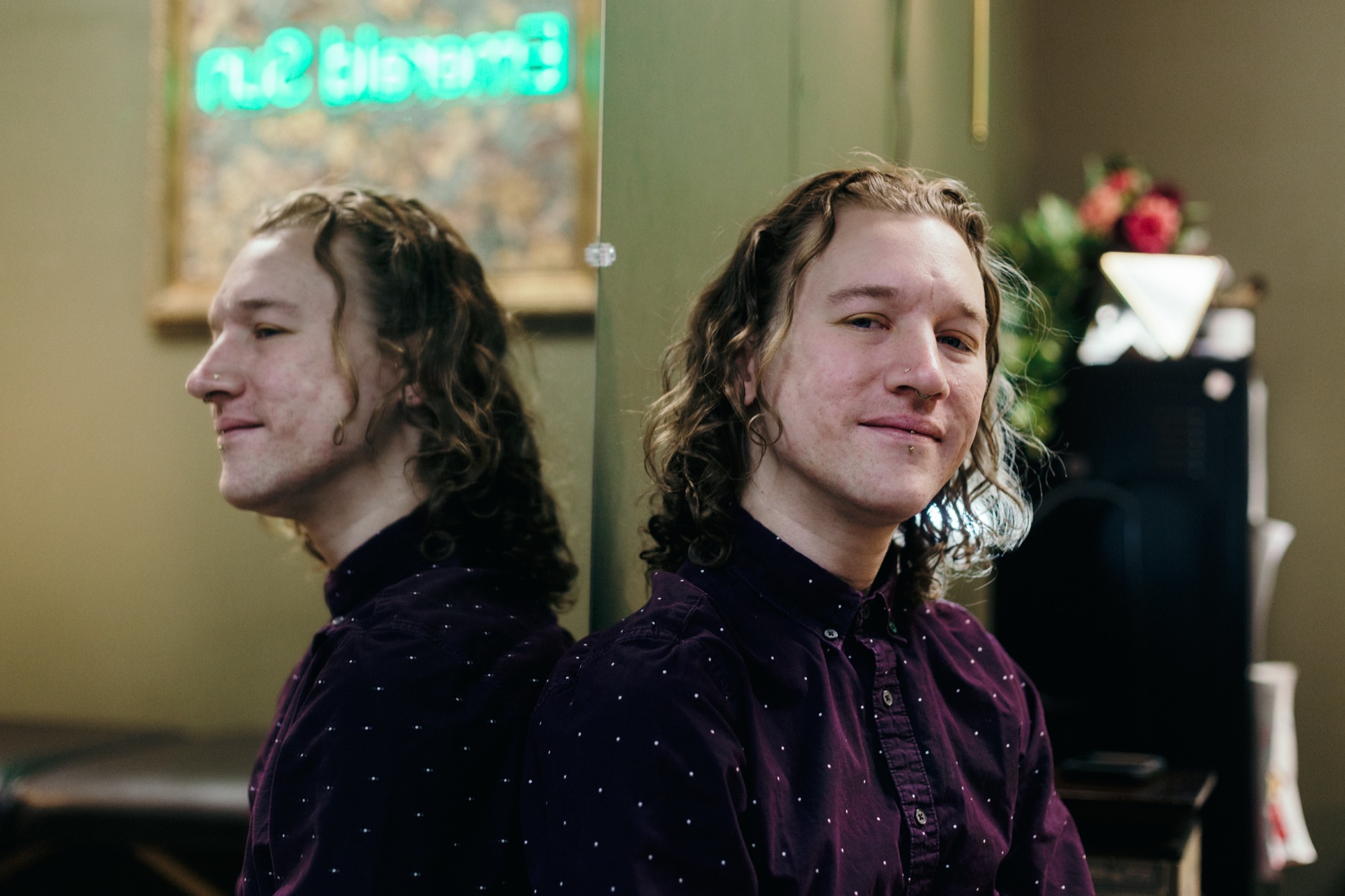
Inside the welcoming walls of 21 Blooms Tattoo Studio, Dylan Sodt (he/they) is quietly reshaping how people see themselves, one piercing at a time.
Dylan is a piercer, but that barely scratches the surface. For them, piercing is not just a form of body modification. It’s a practice of empowerment, trust, and transformation.
“I can build a little home with people in 30 minutes,” they say. “It creates a ritual environment. It’s an energetic exchange. They’re trusting me—and that’s when I think I have the best job.”
Born and raised in Jackson, Dylan’s path to piercing was anything but linear. He started by sketching the human figure as a kid and later found creative expression as a drummer in local bands. For much of his adult life, Dylan worked in restaurants, eventually managing the bar and kitchen at Sandhill Crane Vineyards. But even while building menus and leading teams, a deeper pull was growing.
“I hit a point where I needed something new,” he recalls.
Just two days after leaving the vineyards, he began a piercing apprenticeship.
“Piercing found me,” Dylan says.
Precision Meets Purpose
That leap of faith led them into a world where artistic intuition and technical precision are inseparable. Their practice is steeped in anatomy, geometry, and material science.
“It’s engineering on a smaller scale,” Dylan says.
Before he started working with Lauren Maureen of Emerald Sun Studios, Dylan had to start at the beginning: an apprenticeship.
Apprenticeship is the cornerstone of ethical piercing, and Dylan’s journey was a slow and deliberate one.
“You don’t even touch a needle for months. You learn the biology of wound healing, jewelry angles, and sterilization.”
But even more than technique, piercing is about people. Dylan specializes in body reclamation: helping those who have experienced trauma, abuse, or body dysmorphia reconnect with themselves.
“I want clients to feel more empowered when they leave here,” they say. “I’ve had clients squeal when they see themselves in the mirror. That sound? It means everything.”
Their work is artistic and deeply personal. Dylan observes each client closely: how they dress, carry themselves, the undertones of their skin, hair, and eye color.
“I have 30 minutes to clock your style,” he says. “It’s like painting on someone else’s canvas. Then it walks out the door and lives a whole life.”
From simple lobe studs to advanced curated ear setups, every piece is placed with aesthetic intention and precision measured in millimeters.
“We have to create the illusion of symmetry. If it’s off, people will feel it. Others will notice.”
Confidence, Care, and Ritual
Empowerment doesn’t come without responsibility. Dylan sees self-confidence as a professional obligation.
“You need a god complex to do this work—not arrogance, but self-respect,” they say. “You have to put clients at ease. There’s no room for shaky hands.”
They draw on Buddhist practices like breathwork and meditation to stay grounded and present, offering their clients not only a piercing, but also a moment of calm and clarity.
Outside the studio, Dylan finds creative joy in cooking—“an art form that doesn’t belong to me,” they say. “It’s all colors and flavors, and then it’s gone in 15 minutes.”
They surround themself with earth tones, thrifted treasures, and houseplants, always seeking to breathe new life into the old. That ethos flows directly into their work.
“What I do gives people a new image of themselves,” they say.
Community and Collaboration at 21 Blooms
At 21 Blooms, Dylan has found a creative home. The studio, owned by Emily Radke and envisioned as a hub for full-time piercers, is more than a workplace.
It’s a collaborative sanctuary.
“We push each other here,” Dylan says. “We talk through designs, hold critique nights. There’s a vulnerability in that, but it makes us all better.”
For them, the studio is also a commitment to raising the standard in Jackson.
“This city deserves a proper piercing space. If you get pierced by me, I consider you a client forever. I’m an island of proper piercing.”
Looking ahead, Dylan is pursuing certification with the Association of Professional Piercers (APP), a national standard of excellence in the field.
“There’s no ceiling in this work. You can always get better,” they say.
From the restaurant floor to the piercing chair, and no matter their tools, Dylan has always been in the business of care.
“I’m in service of an idea,” they say. “That people can see themselves differently. That they can walk out of here and feel like they belong to themselves again.”