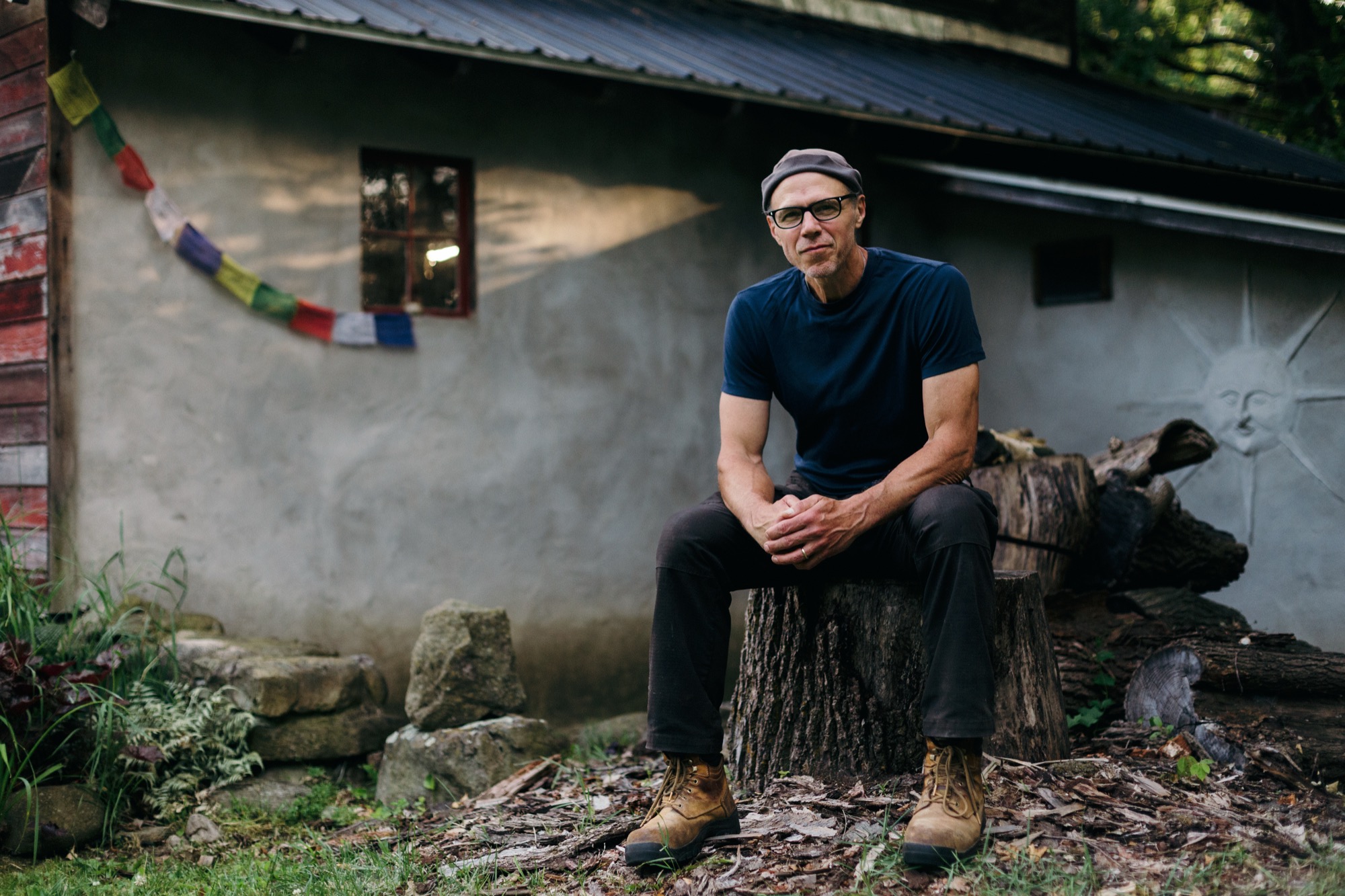
artist

Artists In Jackson - Jessica Leeland

Artists In Jackson: Jessica Leeland

Art has always been central to Jessica Leeland’s life. 

“I’ve always done it,” she says. “My brother was an artist. My parents were artists.” 

Music, theater, and psychology – together with the visual arts – shaped her early creative world, giving her what she calls “the arts in the whole realm of my life.”

That foundation eventually led Jessica to discover art therapy in college, something she “had no idea” existed until professors recognized her ability to connect with others and encouraged her to explore it. 

Jessica soon realized that art could be used not just for expression, but to help people. 

“That was my favorite thing, finding out that you could actually help people by utilizing it,” she says.

Choosing Education at a Critical Moment

Jessica initially planned to pursue clinical art therapy, but a sudden opportunity changed everything. 

When a music teacher unexpectedly left a local elementary school, she was faced with a choice: continue the art therapy path, or help kids in a different, but related, way. 

“I thought, ‘If I don’t jump now, I’ll never do it,’” she recalls.

Rather than waiting years to complete art therapy’s clinical requirements, Jessica chose to step into teaching and advocate for arts education where she felt it was missing. 

“Kids need the tools now, in elementary,” she says. 

In education, Jessica could give students access to creative tools early, before those opportunities disappear. 

“You can still play sports and be an artist. You can still go be a doctor and be an artist. You just have to balance the schedule.”

Artists In Jackson - Jessica Leeland

Teaching as Creative Advocacy

In the classroom, Jessica merges artistic practice with therapeutic principles. She emphasizes pausing, reflecting, and making choices. 

“It’s okay to pause,” she tells students. “And then watching them and hearing them speak the words, ‘no means no. Those are my boundaries.’ Those are healthy. This is OK.”

Jessica remembers one moment that confirmed she was exactly where she needed to be. 

“A child told me they had never held a paintbrush before,” she says. “That was their first time painting. When that hit me, I knew I was meant to be here.”

Over time, she has seen the impact. Students repeat her language back to parents. Former 4H participants return and tell her, “You told me last year to do this.” For Leeland, those moments are everything. 

“That’s game over for me,” she says. “That’s it.”

Her Own Studio Practice

Despite the demands of teaching and family life – she’s married with two kids – Jessica remains committed to her own art. 

“If I don’t create for myself in a certain amount of time, I become bitter,” she says. “It’s me flushing my brain out.

Her Art 634 studio is essential – a place where her brain knows it is time to create.

Jessica’s work spans life drawing, paint pouring, acrylic paintingArtists In Jackson - Jessica Leeland, and ongoing experimentation. 

“I’m very much a try it out, test it kind of person,” she explains. 

Much of her work is human-centered, shaped by anatomy, psychology, and emotional experience. 

“It just needs to come out of me,” she says.

While her art began as something “for nobody but myself,” sharing it has become part of the process. Teaching, creating, and continuing to evolve are inseparable for Leeland. 

“This is exactly what I was looking for,” she says.

Follow Jessica's studio on Facebook

Gary Willcock

Artists In Jackson: Gary Willcock

For Gary Willcock, art is something built from the inside out.

His story begins with buildings.

“I studied architecture at the University of Michigan,” he says. “I worked for a company in Pontiac called Custom Home Design, for Architonics here in Jackson, and I used to moonlight doing drawings at night. I got into a lot of places, met a lot of people, did some fun things.”

Gary grew up in Michigan’s Upper Peninsula. As he moved around the state, he was raised in houses without plumbing or a refrigerator, where every wall and nail carried meaning.

“All those structures had a special place in my life,” he says. “After World War II, there was a huge building boom. Every vacant lot disappeared, and I got involved in it somehow. When my dad decided to build a house, I was part of that. I didn’t know anything about architecture, but I liked designing houses. They told me, ‘That’s an architect.’ So off I went.”

Even after he left formal architecture for design and engineering work, the mindset stayed.

“Wherever I’ve lived, I play with the building,” Gary says. “If I see an empty building, I start massaging it in my mind.”

Gary’s Living Sculpture

Gary and his wife Christie live on seven wooded acres south of Jackson, a place they call Wind Mountain.

“When I moved in here, this part of the house was just a covered slab,” he says. “I enclosed it, added a reverse gable, and kept going. Over the years, I’ve changed almost everything.”

He built patios, redesigned the kitchen, and drew every trim detail himself.

“This is all my design: the casing, the woodwork. I had it custom-made by the man who built my cupboards,” he says.

Christie calls their home “a living sculpture.” Gary agrees.

“At some point, I wanted my life to be a piece of art,” he says. “To live in this structure where I’ve created all this stuff. I’m walking through my own big sculpture, and it’s functional.”

Sculptures of Precision and Play

Gary’s sculptures merge precision and imagination.

“I’m rigid in some ways,” he laughs. “Right angles all the way. That’s from my mother: you didn’t color outside the lines.”

His background in product and machine design shows in the materials he chooses: anodized aluminum, steel, acrylic, and found parts.

“I think of machines as robots,” he says. “Even a car is a robot. A robotic horse.”

His fascination with robots goes back to childhood.

“For some reason, I never got rid of a toy robot I bought in about 1948,” Gary says. “I bought it at Montgomery Ward in Royal Oak. It cost a dollar.”

Years later, his oldest son found a reproduction and bought it for him, sparking a new collection.

“Then somebody else gave me one, and another, and pretty soon it became a thing,” he laughs. Now, robots, along with dogs, fill his shelves.

“They all have personalities,” he says. “Some of my sculptures do too.”

Light is another essential part of his work.

“I enjoy how it plays off different surfaces, how it bounces around through the holes,” he says. “Some pieces have lenses. You look in one end and out the other, like a telescope.”

His sculptures often carry names that hint at humor and personality: Light Scope, Nest, Red Foreman, SEA AWL.

“I’m corny,” he admits. “But I like it when people lean in to look. Art should make you curious.”

Gary Willcock

Champion of Local Art

Walk through Gary and Christie’s house, and every wall holds local art.

“If you want a creative community, you support it,” he says. “You show up to openings, you buy work when you can, you encourage people.”

“We buy it because we like it, not because we have to,” Christie adds. “The people who made this work are our friends.”

Gary smiles at that. “Art is connection. You don’t create in isolation.”

Gary Willcock

Making Meaning through art

After raising six children and working full-time, Gary returned to art in retirement.

“I had to work, so all this was on the back burner,” he says. “One day I told myself, ‘If you’re ever going to do something, you better get off your seat and do it now.’ ”

Now an active member of several local art communities and collectives, Gary continues to draw, design, and build.

“I think art gives meaning to life,” he says. “It reminds us to look closer, to pay attention, to see more.”

Visit Gary's website  |  Follow Gary on Facebook

Tim Péwé

Artists In Jackson: Tim Péwé

Tim Péwé creates art that moves.

Known for his figurative and kinetic sculptures, Tim’s work blends whimsy with craftsmanship. His pieces often balance, spin, or sway – sometimes, just for fun.

“A lot of this stuff moves or has a purpose, but it’s not like a practical purpose,” he says. “I like the idea of making something that does something, but there’s really no reason for it.”

Early Creativity

Tim’s creative story begins far from Michigan, in the western U.S.

Growing up a creative kid in Albuquerque, New Mexico, and later spending time in Oregon, Tim was drawn to the outdoors and the tactile world of making things. His early fascination with Native American culture and ancient traditions, particularly those of the Hopi and Zuni tribes, shaped his artistic sensibility.

“We’d go to the dances at the Pueblo. That exposure made me more interested in a lot of different cultures,” he says.

Before sculpture became his calling, Tim built a career in construction and contracting. He specialized in marble and tile work, creating intricate inlays and custom medallions for homes and businesses in and around Naples, Florida.

“I always liked working with my hands,” he explains. “I started doing tile and marble, and then I’d make tables with inlays. It was creative, but it was also practical.”

Those years, and those early cultural touchpoints, taught him the skills and worldview that would later define his art.

Experimentation and Autonomy

Tim never studied sculpture formally. Instead, he learned by doing.

“I definitely progressed because a lot of the earlier stuff, when I look at it now, it’s kind of rough,” he admits. “I guess it was just experimenting.”

That spirit of exploration remains central to his work. For Tim, art is freedom.

“You don’t have a boss telling you no,” he says. “You’re your own boss. If someone doesn’t like it, that’s fine. And if someone does, that’s great.”

Figurative and Kinetic Sculpture

Today, Tim is best known for his figurative and kinetic pieces. His portfolio (and his property) is filled with curious representations and characters. In his studio, he’s carving a standing wooden figure. Out in the yard, there’s a head made of stone.

“To me, figurative art is more appealing. I don’t like abstract,” he says. “I always like just having an idea and thinking, ‘I’d like to see it actually exist.’ It’s almost like an invention.”

Tim’s studio in rural Jackson is a workshop of constant motion. He works with reclaimed materials, metal scraps, and wood, often starting with a single piece that sparks an idea.

“It’s the fun part to pick something up and then actually make it,” he says. “After it’s done, I’m not as worried about it anymore.”

Tim Péwé

Beyond his studio, Tim is an active presence in mid- and southeast Michigan’s art scene. He exhibits regularly in Detroit-area galleries and participates in local shows that bring together regional artists.

His work has become a familiar highlight at community art events, where its playful energy draws both collectors and casual viewers.

Brigit, his wife, sums up his appeal simply: “Tim’s work makes you smile. It’s clever and full of life.”

For Tim, that playfulness is the point.

“Either way, I just like making things,” he says. “If someone connects with it, that’s even better.”

Visit Tim's website