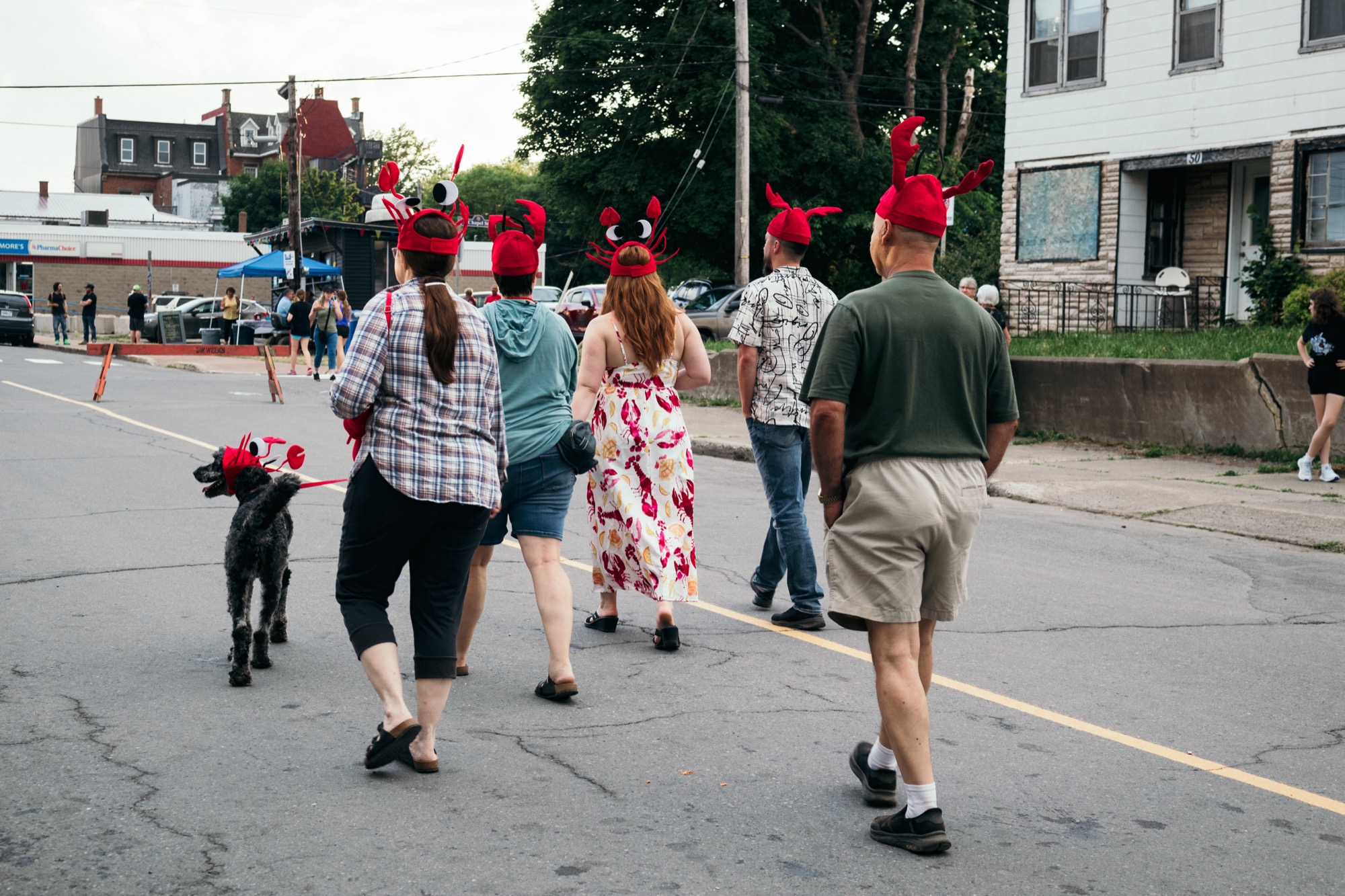
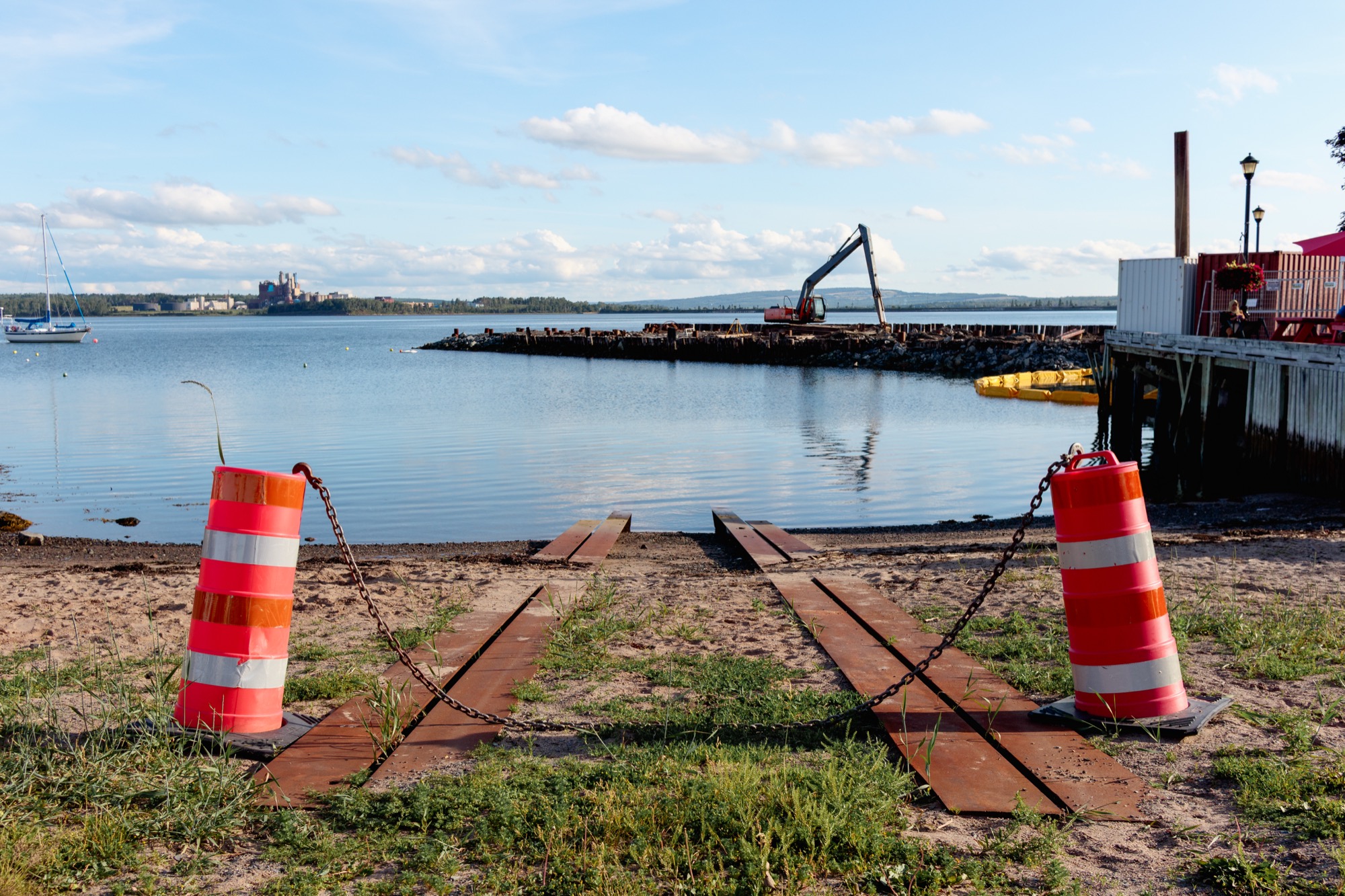
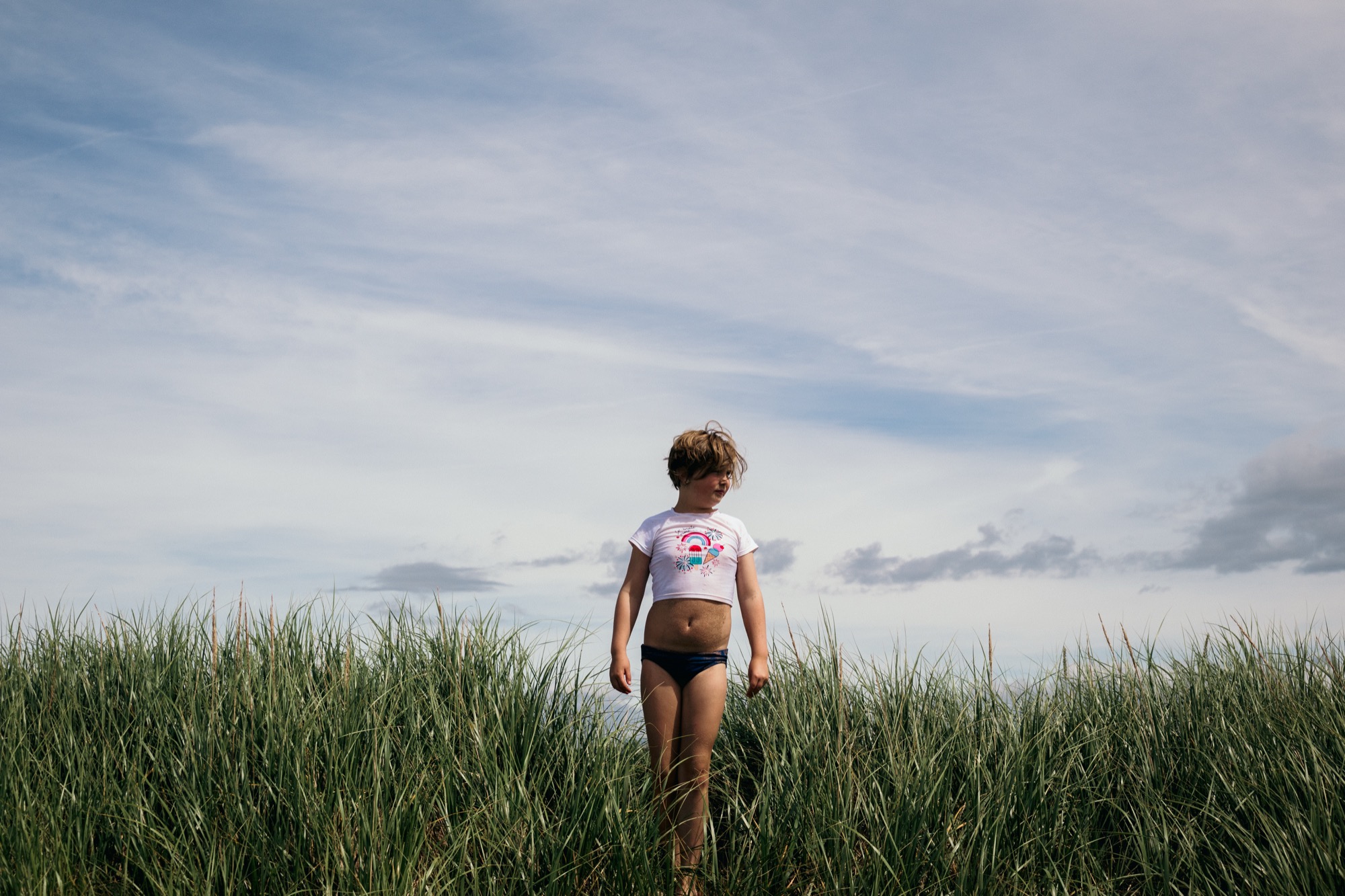
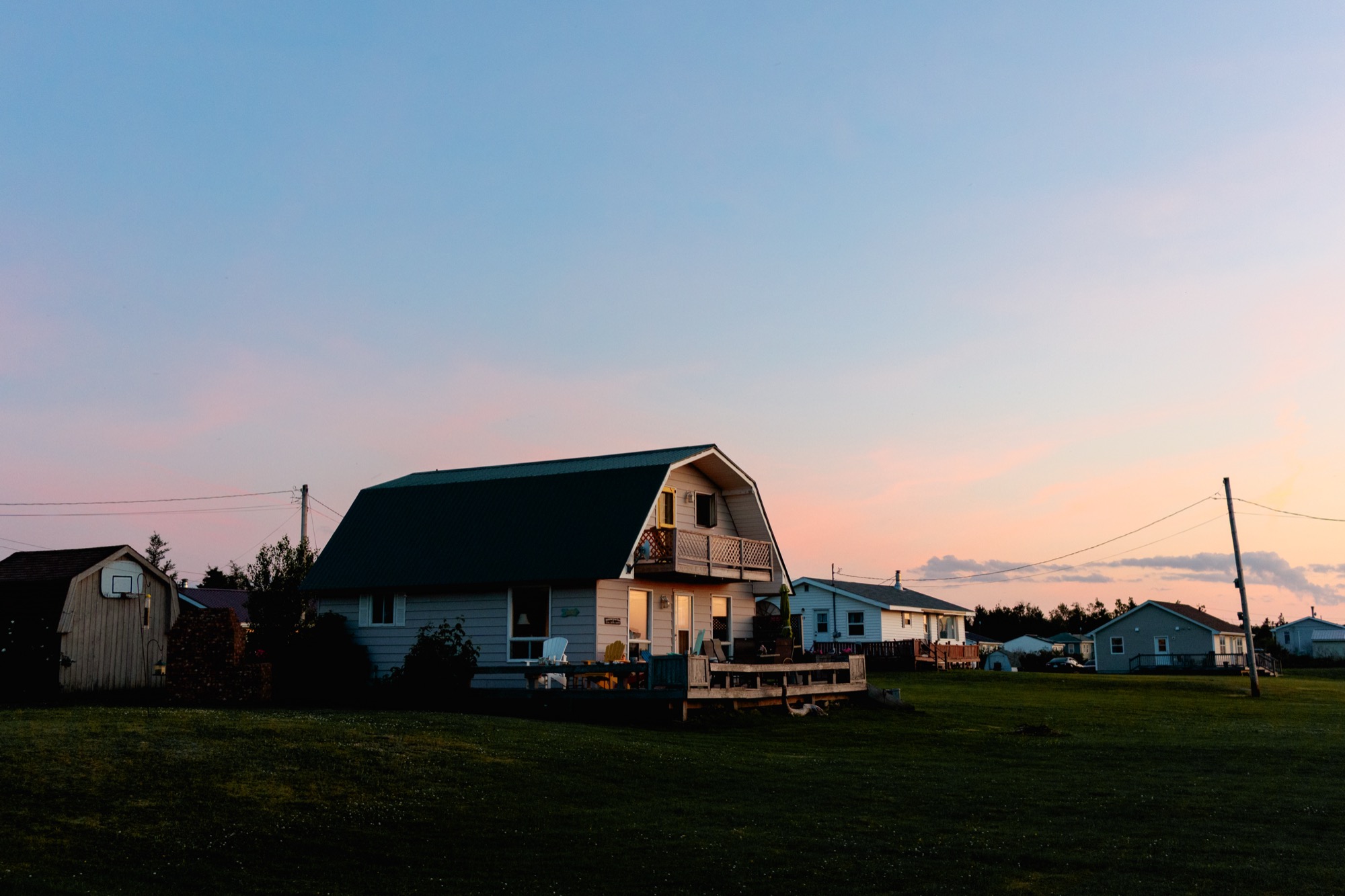
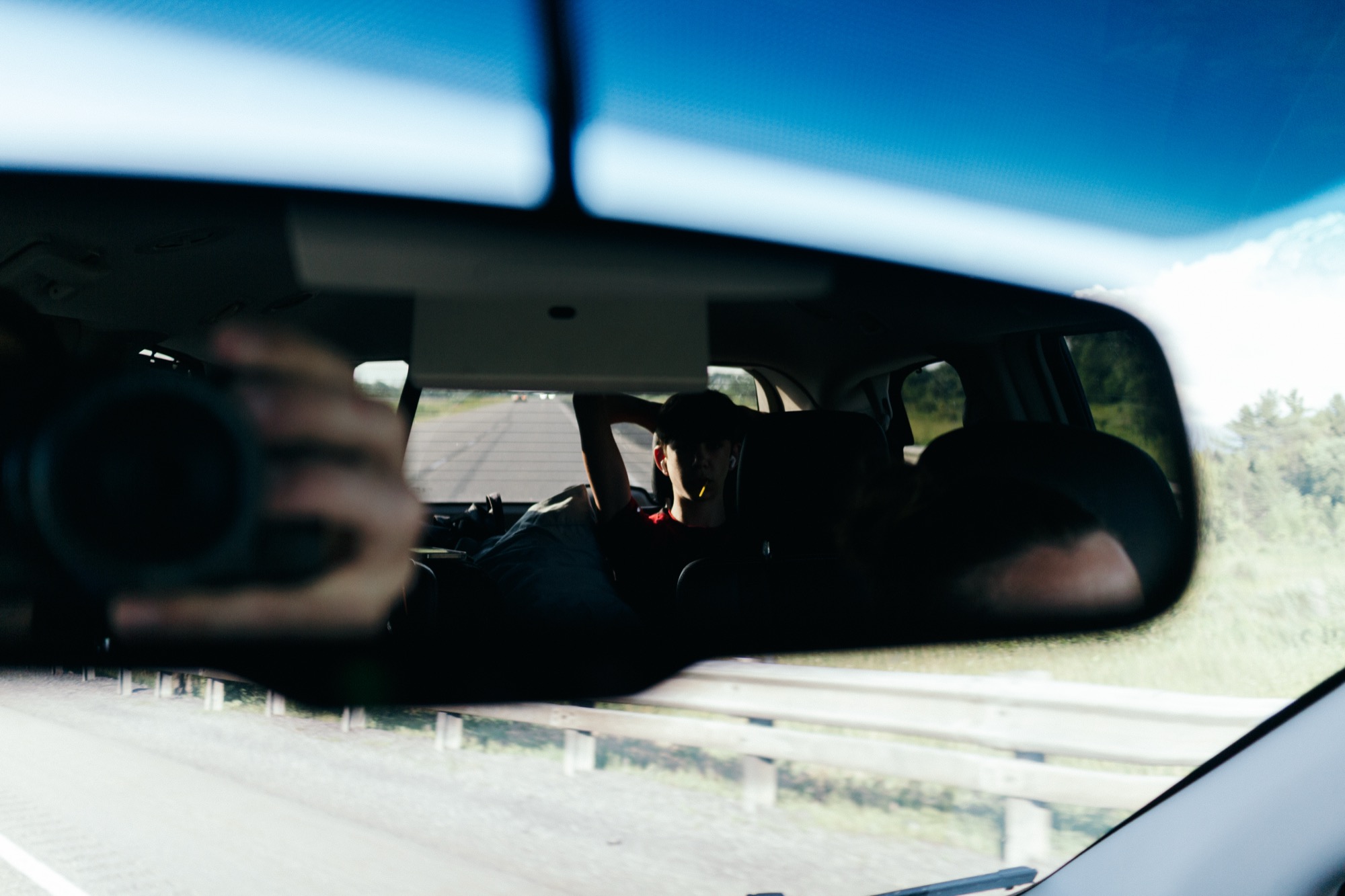
To us Americans, Pictou, Nova Scotia’s Lobster Carnival was nothing short of a wonder.
Pictou is a small town. But walking around on the last day of our Canadian trip, you’d think the whole town had turned out. And why not? On the East Coast, lobsters are a big deal.
Pictou made them a big deal.
A mini fair, with rides and games, a concert in the park, and one of the best lobster rolls I had so far this trip – Carny had it all.
We couldn’t have picked a better way to say “goodbye” to Canada.
Before we left town, we stopped and had ice cream. Tomorrow? Through New Brunswich and on to Maine.
Shot on the Canon EOS M6 and EF-M 22mm f/2 and 32mm f/1.4.
Imagine a New England state-size island, full of its own little towns and natural wonders, and that’s Cape Breton – off the eastern coast of Nova Scotia.
It was a bit of a drive to get there, but boy, it was worth it.
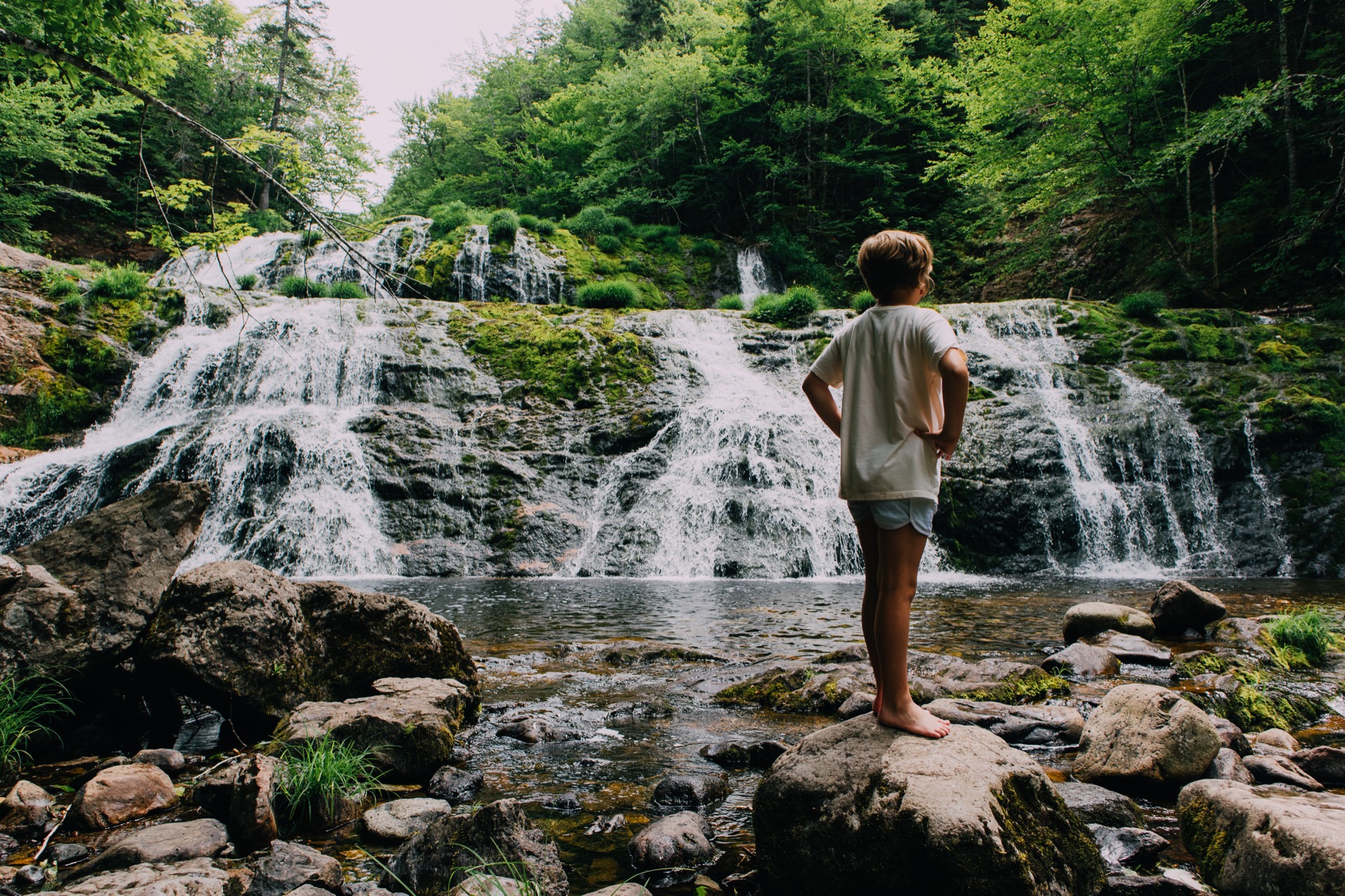
First, we took some nature trails and discovered Egypt Falls along the western section of the island.
For the kids, it was a grueling hike up and down the trail. But at the bottom? One of the most beautiful waterfalls I’ve ever seen.
After Egypt Falls, we hiked the Lewis Mountain trail, a hidden gem behind a set of power lines. To get there, you take a lovely drive around Bras d’Or, the large inland body of saltwater.
The trail, a gentle incline through a beautiful northern forest, followed a stream where (I’m proud to say) my family took a swim.
Driving around the island, there was plenty to see.
To close out the trip, we had dinner in Baddeck, where I couldn’t resist eating an entire lobster.
Shot on the Canon EOS M6 with the EF-M 22mm f/2 and kit zoom lenses.
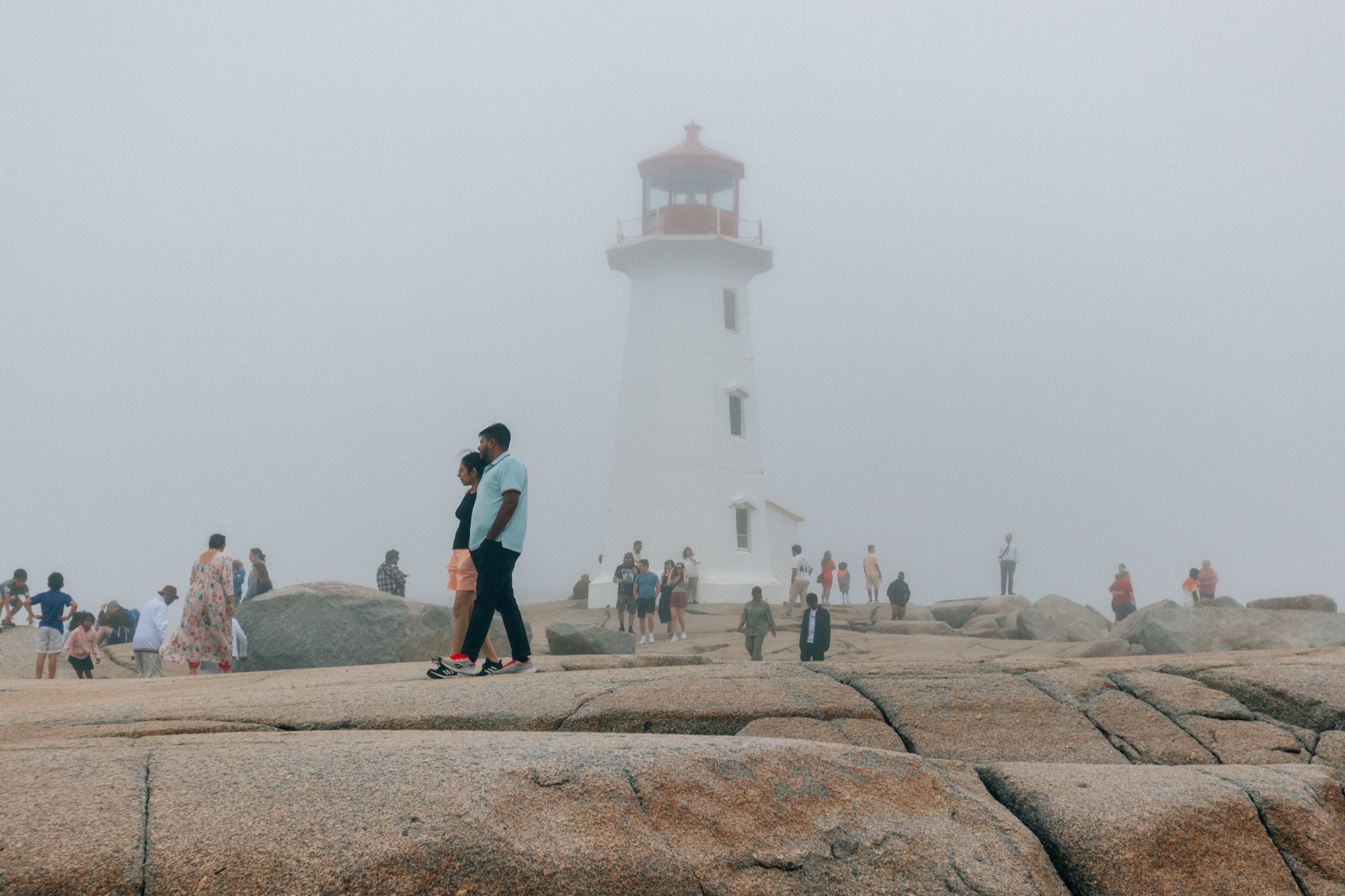
As we approached the shore, we noticed the fog rolling in off the Atlantic. This would be a theme for our vacation.
It was certainly a vibe: a rocky, jagged coast, a little fishing village, and not much visibility. We could barely see the lighthouse from the parking lot, but the visibility improved the closer you got.
Reds and greens. Blues and teals. Here, colors popped out of the fog.
Driving from the coast, we made a few stops along the way to see what else the fog was hiding.
Some of it? We couldn’t see. It’s still a mystery.
You haven’t experienced a national holiday until you’ve seen Canadians celebrate Canada Day on July 1.
The first clue came when we were driving into Halifax.
“Everyone’s wearing red,” I noticed. Like, everyone.
First, we hit the waterfront district because that’s where the action was. Food, activities, vendors – and tons of people dressed in their Canada Day gear. It was super fun to see, especially coming from the United States, where our relationship with our northern neighbor has been rocky since January.
“Good for Canada,” I thought with a little sense of pride.
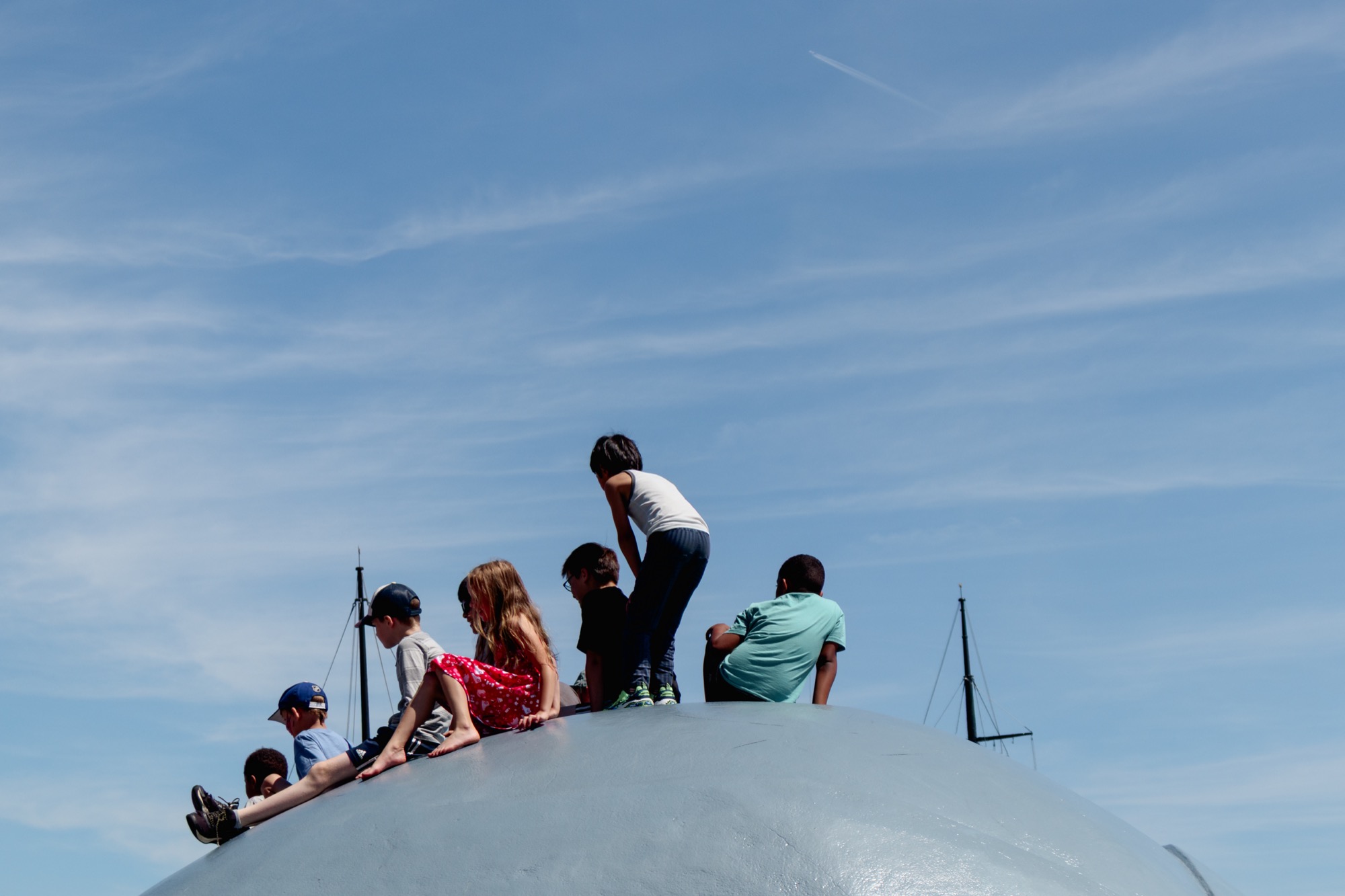
Our kids had fun seeing the big ships coming into the Halifax harbor and the giant wave sculpture.
Then we left the waterfront to walk around the Public Gardens.
Later, trying to find a place for dinner, we wandered around the north part of the city until we found a stellar cidery, the Chain Yard – complete with a DJ.
This situation – visiting a new city in another country on a special day – is exactly what I mean when I tell people I use photography as an excuse for adventure. It’s my favorite setting: a new place with new people, where I get to use my camera as a sort of third eye, capturing and getting to know the things I see.
Speaking of which…
From Halifax, we drove to Peggy’s Cove for some fog and lighthouse action. More on that next.
Shot on the Canon EOS M6 and (mostly) the EF-M 15-45mm kit zoom lens.
Swimming in the Atlantic Ocean was new enough for our kids. But swimming in the northern Atlantic?
That water is cold.
The frigid ocean didn’t stop us, though, at Rushtons Beach, a scenic, sandy beach on the north side of Nova Scotia.
We spent half of the day relaxing on the beach. For the other half, we explored one of the rivers flowing into the Atlantic. The kids discovered you could tiptoe across the water to the near shore.
I took the boardwalk and went to explore around the provincial park a bit.
After brushing the sand off, we went into Pictou for dinner and ice cream.
Not a bad first day exploring the Maritimes.
Shot on the Canon EOS M6 and EF-M 22mm f/2 and 32mm f/1.4.
The first leg of our two-week vacation was along the north shore of Nova Scotia, in a little town called Marshville. It was a total throw-a-dart-at-a-map-and-hope-it-works-out location.
It totally worked out.
We’re an AirBNB/Vrbo family, and we try to get cabins on the water. This one was close enough – a short walk down a drive, then a set of stairs down a bluff, and we were oceanside.
The neighborhood was filled with quaint sea cottages, many of which proudly displayed their Canadian pride.
As always, I took the first day or two to explore the cabin and the neighborhood, exploring the light where I could find it.
Marshville was a good launching point for all our adventures. We had plenty to see along Nova Scotia’s North Shore, and it was centrally located to easily make our future drives to Halifax and Cape Breton.
Every morning, the kids watched the tide ebb and flow. And every evening, we went down to the beach to see the sunset.
We saw the ocean in California last year, but not like this – not every day, and not this close to shore. After the kids overcame their fear of the little brown jellyfish and embraced the cold northern water, the ocean became part of their spiritual rhythm.
The Canon M6, paired with either the EF-M 22mm f/2, EF-M 32mm f/1.4, or the M kit zoom, made for a light and satisfying travel kit.
We spent our first evening getting to know the place. The next day, we’d travel to a local beach to really take in the ocean view.
All of our summer vacations have lasted a week. Weekend to weekend, about 9-10 days max. This year, we tried something different: taking a two-week vacation out East.
We hit the road in late June for an epic road trip to the Atlantic Coast – first to Nova Scotia, Canada, for one week, then to Maine for the second week.
To get there, it meant driving 20 hours through Ontario, Quebec, New Brunswick, and finally Nova Scotia to our first cabin. We split the drive in half, staying overnight in Trois-Rivières, Quebec, at a lovely hotel on the St. Lawrence Seaway.
I took six years of French in high school and college, so it’s been a while since I spoke it fairly fluently. It was pretty humbling to walk into a gas station on the edge of Trois-Rivières where the checkout team spoke nothing but French.
Petrol, s’il vous plait?
Quebec was a brief stop on the way, but it is a huge Canadian province, and most of our driving ran along the St. Lawrence until we hopped over the river in Quebec City and then on through New Brunswick.
This is the first in a series of posts outlining our big summer adventure. I brought along the Canon EOS M6 with a full kit of EF-M lenses. I also kept the Canon EOS M in the car for road photos, and the few you see above in Trois-Rivières.
An epic road trip to the East Coast sporting the Canon M line. Lots more to come.
The show was notable because Gord Downie, the Hip’s lead singer, was diagnosed with terminal brain cancer earlier this year. Saturday night’s show, broadcast on the CBC to a third of Canada’s citizens, could be the Hip’s last ever – capping a 30-year career.
Imagine that in America. What U.S.-based band would garner a national broadcast on its last show ever? Bruce Springsteen, maybe? What modern music act can unite a country on what night in the way the Hip did this weekend? It’s amazing when you think about it.
I have a great history with the band. My friend Chris took me to a Hip show in the summer of 2000 at DTE Energy Music Theater (Pine Knob to those who remember the good ol’ days), north of Detroit. Since then, I’ve seen the Hip more than a dozen times: in Detroit, in Grand Rapids, in Sarnia, in Toronto, in Windsor (photo above). Their country and my own, I’ve seen them on almost every tour since 2000, sometimes catching them on several dates on a given tour.
Saturday night was emotional for me. It was especially difficult watching Gord, obviously frail and tired, giving it his all. He was spent emotionally, physically, and perhaps even creatively. But he went out with a bang. Here was a guy who has dealt with terminal cancer, on the last night of a country-spanning tour, deliver a three-hour performance in front of his hometown crowd and his nation. That’s grit.
Not that I think about death a lot, but watching my musical heroes pass away over the years makes me think about mortality, and the limited time we have.
It’s hard not to dive into the live-like-you-were-dying cliché here, but hear me out.
What would you do, artistically, if you knew you were on borrowed time?
And what’s holding you back from doing that, right now?
I try not to be morbid about this stuff. But it’s hard, having kids, not thinking about being taken away suddenly, and what kind of situation I’d leave behind. The unexpected happens all the time. Any of us could get a diagnosis that changes everything.
We can’t think about this stuff every day. That would be paralyzing in a way. Then again, that’s the whole point of the your-life-changes-after-you-get-the-news storyline – hardly anyone young-ish sees death coming. Saturday’s concert was a good reminder.
I mean, if a guy with terminal brain cancer can hit the road with the band one more time, travel the country and give it his all every night in the name of art and performance and duty, surely I can get that undone project completed. Right?
Watching Gord’s exhausted face melt into anguish at the end of a barn-burning song? Yeah, there aren’t too many excuses left after seeing that.
We set sail from South Baymouth, a little port town on Manitoulin Island – a chuck of Ontario resting in the Georgian Bay of Lake Huron. And though the trip isn’t very long, there comes a point where we’re absolutely surrounded by water.
It’s like being on an unsalted cruise trip. The wind is chilly, but the sun (when it peeks out from the clouds) feels good.
There are all types on this boat, the Chi-Cheemaun. Mostly Mennonite, a few foreigners, quite a few students. Most hang out in the lobby. A few of use brave ones, the ones who don’t mind the breeze, stick around on deck to watch the scenery change. We watch the little limestone islands pop up on the horizon, the Bruce Peninsula jutting out into the great lake to welcome us to Tobermory.
The people are great, the colors and shapes are great, the seagulls following the boat are great. Everything is great.
The lodge at Tobermory, Ontario, offered a perfect view of Lake Huron and the Georgian Bay off the back patio. The way the light came into the main sitting room was perfect.